
Affiliate disclosure: This post may contain affiliate links. As an Amazon Associate, I earn from qualifying purchases at no extra cost to you.
A beautiful home theater is more than a giant screen and luxury seating. True cinematic immersion happens when outside noise fades and your movie audio stays inside the room where it belongs.
Whether you are dealing with noisy neighbors, loud bass traveling through walls, or family members who hear every upstairs explosion, proper soundproofing can completely transform your viewing experience.
In this guide, we’ll cover the best soundproofing techniques for a home theater, including practical tips, affordable upgrades, and professional-grade solutions to create a quieter, more immersive entertainment space.
Before choosing products, it helps to understand the difference between acoustic treatment and true sound isolation. Acoustic panels can improve the sound in your theater, while soundproofing focuses on reducing sound transfer between rooms. For a deeper explanation, read my full guide to Acoustic Panels vs. Soundproofing for Home Theaters.
Quick Guide to Home Theater Soundproofing
Here is a simple way to decide which soundproofing upgrade to start with:
| Problem | Best Starting Point |
|---|---|
| Echo inside the room | Acoustic panels, rugs, curtains, and soft furniture |
| Sound leaking through the door | Weather stripping, door sweep, and solid-core door |
| Bass shaking other rooms | Subwoofer isolation pad, bass traps, and careful placement |
| Outside noise entering the room | Door sealing, window treatments, and added wall mass |
| Hard floors causing reflections | Thick rug, carpet, or carpet padding |
| Windows causing noise and glare | Heavy blackout curtains or velvet curtains |
| Sound traveling through ceiling | Insulation, double drywall, isolation clips, or acoustic ceiling panels |
| Budget-friendly first step | Seal the door, add rugs, and use curtains or panels |
Why Soundproofing Matters in a Home Theater
Many homeowners spend thousands on surround sound systems but overlook one of the most important factors: managing sound leakage. Without soundproofing, even the best audio setup can be affected by echo, outside distractions, and sound escaping into the rest of the home.
Benefits of soundproofing your home theater include:
- Better audio clarity
- Reduced echoes and vibrations
- Less disturbance to family members or neighbors
- Better control over bass and low-frequency sound
- A more immersive theater-like atmosphere
If you want your home theater to feel like a luxury cinema, sound management should be part of the design from the beginning. It affects not only how the room sounds, but also how comfortable and enjoyable the space feels during movie nights.
For a broader look at creating a complete movie-night setup, see my guide to Home Theater Accessories and Decor.
Understand the Difference Between Soundproofing and Acoustic Treatment
One of the most common mistakes in home theater design is using the word “soundproofing” for everything.
Soundproofing, or sound isolation, helps reduce sound entering or leaving the room. This usually involves sealing gaps, adding mass, upgrading doors, improving wall or ceiling assemblies, and reducing vibration transfer.
Acoustic treatment improves how sound behaves inside the room. Acoustic panels, bass traps, rugs, curtains, and upholstered furniture can reduce echo, tame reflections, and improve dialogue clarity.
Both matter, but they solve different problems. If you are not sure which one you need first, start with my full comparison of Acoustic Panels vs. Soundproofing.
1. Add Acoustic Wall Panels
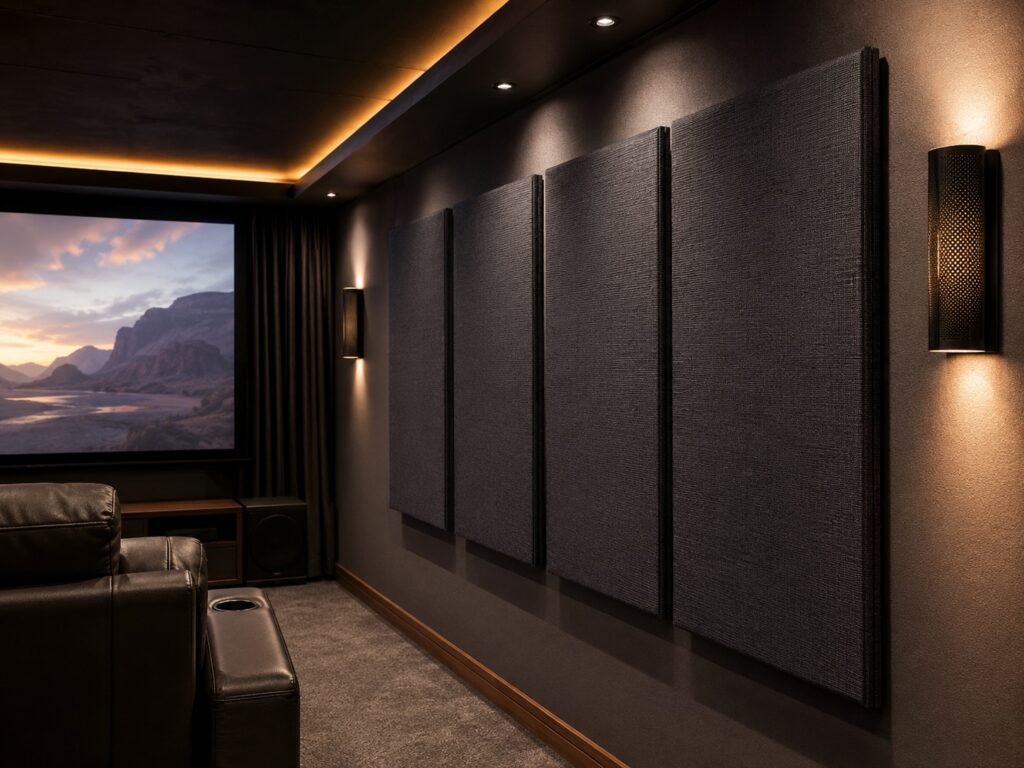
Acoustic wall panels are not true soundproofing, but they are among the easiest ways to improve a home theater’s sound. They absorb mid- and high-frequency reflections, helping reduce echo and improve dialogue clarity.
This is especially helpful if your room has hard walls, bare floors, large windows, or minimal furniture. In those spaces, sound can bounce around, making dialogue feel muddy or harsh.
Best Places to Install Acoustic Panels
- Side walls
- Rear walls
- Ceiling reflection points
- Behind the screen
- First reflection points near the main seating area
Decorative acoustic panels are especially popular because they combine functionality with high-end theater-style aesthetics. If you want panels that look intentional instead of purely technical, see my guide to Home Theater Wall Decor Ideas.
Pro Tip
Use dark-colored fabric panels in charcoal, navy, or black for a true cinematic feel.
If your main problem is echo, acoustic panels can help. If your main problem is movie sound escaping into bedrooms, hallways, or neighboring spaces, you will also need sound-isolation upgrades such as door sealing, added mass, and improved wall or ceiling construction.
Helpful Amazon searches for acoustic wall panels
Acoustic panels are helpful when your theater room sounds echoey or dialogue feels muddy. They will not fully soundproof the room, but they can improve the way sound behaves inside the space.
- Acoustic Panels for Home Theater — best for reducing echo and improving dialogue clarity
- Fabric Acoustic Wall Panels — best for a cleaner, more decorative theater look
- Bass Traps for Corners — best for helping control low-frequency buildup in room corners
2. Seal Doors and Gaps
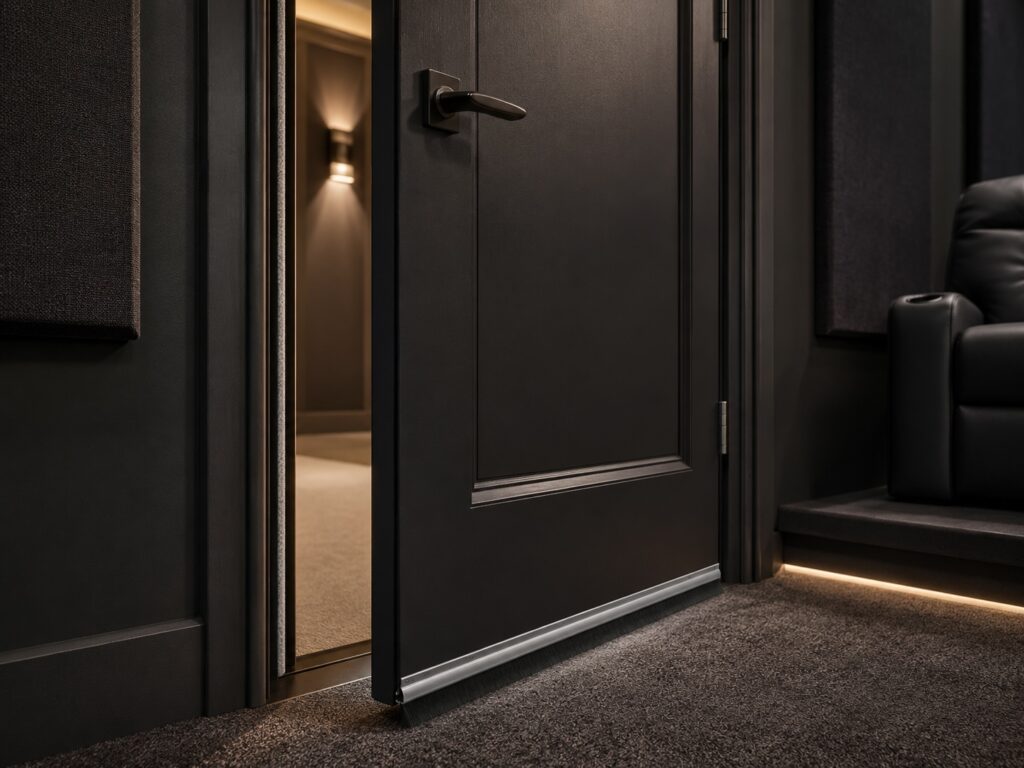
Even tiny openings around doors can leak a surprising amount of sound. Because sound travels through air gaps, a room with a poorly sealed door is harder to control.
Effective Door Soundproofing Solutions
- Install weather stripping around door frames
- Add a door sweep at the bottom
- Upgrade to a solid-core door
- Use acoustic seals for better isolation
- Check for gaps around trim and thresholds
Hollow-core doors allow sound to travel easily, especially low-frequency bass. Replacing them with solid-core doors can make a major difference.
If you are working with a small budget, door sealing is one of the best places to start. Weather stripping and a door sweep are affordable, simple upgrades that can help reduce noise leakage before you move on to larger projects.
Helpful Amazon searches for door soundproofing
Doors are one of the biggest weak points in a home theater because sound can leak through gaps around the frame and under the door.
- Door Weather Stripping — best for sealing gaps around the door frame
- Door Sweep for Soundproofing — best for reducing sound leakage under the door
- Acoustic Door Seal Kit — best for a more complete door-sealing upgrade
3. Use Thick Carpeting and Rugs
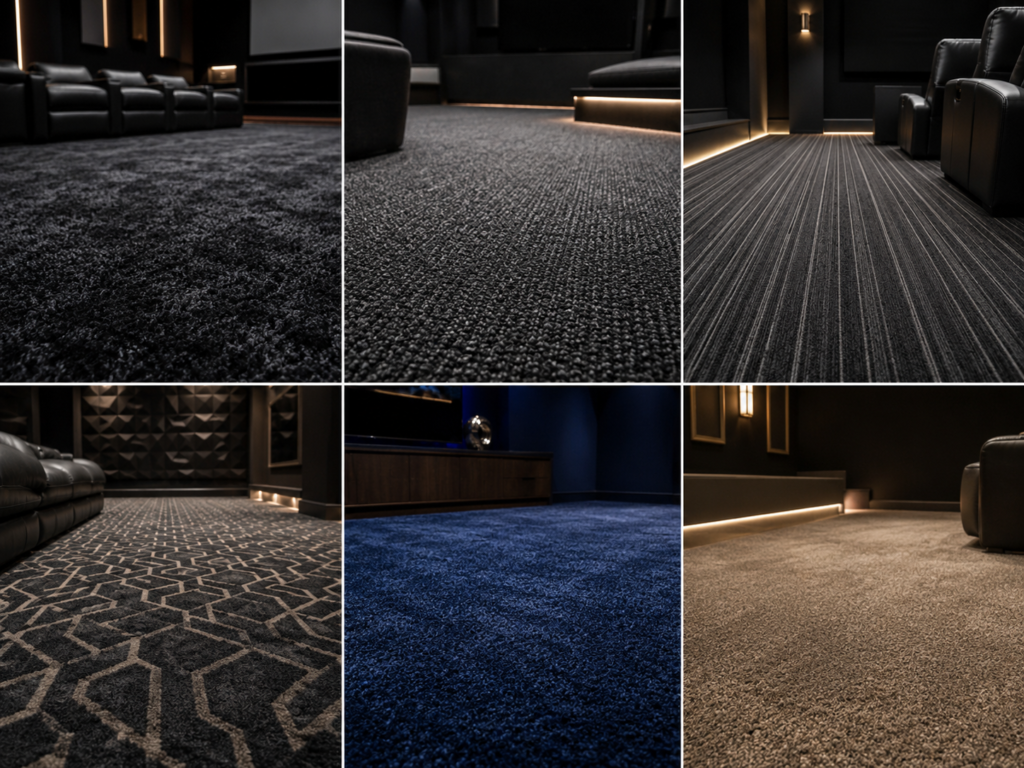
Hard flooring reflects sound waves, creating unwanted echoes and making a room feel less controlled. Soft surfaces help absorb sound and reduce some vibration.
Great Flooring Options for Home Theaters
- Wall-to-wall carpeting
- Thick area rugs
- Carpet padding underneath
- Acoustic underlayment
Carpeting also adds warmth and comfort, making movie nights more inviting. If you are not ready to install wall-to-wall carpet, a large, thick rug under the seating area is a practical alternative.
Rugs will not fully soundproof a room, but they can improve the room’s acoustics and make the theater feel more comfortable.
Helpful Amazon searches for rugs and floor sound control
Soft flooring can help reduce reflections and make the room feel warmer and more comfortable during movie nights.
- Thick Area Rug for Living Room — best for softening sound in a media room or living room theater
- Rug Pad for Sound Absorption — best for adding extra cushioning under an area rug
- Carpet Padding — best for improving comfort and reducing some floor reflections
4. Install Soundproof Curtains
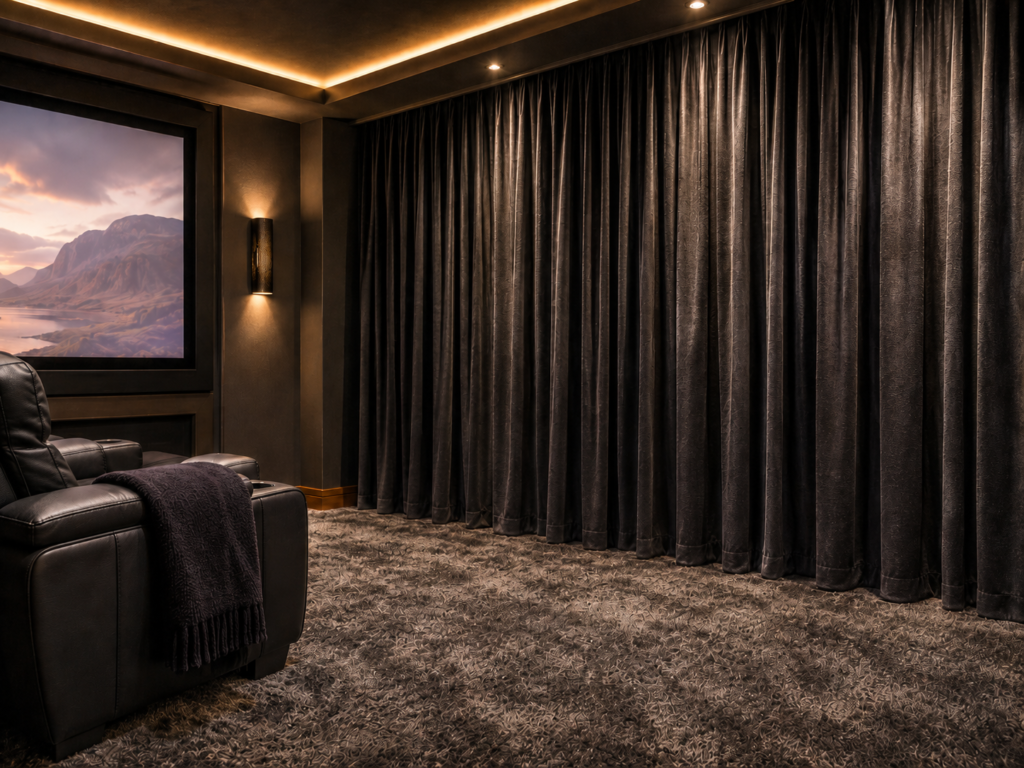
Heavy blackout curtains can help reduce some outside noise while also improving theater aesthetics. They are especially useful around windows, glass doors, or bright areas that interfere with the movie experience.
Benefits of Soundproof Curtains
- Reduce some outside noise
- Minimize sound reflections
- Improve room darkness for movie viewing
- Add luxury theater style
- Soften the look of the room
Velvet curtains are especially popular because they absorb sound while adding dramatic visual appeal.
Helpful Amazon searches for soundproof curtains
Heavy curtains can help soften reflections, reduce glare, and make a home theater feel darker and more cinematic.
- Soundproof Curtains — best for windows, glass doors, and bright media rooms
- Heavy Blackout Curtains — best for reducing glare and darkening the room
- Velvet Blackout Curtains — best for a dramatic theater-style look
Curtains can also complement your overall room design, especially when paired with layered lighting. For more design inspiration, see How to Layer Lighting in a Home Theater.
5. Add Mass to Walls and Ceilings
One of the most effective soundproofing strategies is adding density to walls and ceilings. Sound has a harder time passing through heavier, better-built surfaces.
Popular Methods Include
- Double drywall layers
- Mass-loaded vinyl
- Green Glue soundproofing compound
- Resilient channels
- Sound isolation clips
- Insulation inside wall or ceiling cavities
These techniques reduce sound transmission by making it harder for vibrations to pass through surfaces.
What Is Green Glue?
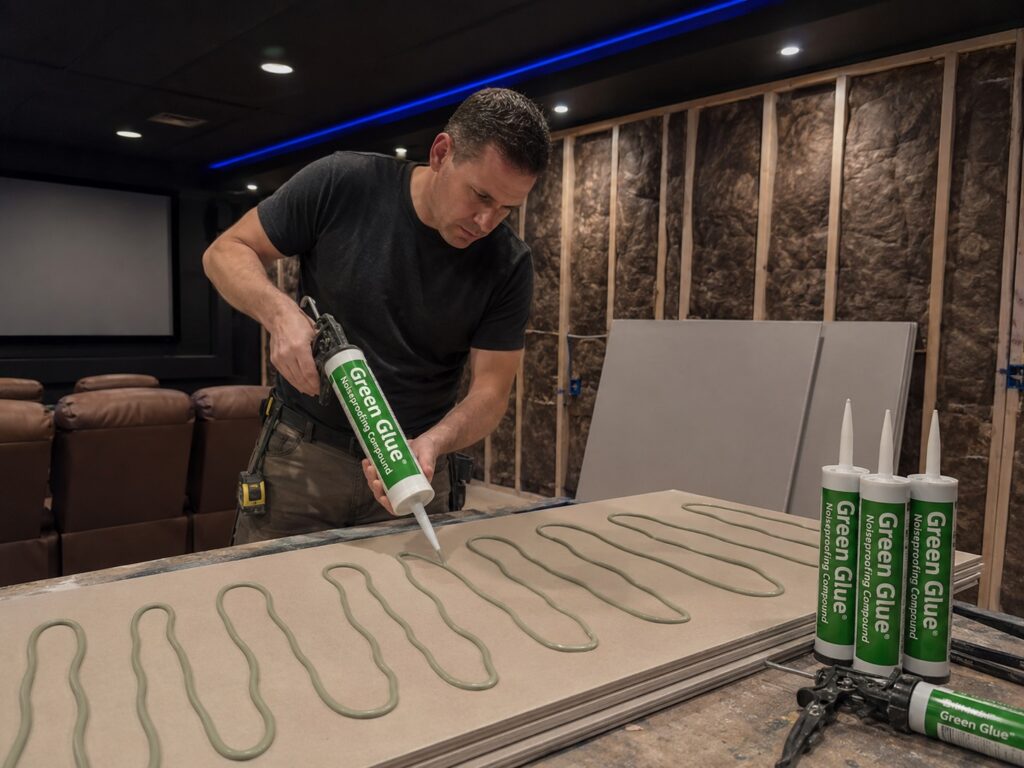
Green Glue is a noise-proofing compound placed between drywall layers to reduce vibrations and absorb sound energy.
This is one of the most effective upgrades for serious home theater enthusiasts, especially when used as part of a full wall or ceiling assembly. It is usually more involved than hanging panels or curtains, but it can make a bigger difference for sound isolation.
Helpful Amazon searches for wall and ceiling sound isolation
Wall and ceiling sound isolation is more involved than adding panels or curtains, but it can help when sound is traveling into nearby rooms.
- Mass Loaded Vinyl Sound Barrier — best for adding mass to walls, ceilings, or floors
- Green Glue Noiseproofing Compound — best for use between drywall layers
- Sound Isolation Clips — best for more advanced wall or ceiling isolation projects
6. Isolate Bass Vibrations
Bass frequencies are the hardest to control because they travel through walls, floors, ceilings, and framing.
This is why someone in another room might not hear the dialogue clearly but can still feel the rumble of the subwoofer. Bass energy behaves differently from higher-frequency sound and often requires more than basic panels or curtains.
Ways to Reduce Bass Transfer
- Use subwoofer isolation pads
- Install bass traps in room corners
- Decouple walls and flooring
- Position subwoofers carefully
- Avoid placing subwoofers directly against shared walls
- Use receiver calibration or room correction tools
Bass traps are especially important in smaller theater rooms where low-frequency buildup can become overwhelming.
Helpful Amazon searches for bass control
Bass is one of the hardest things to control in a home theater. These upgrades can help reduce vibration, smooth out low-frequency buildup, and improve the listening experience.
- Subwoofer Isolation Pad — best for reducing vibration from a subwoofer
- Bass Traps for Home Theater — best for controlling low-frequency buildup in corners
- Speaker Isolation Pads — best for reducing vibration under speakers or small subwoofers
If your theater sound feels uneven, where one seat has too much bass and another has very little, placement may be part of the problem. You may also want to read my guide to Speaker Placement Tips for a Home Theater vs. a Family Living Room.
7. Soundproof the Ceiling
If your theater is located in a basement or first-floor room, ceiling soundproofing becomes critical. Sound can travel upward into bedrooms, living spaces, or offices above the theater.
Effective Ceiling Soundproofing Options
- Acoustic ceiling panels
- Isolation clips
- Double drywall
- Insulation between joists
- Sound-damping compound
- Sealing around recessed lights or ceiling gaps
Ceiling soundproofing is easiest to plan before the ceiling is finished. If the room is already complete, you may still be able to add acoustic panels or decorative ceiling treatments, but deeper isolation work may require construction.
Helpful Amazon searches for ceiling soundproofing
Ceiling soundproofing is especially helpful when a theater room is below bedrooms, offices, or living spaces.
- Acoustic Ceiling Panels — best for reducing reflections on finished ceilings
- Soundproof Insulation — best for unfinished ceiling or wall cavities
- Resilient Channel — best for more advanced ceiling isolation projects
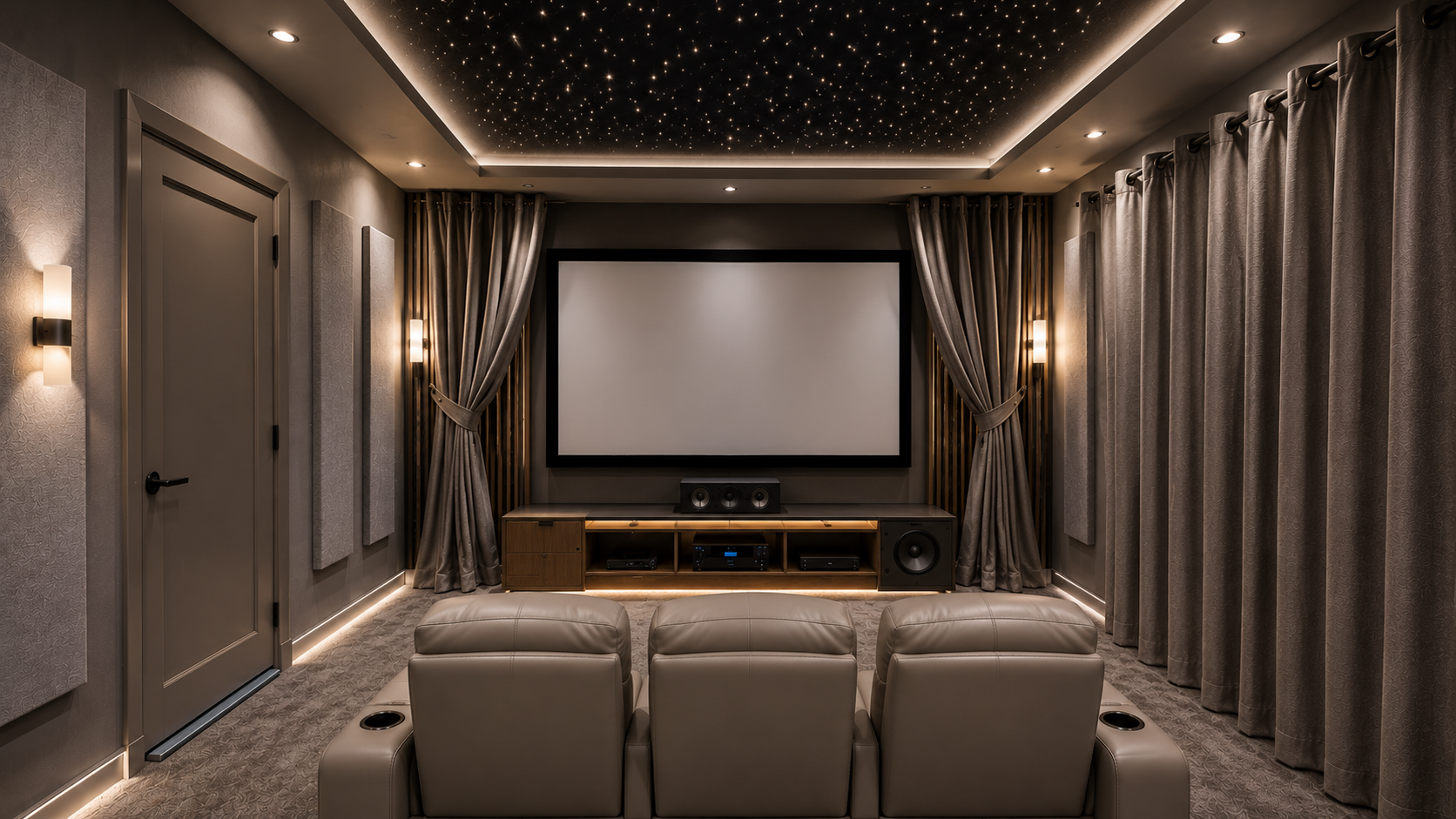
Fiber-optic star ceilings are also becoming increasingly popular because they combine atmosphere with a finished theater look. For more lighting ideas, see How to Layer Lighting in a Home Theater.
8. Use Furniture to Help Absorb Sound
Soft furniture naturally absorbs sound and reduces harsh reflections. While furniture will not fully soundproof a room, it can help make the space sound warmer and feel more inviting.
Helpful Furniture Choices
- Plush theater recliners
- Sectional seating
- Fabric pillows
- Thick blankets
- Upholstered wall accents
- Ottomans
- Bean bags or floor cushions for kids
A room filled with hard surfaces creates unwanted reflections. Comfortable seating and soft decor improve both acoustics and comfort.
Helpful Amazon searches for soft acoustic upgrades
Soft furnishings can help reduce harsh reflections while also making the theater feel more comfortable and inviting.
- Upholstered Ottoman — best for adding soft surfaces and extra comfort
- Plush Throw Blankets — best for cozy seating and softer room acoustics
- Large Floor Pillows — best for family rooms, kids, and casual movie-night seating
Comfortable seating also helps make the room feel finished and inviting. For more ideas, see my guide to Home Theater Seating Accessories.
Budget-Friendly Soundproofing Tips
You do not need a Hollywood-sized budget to improve your theater acoustics or reduce some sound leakage. The key is starting with the most obvious weak points first.
Affordable Home Theater Soundproofing Ideas
- Use weather stripping around the door
- Add a door sweep
- Add rugs or carpeting
- Hang blackout or velvet curtains
- Install DIY acoustic panels
- Rearrange furniture to reduce reflections
- Move the subwoofer away from shared walls
- Add soft furnishings like blankets and pillows
- Seal visible gaps around trim or outlets
Even small upgrades can noticeably improve sound quality.
If your budget is limited, start with door sealing, rugs, curtains, and acoustic panels at reflection points. These changes are easier than major wall construction and can make the room feel more controlled.
Common Soundproofing Mistakes to Avoid
Soundproofing can quickly become confusing because many products promise more than they can realistically deliver. Avoiding a few common mistakes can save money and frustration.
Ignoring the Door
Doors are often the biggest weak point in soundproofing. A heavy wall will not help much if the door is hollow, loose, or surrounded by gaps.
Using Foam Alone
Acoustic foam can reduce some echo, but it does not fully soundproof a room. Thin foam panels do not add enough mass to stop loud movie sound or low-frequency bass from traveling through walls, floors, and ceilings. Foam may help with room reflections, but it should not be your only soundproofing strategy.
Forgetting About Ventilation
HVAC vents can carry sound throughout the home. If your theater shares ductwork with nearby rooms, sound may travel through the ventilation system even if the walls and door are treated.
Placing Subwoofers Incorrectly
Poor subwoofer placement can increase vibration problems. A subwoofer pushed into a corner or placed directly against a shared wall may worsen bass transfer.
Treating Only One Surface
Sound can travel through walls, ceilings, floors, doors, windows, vents, and gaps. Treating only one wall may not solve the problem if sound is escaping through other paths.
For more planning issues that can affect the final result, read our guide to Home Theater Mistakes to Avoid.
What Should You Try First?
The best first upgrade depends on your biggest problem.
If the room sounds echoey, start with acoustic panels, rugs, curtains, and soft furniture.
If sound is escaping through the door, start with weather stripping, a door sweep, and possibly a solid-core door.
If bass is shaking other rooms, look at subwoofer placement, isolation pads, bass traps, and more serious isolation upgrades.
If outside noise is entering the theater, focus on windows, doors, gaps, and wall or ceiling assemblies.
For many homeowners, the best starting point is simple:
- Seal the door.
- Add a rug or carpet.
- Add curtains if there are windows.
- Add acoustic panels at key reflection points.
- Adjust subwoofer and speaker placement.
- Consider larger wall, ceiling, or door upgrades if needed.
When to Consider Professional Soundproofing
DIY upgrades can make a big difference, but professional help may be worth it if you are building a dedicated theater or trying to contain powerful sound.
Consider hiring a professional if:
- You are building the theater from scratch
- The room is below the bedrooms
- The theater shares a wall with neighbors
- You plan to use multiple subwoofers
- You want serious wall or ceiling isolation
- You are adding double drywall, clips, channels, or damping compounds
- You need help with HVAC noise paths
- You want the best possible results before finishing the room
Professional soundproofing is usually easiest before the room is complete. Once drywall, flooring, trim, and lighting are installed, the options become more limited.
Final Thoughts
Creating the perfect home theater is about more than visuals alone. Proper soundproofing techniques can help reduce outside distractions, limit sound leakage, and create a more immersive movie-watching experience.
If your room sounds echoey or dialogue is hard to understand, start with acoustic treatment such as panels, curtains, rugs, and soft furnishings. If your main problem is sound traveling into other rooms, focus on sound isolation upgrades like sealing gaps, improving the door, adding mass, and controlling bass vibrations.
The best home theaters are quiet, comfortable, and controlled. Whether you start with simple door seals and rugs or invest in professional wall and ceiling isolation, each improvement brings your room closer to a true cinematic retreat.
Question: What soundproofing upgrade would you try first in your theater space: acoustic panels, curtains, door seals, or wall treatments?
Related Articles
- Acoustic Panels vs. Soundproofing for Home Theaters
- Home Theater Accessories and Decor
- Home Theater Seating Accessories
- How to Layer Lighting in a Home Theater
- Home Theater Wall Decor Ideas
- Home Theater Mistakes to Avoid
- Speaker Placement Tips for a Home Theater vs. a Family Living Room
- Creating a Luxury Home Theater Experience
Question:
What soundproofing upgrade would you try first in your theater space: acoustic panels, curtains, door seals, or wall treatments?

Lisa is the creator of Home Cinema Living. Together with her husband, a longtime home theater professional, she has spent years designing and enjoying home theater spaces that bring family and friends together for memorable movie nights.
Your article is very well put together with great information and insights. I am looking to create such a space in my home, and have 1 question. What are the most cost-effective materials for soundproofing a home theatre, and where can I buy them to achieve the best balance between noise reduction, sound quality, and budget?
“Thank you so much! I’m really glad you found the article helpful. If you’re looking for the best balance between budget and performance, I’d start with a few key basics rather than trying to fully soundproof the room all at once.”
Heavy blackout or velvet curtains, acoustic wall panels, thick carpeting or rugs, and weather stripping around the door can make a surprisingly big difference without spending a fortune. A solid-core door is also one of the best upgrades if sound leakage is a major concern.
For materials, many people shop at places like Amazon, Home Depot, or Lowe’s because you can find affordable acoustic panels, insulation, door sweeps, and soundproof curtains at a wide range of price points.
If you’re on a tighter budget, I’d focus first on:
Curtains/Door sealing/Rugs/carpet/Acoustic panels at reflection points
Those upgrades usually offer the biggest bang for the buck. Then you can always build from there over time.
Good luck with your theater project, creating the room is half the fun!
Absolutely helpful guide! Soundproofing is one of those details that can completely change the home theater experience, especially if you want to enjoy movies without disturbing the rest of the house. I really like that you explained practical options like sealing gaps, using acoustic panels, heavy curtains, and proper flooring. These ideas make the whole project feel much more realistic, even for someone who is just starting to improve a media room. A quiet cinema space sounds like a dream!
Thank you! Soundproofing is one of those upgrades that can make a dramatic difference in a home theater. Even simple additions like acoustic panels, heavy curtains, and sealing gaps can have a big impact. I’m glad you found the guide helpful!
Definitely proper soundproofing of your home theater will reap benefits on your enjoyment of your space. Just like when watching any movie in the cinema, you would like to really “be in the movie, “hearing all the details of the dialogue of the actors and the soft music playing, rather than hearing outside noises and be distracted.
If budget is really tight, what is one soundproofing that you cannot do without?
Marita
I agree completely. Good soundproofing helps create a more immersive experience by minimizing outside distractions and letting you hear all the details in the movie.
If I had to choose just one soundproofing improvement on a tight budget, I’d focus on sealing gaps around doors and windows with weatherstripping. It’s relatively inexpensive, easy to install, and can make a noticeable difference in reducing unwanted noise.