Affiliate disclosure: This post may contain affiliate links. As an Amazon Associate, I earn from qualifying purchases at no extra cost to you.
There’s something magical about walking into a home theater and looking up to see a sky full of stars. A fiber-optic star ceiling instantly transforms an ordinary room into a cinematic escape, adding depth, luxury, and atmosphere that standard lighting cannot.
Whether you’re designing a dedicated theater room or upgrading an existing entertainment space, a star ceiling is one of the most impressive features you can add.
The best part? You don’t need a commercial cinema budget to achieve the effect. With the right planning, materials, and design ideas, you can build a stunning star ceiling that feels immersive, relaxing, and truly custom. In this guide, you’ll learn the different ways to create a star ceiling, how to choose the right design, the materials you’ll need, and whether a DIY or professional installation is the best option.
If you are planning your lighting as a whole, you may want to read How to Layer Lighting in a Home Theater, so your star ceiling works with sconces, LED strips, pathway lighting, and dimmable movie-night scenes.

Why Star Ceilings are so Popular in Home Theaters
A star ceiling creates ambiance unlike any other lighting feature. Instead of harsh overhead fixtures, tiny glowing lights mimic the night sky, giving your theater a softer, more luxurious feel.
Many homeowners love star ceilings because they:
- Reduce glare during movies
- Create a calming atmosphere
- Add a high-end custom theater appearance
- Make the room feel larger and more immersive
- Pair beautifully with LED accent lighting
- Become an instant conversation piece
The glow from a fiber-optic ceiling is subtle enough not to distract from the screen while still adding enough visual interest to elevate the entire room.
Star ceilings also pair beautifully with other decorative lighting upgrades. If you want more ideas for lighting details that make a theater feel finished, visit Top Decorative Lighting Accessories for Home Theaters.

What is a Star Ceiling?
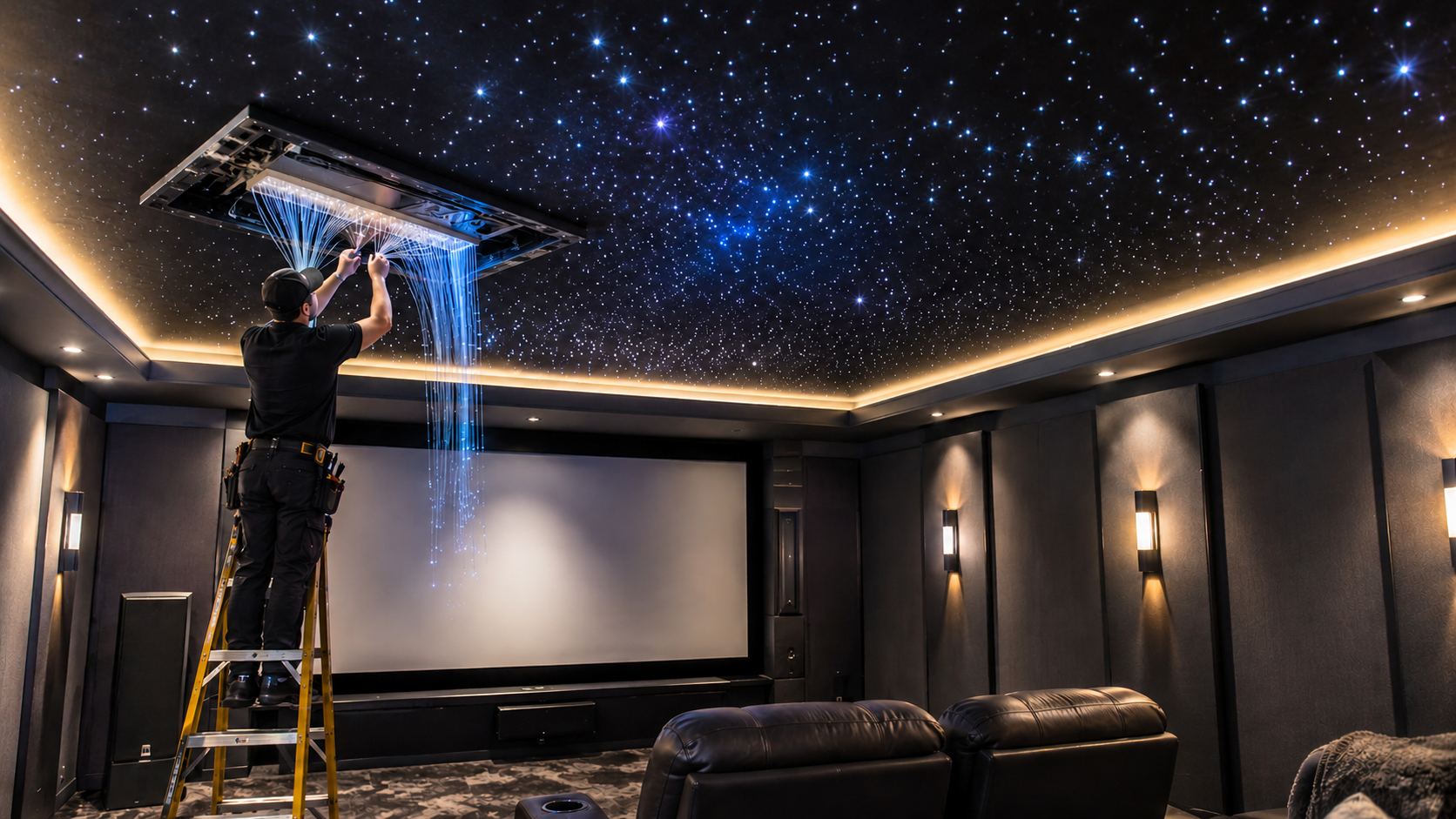
A theater star ceiling is typically created with fiber-optic lighting. Small fiber-optic strands are inserted through acoustic ceiling panels or fabric-covered boards, while a separate illuminator powers the light source.
Unlike traditional bulbs, fiber optics do not carry electricity through each strand. Instead, light travels through the fibers from a central light engine, making the system safer and cooler to run.
The result is hundreds, or even thousands, of tiny points of light that resemble stars.
Some advanced systems even include:
- Twinkling effects
- Shooting stars
- Color-changing options
- Constellation layouts
- Dimming controls
- Smart home integration
A star ceiling can be purely decorative, but it can also work with the rest of your room design. In many theaters, the ceiling panels, fabric, lighting, and acoustic treatments all work together to create a more polished and immersive space.
Helpful Amazon searches for star ceiling kits
A fiber-optic kit is usually the starting point for a home theater star ceiling. The right kit depends on your ceiling size, how many stars you want, and whether you want simple white lights, twinkling effects, or color-changing options.
- Fiber Optic Star Ceiling Kit — best for creating a classic star ceiling effect
- Twinkle Fiber Optic Star Ceiling Kit — best for adding subtle movement and a more realistic night-sky feel
- Color Changing Fiber Optic Star Ceiling Kit — best for galaxy-style ceilings or themed theater rooms
Choosing The Right Ceiling Style
Before purchasing materials, consider the look you want for your theater. Star ceilings can feel subtle and elegant or dramatic and cosmic, depending on the layout, color, and surrounding lighting.
| Star Ceiling Style | Overall Look | Best For |
|---|---|---|
| Classic Night Sky | Subtle white stars on a dark ceiling | Timeless and traditional home theaters |
| Galaxy Ceiling | Blue, purple, and white cosmic lighting | Themed theaters and dramatic spaces |
| Constellation Layout | Recognizable or personalized star patterns | Custom and meaningful ceiling designs |
| Modern Luxury Ceiling | Fewer stars with clean perimeter lighting | Sleek, upscale home theaters |
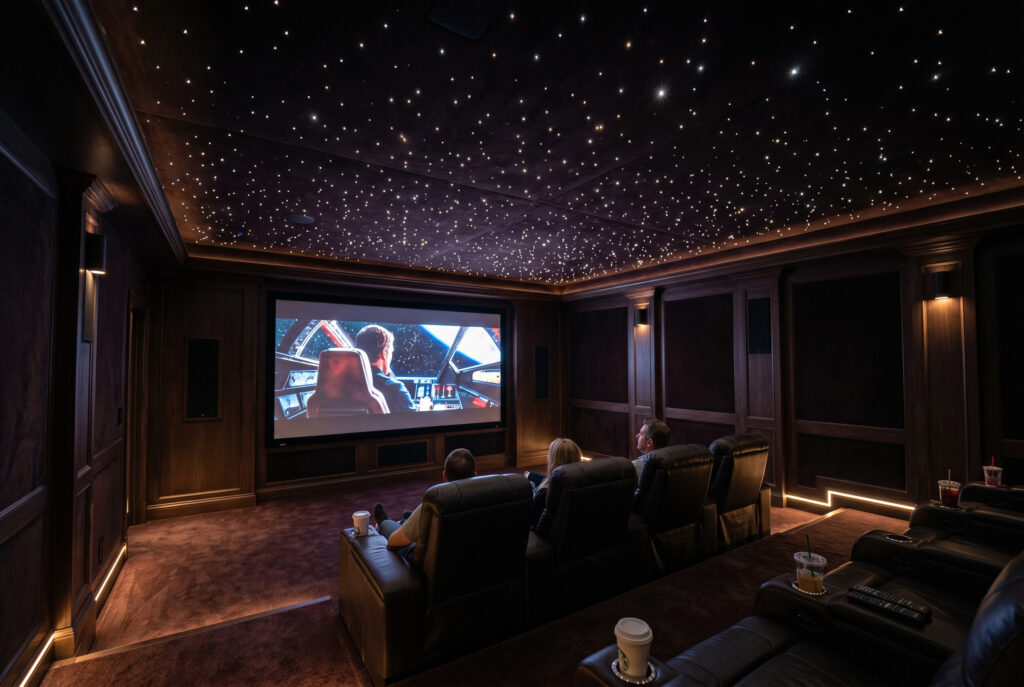
Classic Night Sky
This is the most popular option. Small white stars are randomly scattered across a dark ceiling, mimicking a realistic night sky.
A classic night sky works well in almost any home theater because it feels timeless and calming. It also pairs beautifully with black, charcoal, navy, and deep blue theater paint colors.
For help choosing the right ceiling and wall colors, see Home Theater Paint Colors: Best Colors for a Cinematic Experience.
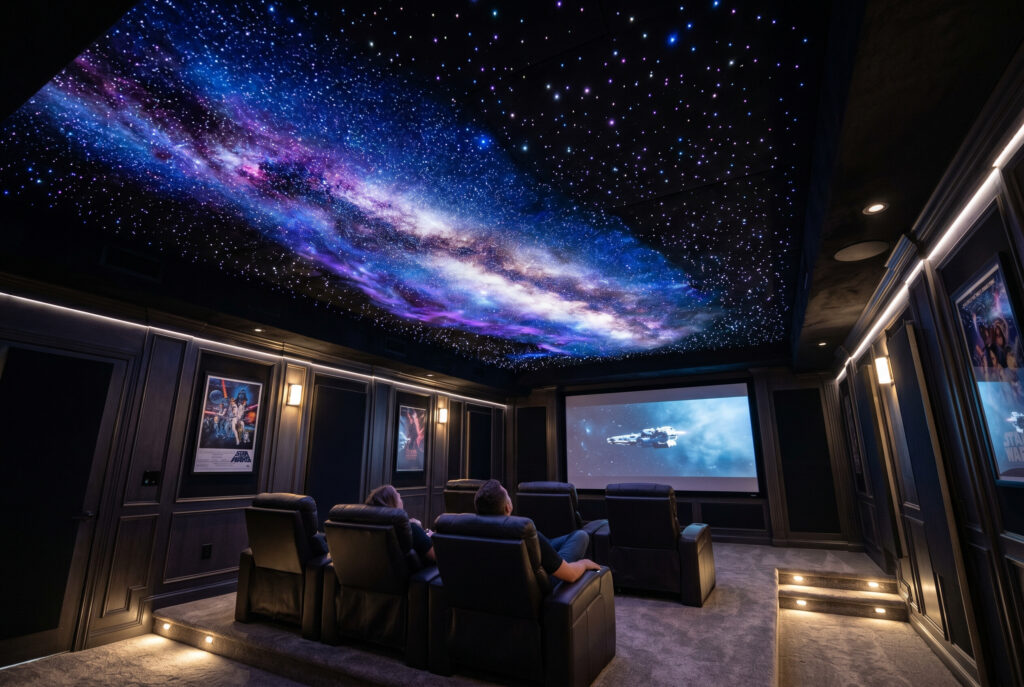
Galaxy Ceiling
A galaxy-style ceiling features multiple colors, including blue, purple, and soft white, for a dramatic cosmic effect.
This style is more eye-catching and works especially well in themed theaters, sci-fi-inspired rooms, or spaces where you want the ceiling to become a major focal point.
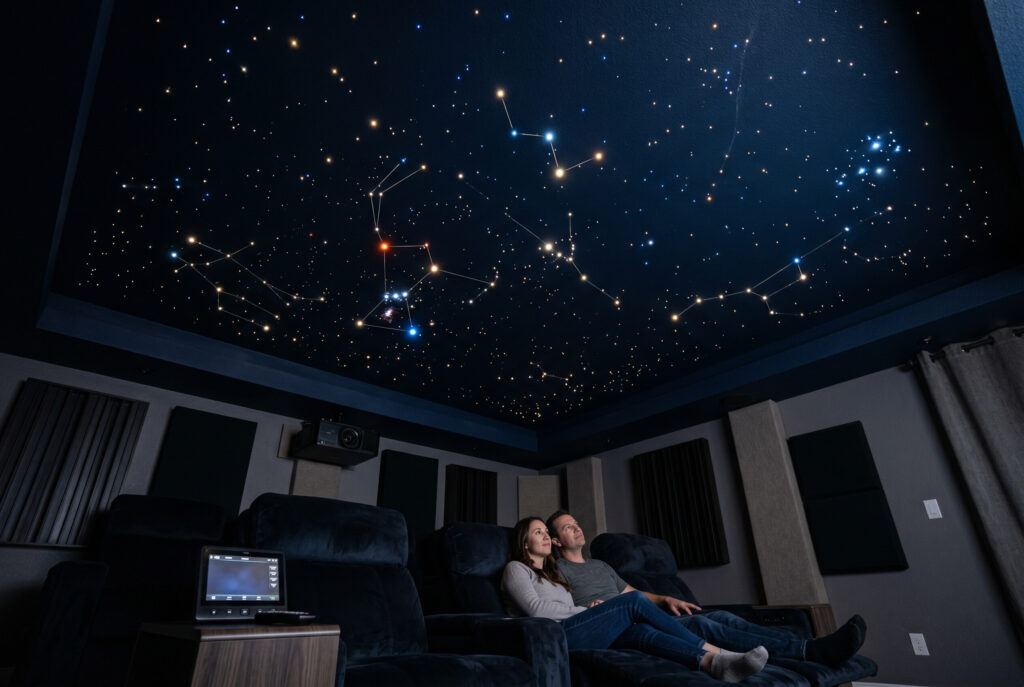
Constellation Layout
Some homeowners recreate actual constellations using accurate star positions for a more personalized touch.
This can be a beautiful option if you want the ceiling to feel meaningful. You could recreate a favorite constellation, a night sky from a special date, or a subtle pattern that only your family recognizes.
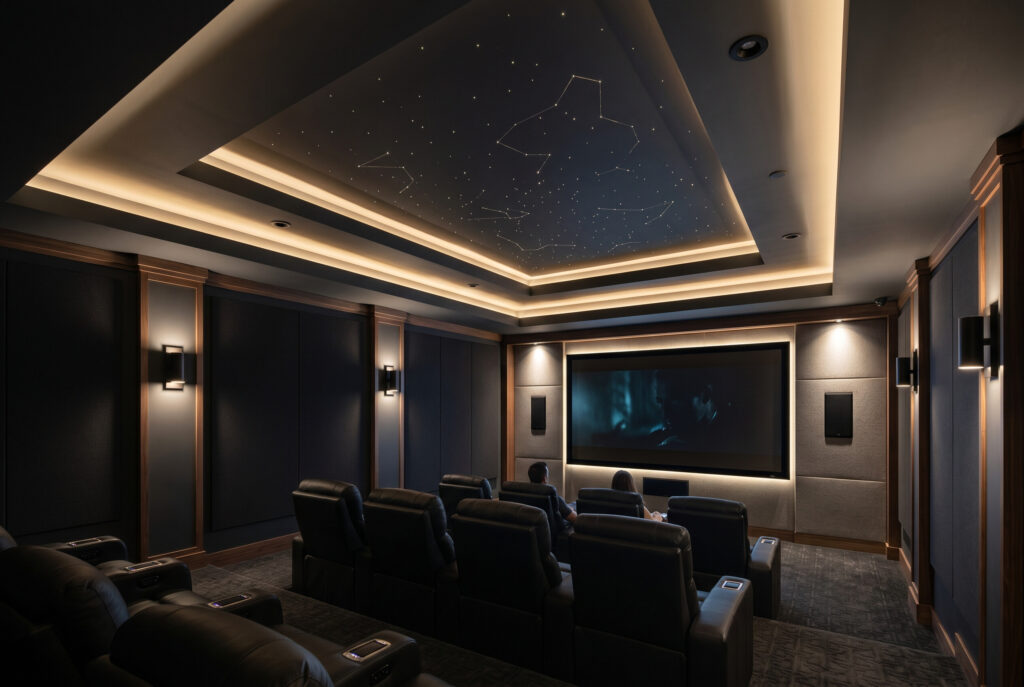
Modern Luxury Ceiling
This style uses fewer stars, a cleaner layout, and recessed LED perimeter lighting for a sleek, upscale design.
A modern luxury ceiling is perfect if you want the star effect without making the room feel overly themed. It works especially well with tray ceilings, dark paint, wall sconces, acoustic panels, and clean-lined seating.
For more premium design inspiration, visit Creating a Luxury Home Theater Experience.
Best Materials for a Star Ceiling
The materials you choose will greatly affect both the final appearance and the installation process.
Fiber Optic Lighting Kit
A high-quality fiber-optic kit is the heart of the project. Most kits include:
- Fiber-optic strands
- Light engine or illuminator
- Remote control
- Twinkle wheel
- Power supply
Look for kits with varying strand sizes. Different star sizes create a more realistic sky effect because real stars do not all appear the same size or brightness.
Acoustic Panels
Many theater owners install star ceilings into acoustic panels wrapped in black fabric. This serves two purposes:
- Improves sound quality
- Creates the perfect dark backdrop for the stars
If you are also thinking about room sound, read my guide to Acoustic Panels vs. Soundproofing for Home Theaters. You may also want to read Soundproofing Techniques for a Home Theater if you are planning ceiling work and want to think about sound control at the same time.
Ceiling Fabric
Black velvet and suede-like fabrics are extremely popular because they absorb light and reduce reflections from the projector screen.
A dark ceiling also makes the stars appear brighter and more dramatic. If your ceiling fabric reflects too much light, the star effect may feel less realistic.

LED Accent Lighting
LED strip lighting around ceiling trays or crown molding complements the star effect beautifully.
The key is balance. The LED glow should frame the ceiling without overpowering the stars. Soft blue, warm white, or dimmable accent lighting usually works best for a theater setting.
Helpful Amazon searches for DIY star ceiling materials
If you are building a DIY star ceiling, the kit is only one part of the project. Dark ceiling fabric, acoustic panels, and soft accent lighting can help the finished ceiling look more polished and cinematic.
- Black Acoustic Panels — best for creating a dark backdrop while helping improve room sound
- Black Velvet Fabric — best for reducing reflections and making star lights stand out
- LED Strip Lights for Ceiling Cove — best for adding soft perimeter lighting around a star ceiling
Planning Your Layout
Proper planning makes the difference between a professional-looking ceiling and one that feels random or cluttered.
Determine Ceiling Coverage
You can create:
- A full-room star ceiling
- A central ceiling panel
- A recessed tray ceiling effect
- Multiple floating ceiling sections
For smaller rooms, even a single star panel can make a huge impact. You do not need to cover the entire ceiling to create a dramatic effect.
Vary The Star Sizes
Real stars are not all identical. Mixing fiber sizes creates a more natural appearance.
Use a combination of small, medium, and slightly brighter points of light so the finished ceiling has depth instead of looking like a grid of identical dots.
Avoid Perfect Patterns
Random placement looks far more realistic than evenly spaced rows.
If every star is placed at the same distance, the ceiling can look artificial. A natural night sky has variation, open areas, and small clusters.
Add Depth
Cluster certain areas slightly heavier than others to mimic real sections of the night sky.
You can also leave some areas more open so the design does not feel too busy.
DIY vs Professional Installation
One of the biggest decisions is whether to tackle the project yourself or hire a professional installer.
DIY Installation
A DIY star ceiling can save money and be very rewarding for homeowners who are comfortable with basic tools and have patience.
Pros:
- Lower cost
- Fully customizable
- Great weekend project
- More control over the design
Cons:
- Time consuming
- Requires careful planning
- Fiber management can be tedious
- Mistakes are harder to fix once panels are mounted
A DIY project works best if you are creating removable ceiling panels or a smaller central star panel rather than trying to retrofit an entire finished ceiling.
Professional Installation
Professional installers can create incredibly polished results with advanced features and custom programming.
Pros:
- Cleaner finish
- Faster installation
- Advanced lighting effects
- Less stress
- Better integration with lighting scenes or smart controls
Cons:
- Higher cost
- Less hands-on customization
- May require scheduling around other theater work
For many homeowners, a hybrid approach works well: install the panels yourself while hiring an electrician for wiring or lighting integration.
Helpful Amazon searches for DIY star ceiling tools
A DIY star ceiling takes patience, but a few basic tools can make the process easier. Always follow the instructions that come with your specific fiber-optic kit, especially when drilling, trimming, and securing fibers.
- Small Drill Bit Set — best for creating tiny holes for fiber-optic strands
- Wire Clips for Cable Management — best for keeping fiber bundles and wires neater behind panels
- Flush Cutters — best for trimming fiber strands cleanly after installation
If you are still in the planning stage, it may help to review Home Theater Mistakes to Avoid before choosing materials or cutting into ceiling panels.
Step-By-Step Overview of Installation
This is a general overview, but always follow the instructions that come with your specific fiber-optic kit.
Step 1: Build Or Install Ceiling Panels
Many theater owners create removable acoustic panels using MDF frames, insulation, and black fabric.
Removable panels can make installation and future maintenance easier because you can work on the panels before they go overhead.
Step 2: Mark Star Locations
Randomly mark where each fiber-optic strand will go.
Avoid perfect spacing. Vary the density so the ceiling looks more natural.
Step 3: Drill Tiny Holes
Small holes allow the fibers to pass through the panel surface.
Use the correct drill bit size for your fiber strands. Holes that are too large may make the fibers loose, while holes that are too small can damage the strands.
Step 4: Insert Fiber Optic Strands
Feed strands through each hole and secure them from the back.
This is often the most time-consuming part of the project, so patience matters.
Step 5: Connect To Illuminator
Bundle the fibers into the light engine according to the manufacturer’s instructions.
Keep the light engine accessible. You may need to adjust settings, replace components, or perform maintenance later.
Step 6: Trim Fibers
Once installed, trim the exposed fibers carefully to create clean star points.
Do not rush this step. Clean trimming helps the stars look polished instead of uneven.
Step 7: Mount Panels
Install the completed panels onto the ceiling.
Make sure the panels are secure and that the fiber strands are not pinched, bent too sharply, or pulled too tight.
Step 8: Add Accent Lighting
Finish the room with LED strips, sconces, or dimmable theater lighting.
For more whole-room lighting ideas, read How to Layer Lighting in a Home Theater.
Best Colors for Theater Star Ceilings
Most home theaters use dark ceilings because they improve screen contrast and reduce reflections.
Popular choices include:
- Matte black
- Midnight blue
- Charcoal gray
- Deep navy
The darker the ceiling, the brighter and more dramatic the stars appear.
A deep ceiling color can also make the room feel more immersive when the lights dim. If you are painting the entire theater, it is worth considering the ceiling, walls, trim, and lighting together rather than choosing each element separately.

Pairing a Star Ceiling with Other Theater Features
A star ceiling works best when combined with layered lighting. Soft cove lighting, dimmable wall sconces, and subtle step lighting help create atmosphere without competing with the stars.
LED Cove Lighting
Soft perimeter lighting adds dimension without overpowering the stars.
This works especially well in tray ceilings, soffits, or crown molding, where the LED strips can stay hidden.
Acoustic Wall Panels
Fabric panels create a cohesive cinema appearance while improving sound quality.
They can also help the star ceiling feel like part of a complete theater design rather than a standalone feature. For ideas that combine style and function, see Home Theater Wall Decor Ideas.
Reclining Theater Seating
The best star ceilings are meant to be enjoyed from comfortable recliners while watching movies.
If you are choosing seating or adding comfort features, read Home Theater Seating Accessories You Didn’t Know You Needed.
Decorative Wall Sconces
Warm sconces add elegant ambient lighting that complements the ceiling perfectly.
Sconces can make the room feel finished even when the star ceiling is off, and they help create that soft pre-movie glow before the lights dim. For wall lighting ideas that pair well with a star ceiling, read Top Decorative Lighting Accessories for Home Theaters. If you want the room to feel more luxurious overall, read How to Create a VIP Cinema Experience at Home.
Helpful Amazon searches for star ceiling room upgrades
A star ceiling looks best when the rest of the room supports the same soft, cinematic feeling. Cove lighting, wall sconces, acoustic panels, and comfortable seating can help the ceiling feel like part of a complete theater design.
- Dimmable Wall Sconces — best for adding soft ambient lighting around the room
- LED Cove Lighting — best for framing a tray ceiling or star ceiling panel
- Home Theater Recliner Accessories — best for making the room more comfortable while enjoying the ceiling effect
Cable Management and Access
Star ceilings are beautiful, but they also involve hidden wiring, fiber bundles, light engines, and sometimes smart controls.
Plan cable paths before installation to keep the finished room looking clean. If you are hiding wires behind panels, crown molding, soffits, or ceiling cavities, make sure you still have access to the parts that may need adjustment later.
For a more polished theater setup, read Hidden Cable Management Ideas for a Clean Home Theater Setup.
Helpful Amazon searches for ceiling cable management
Cable management matters with star ceilings because the light engine, fiber bundles, LED strips, and smart controls may all need hidden but accessible wiring. Planning access points before installation can make future adjustments much easier.
- Cable Raceways — best for hiding wires along walls, ceilings, or trim
- Cable Management Sleeves — best for grouping wires behind equipment or panels
- Label Maker for Cables — best for labeling fiber bundles, power cords, and lighting controls
Common Mistakes to Avoid
Using Too Many Stars
Overcrowding can make the ceiling look artificial. Less is often more.
A realistic night sky needs breathing room. Use clusters, variation, and open space instead of filling every inch.
Ignoring Acoustics
A beautiful ceiling should also support good sound performance.
If you are installing ceiling panels, consider whether they can also help with acoustics. This is especially important in dedicated theaters with surround sound or Dolby Atmos-style layouts.
Choosing Bright White LEDs
Soft white stars usually appear more realistic and cinematic than harsh, bright white points.
If your system offers color control, keep the main movie-night setting subtle. Brighter colors can be fun for parties, but they may feel distracting during films.
Poor Fiber Management
Messy wiring behind panels can make future maintenance difficult.
Labeling bundles, keeping pathways neat, and leaving access to the illuminator can save frustration later.
Forgetting Access Panels
Always maintain access to the light engine for future maintenance.
Do not permanently bury the illuminator behind finished drywall or sealed panels.
Smart Home Integration Ideas
Modern star ceilings can integrate seamlessly with smart home systems.
You can control:
- Brightness
- Color changes
- Twinkle speed
- Movie mode presets
- Voice activation
Some homeowners even synchronize lighting scenes with movie intros or music playback.
A simple “movie mode” scene could dim the sconces, lower the LED cove lighting, turn on the stars, close blackout shades, and start the projector. This kind of automation makes the room feel more like a real cinema.

Budget-Friendly Star Ceiling Alternatives
If you love the idea of a star ceiling but are not ready for a full DIY or professional installation, there are a few simpler ways to create a similar mood.
A star projector, galaxy light, or subtle ceiling accent light will not look as custom as a fiber-optic ceiling, but it can still add a relaxing night-sky effect for family movie nights, kids’ rooms, or temporary theater setups.
These options are especially useful for renters, multipurpose rooms, or anyone who wants to test the look before committing to a permanent ceiling project.
Helpful Amazon pick for a budget star ceiling alternative
For a simpler setup, a galaxy projector can create a fun starry ceiling effect without drilling, ceiling panels, or fiber-optic installation. It will not look as custom as a true fiber-optic star ceiling, but it can still add a relaxing night-sky mood for family movie nights, kids’ rooms, renters, or temporary theater setups.
Rossetta Dual Lens Galaxy Projector is best for creating a temporary starry ceiling effect without a permanent installation
For more theme inspiration, read 10 Movie Theater Themes to Inspire Your Dream Home Cinema.
Are Star Ceilings Worth It?
For many home theater enthusiasts, absolutely.
A star ceiling does more than improve lighting. It creates an emotional experience. The moment guests enter the room and look up, the space instantly feels special. It transforms a standard media room into a cinematic retreat.
Even if your theater is modest in size, a star ceiling can dramatically enhance the room’s visual impact and overall atmosphere.
It is especially worth considering if you want your theater to feel custom, cozy, and memorable without relying only on a larger screen or more expensive equipment.
More Home Theater Ideas
- How to Layer Lighting in a Home Theater
- Top Decorative Lighting Accessories for Home Theaters
- Home Theater Paint Colors: Best Colors for a Cinematic Experience
- Home Theater Wall Decor Ideas
- Home Theater Seating Accessories You Didn’t Know You Needed
- Hidden Cable Management Ideas for a Clean Home Theater Setup
- Acoustic Panels vs. Soundproofing for Home Theaters
- Soundproofing Techniques for a Home Theater
- Home Theater Mistakes to Avoid
- Creating a Luxury Home Theater Experience
FAQ
How much does a fiber-optic star ceiling cost?
The cost depends on the ceiling size, number of fiber strands, panel materials, lighting effects, and whether you install it yourself. A small DIY star panel can be relatively affordable, while a professionally installed full-room ceiling with custom controls will cost considerably more.
Can you install a star ceiling in an existing home theater?
Yes. Many homeowners add removable fabric-covered or acoustic panels beneath the existing ceiling. This approach avoids cutting directly into finished drywall and makes the fibers and light engine easier to access later.
Do star ceilings interfere with a projector?
A properly designed star ceiling should not interfere with the projected image. Keep the stars subtle, use dimming controls, and avoid excessively bright fibers near the screen.
How many fiber-optic stars do I need?
The right number depends on the size of the ceiling and the effect you want. A realistic design usually combines open areas, small clusters, and several fiber sizes rather than filling every inch with evenly spaced lights.
Can a star ceiling improve home theater acoustics?
The fiber-optic lights themselves do not improve sound. However, installing the fibers in fabric-wrapped acoustic panels can help manage reflections while creating the star effect.
Is a galaxy projector as good as a fiber-optic ceiling?
A galaxy projector is easier and less expensive, but it does not look as permanent or realistic as a fiber-optic ceiling. It works best for renters, multipurpose rooms, children’s movie spaces, or anyone testing the look before committing to installation.
Final Thoughts
Creating a star ceiling in your theater room is one of the most rewarding upgrades you can make. It blends luxury, ambiance, and immersive design into a feature that truly elevates the movie-watching experience.
Whether you choose a professionally installed fiber-optic ceiling or a simple galaxy projector, adding a star ceiling can transform an ordinary theater room into a truly immersive space. With thoughtful planning, the right materials, and complementary lighting, you’ll create a home theater that feels just as memorable as the movies you watch in it.
The beauty of a star ceiling is that it feels timeless. Long after the latest technology changes or seating styles evolve, that glowing night sky overhead still evokes the same feeling whenever the lights dim and the movie begins.
Question:
Would you add a star ceiling to your theater room, or do you prefer a more traditional ceiling design?

Lisa is the creator of Home Cinema Living. Together with her husband, a longtime home theater professional, she has spent years designing and enjoying home theater spaces that bring family and friends together for memorable movie nights.
This post convinced me to finally stop procrastinating on the star ceiling I’ve been planning for almost two years. I kept telling myself it was too complicated, but the step-by-step breakdown makes the whole process feel genuinely approachable.
The tip about varying fiber sizes is something I hadn’t considered at all. I assumed all kits used uniform strands, and that’s probably exactly why some DIY ceilings look flat and artificial compared to others. That single detail makes a huge difference in realism.
I also love the suggestion about avoiding perfect patterns. It seems obvious in hindsight, but most beginners would instinctively space stars evenly, which immediately kills the natural look.
The hybrid approach, building panels yourself and hiring an electrician for integration, is exactly the middle ground I was looking for budget-wise.
To answer your question: absolutely adding a star ceiling. A traditional flat ceiling in a theater room feels like a missed opportunity now that I’ve seen what’s possible.
This is such a great perspective, and I’m glad the post helped make the project feel more approachable. A star ceiling can definitely seem overwhelming at first, but once it’s broken into steps, it starts feeling much more manageable.
You also picked up on some of the details that make a huge difference. Varying fiber sizes and avoiding perfectly even spacing are small things, but they really help move the look from “DIY project” to something that feels much more natural and realistic.
I also love your approach of doing the panels yourself and bringing in help for the electrical side if needed. That hybrid method can save money while still keeping the project comfortable and manageable.
And I completely agree with you on the ceiling itself. Once you see a well-done star ceiling in a theater room, a plain flat ceiling really does feel like a missed opportunity!