
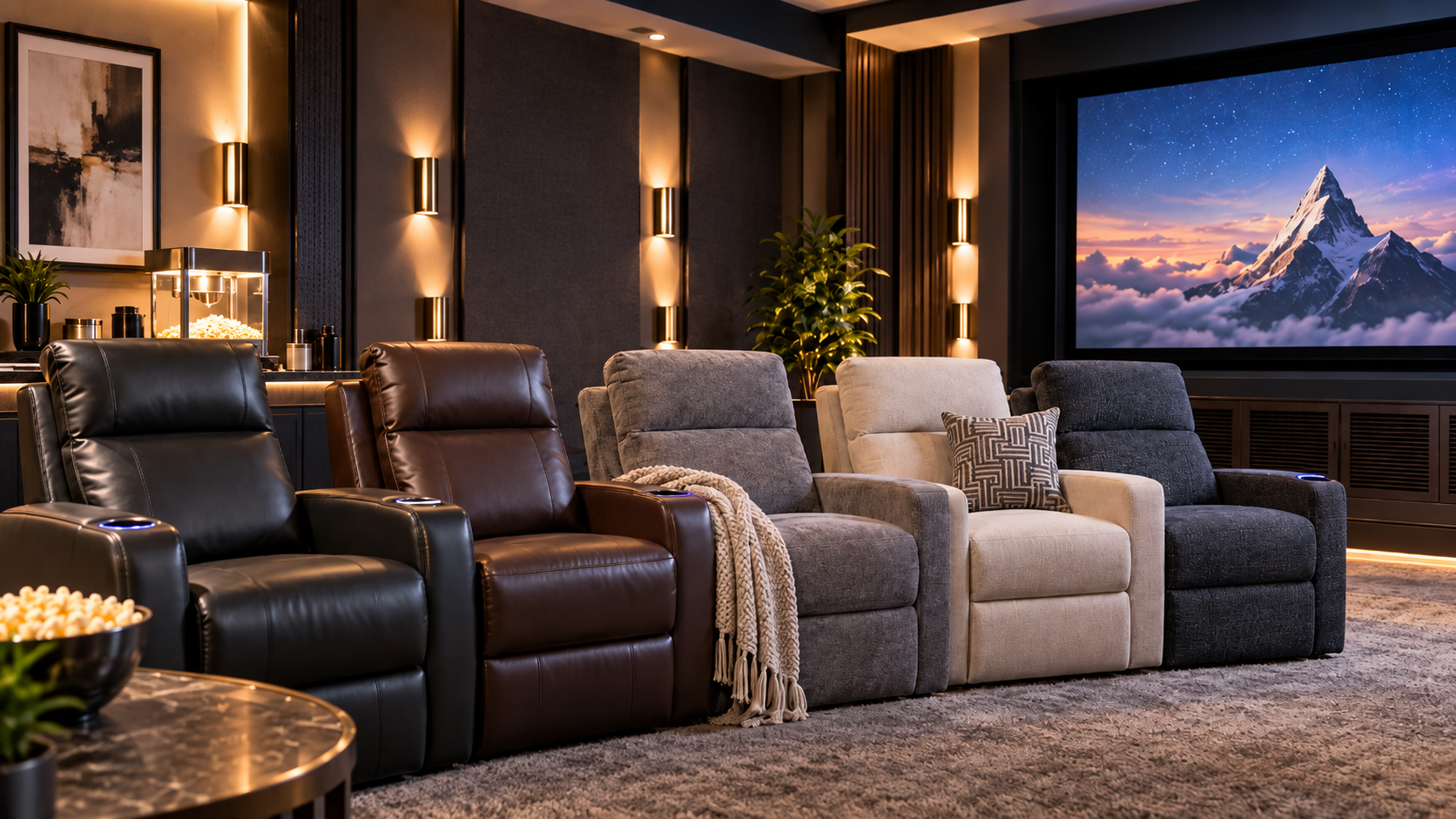
Best Material for Home Theater Chairs: Leather, Fabric, Microfiber & More
Choosing the best material for home theater chairs is about more than appearance. Your seating needs to be comfortable for a two-hour movie, withstand occasional spills or popcorn crumbs, and fit the overall style of your theater or media room.
The most common choices are genuine leather, faux leather, microfiber, traditional upholstery fabric, and performance fabric. Each has its own advantages in terms of comfort, durability, maintenance, price, and everyday family use.
If you’re planning a dedicated theater, upgrading an existing media room, or replacing seats that have seen better days, this guide will help you compare the most popular home theater chair materials and decide which one makes the most sense for your space.
Affiliate Disclosure: This post contains affiliate links. As an Amazon Associate, Home Cinema Living earns from qualifying purchases at no additional cost to you.
Quick Guide: Which Home Theater Chair Material Is Best?
| Material | Best For | Main Advantage | Main Drawback |
|---|---|---|---|
| Genuine Leather | Luxury theaters and long-term use | Durable, polished, easy to wipe clean | Higher price |
| Faux Leather | Budget-conscious theaters | Affordable and easy to maintain | May peel or crack with age |
| Microfiber | Cozy movie rooms | Soft, warm, comfortable | Can attract lint and pet hair |
| Standard Fabric | Style and color variety | Breathable with many design choices | More vulnerable to stains |
| Performance Fabric | Families, pets, frequent use | Stain-resistant and practical | Usually costs more |
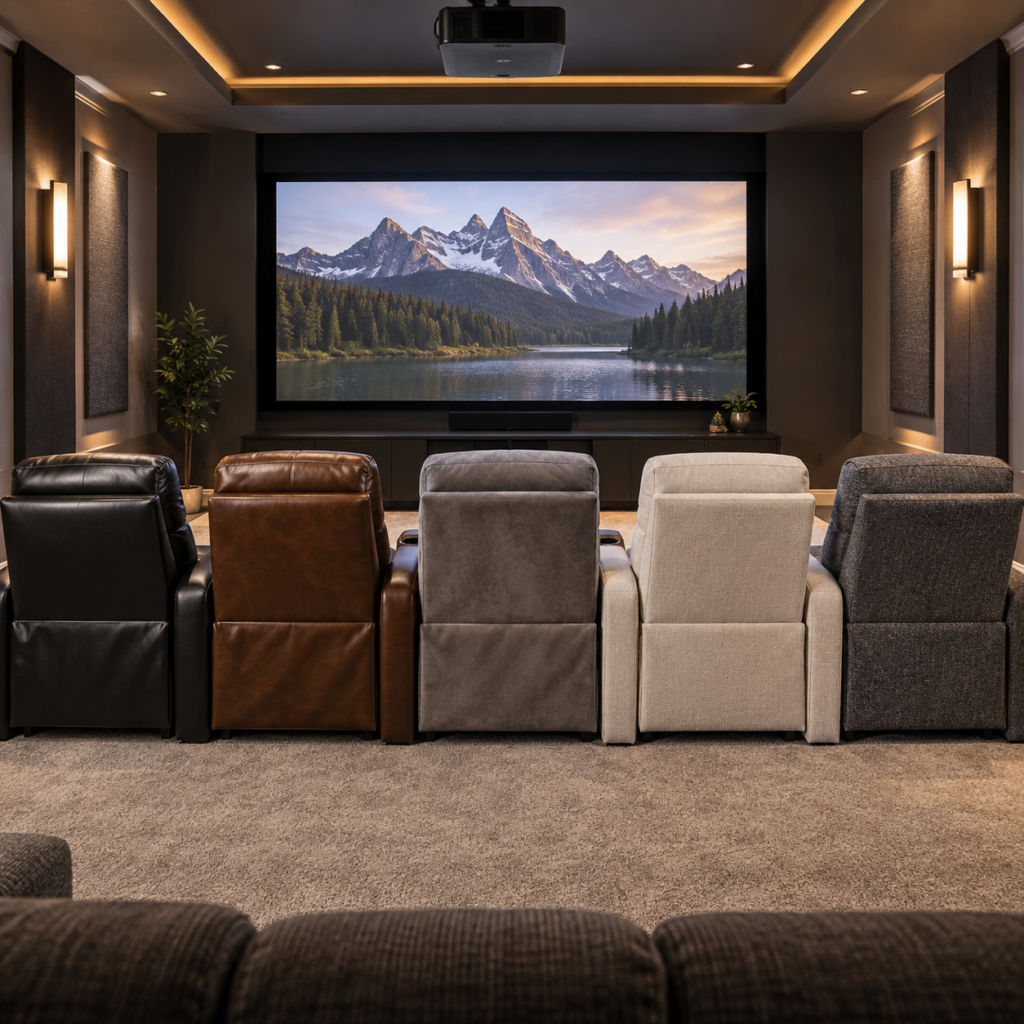
There isn’t one material that works best for every home. Your room temperature, eating habits, pets, children, budget, and design style all matter.
If you’re still deciding what kind of seating you want overall, my guide to what to look for in a comfortable home theater recliner is a helpful place to start.
Genuine Leather: A Classic Choice for Home Theater Seating
Genuine leather continues to be one of the most popular choices for higher-end home theater seating, and it’s easy to understand why.
Leather gives a theater an upscale, finished look without needing much additional decoration. It works especially well in dedicated home cinemas, luxury theaters, and traditional movie rooms.
One of leather’s biggest advantages is durability. Quality leather can hold up very well with regular use when it is cared for properly. Instead of simply wearing out, good leather often becomes softer and develops more character over time.
It’s also convenient during movie night. Crumbs can usually be brushed away easily, and many small spills can be wiped up before they become a major problem.
Advantages of Genuine Leather
- Polished, upscale appearance
- Durable when properly maintained
- Relatively easy to wipe clean
- Becomes softer with use
- Works beautifully with traditional and modern theater designs
Things to Consider
Leather typically costs more than synthetic upholstery, particularly when you move into top-grain and premium seating.
It can also feel cool when you first sit down in a cold basement theater and warm in rooms that run hot. Occasional cleaning and conditioning may be recommended by the manufacturer to help preserve the finish.
If you’re creating a more luxurious home cinema and expect to keep your seating for years, genuine leather can be worth the additional investment.
Helpful Amazon Find
Seatcraft Anthem Home Theater Seating – A leather theater-seating option worth comparing if you want the classic look of individual cinema recliners with built-in conveniences.
Product availability and upholstery options can change, so always confirm the current material specifications before ordering.
Faux Leather: The Leather Look for Less
Faux leather is one of the easiest ways to create a traditional home theater look without paying genuine-leather prices.
You may see it described as PU leather, polyurethane upholstery, leatherette, synthetic leather, or vinyl, depending on the manufacturer.
Visually, faux leather can work very well in a dedicated theater. Black and dark brown remain popular, but you can also find red, gray, white, and other finishes if you want the seating to become part of the room’s design.
Why Faux Leather Works Well
- Usually more affordable than genuine leather
- A smooth surface is easy to wipe clean
- Available in many colors
- Gives a room a traditional cinema look
- Practical if you need several matching seats
For families who regularly bring drinks and snacks into the theater, easy cleanup is a major advantage.
The trade-off is longevity. Lower-quality faux leather can eventually crack, flake, or peel, particularly on armrests and other high-contact areas.
That doesn’t make faux leather a poor choice. It simply means construction quality and upholstery quality matter. When comparing chairs, look beyond the photos and read recent owner reviews for comments about how the material holds up over time.
A faux-leather theater can also look fantastic without feeling overly formal. Pair dark seating with warm wall sconces, subtle accent lighting, and a comfortable throw blanket to soften the room.
For more ways to make the seating area feel finished, see my guide to home theater seating accessories you didn’t know you needed.
Helpful Amazon Find
Homall Recliner Chair – A compact faux-leather recliner that may work well in smaller movie rooms or casual media spaces.
Microfiber: Soft, Warm, and Relaxed
If your ideal movie room is cozy rather than formal, microfiber deserves serious consideration.
Microfiber has a soft texture that feels comfortable immediately. Unlike leather-style seating, it rarely has that cool first-touch feeling in a basement or air-conditioned room.
This makes it especially appealing for family movie rooms, bonus rooms, dens, and theaters designed around relaxed lounging.
Advantages of Microfiber
- Soft and comfortable
- Warm to the touch
- Good for casual media rooms
- Typically less formal than leather
- Tight fibers may help slow down some spills when cleaned quickly
Microfiber also pairs naturally with the cozy side of home theater design. Blankets, pillows, soft rugs, warm lighting, and upholstered seating can make a movie room feel less like a commercial cinema and more like the best seat in the house.
If that’s the atmosphere you’re after, take a look at my cozy movie room ideas for every style.
What About Pets?
Microfiber can work in homes with pets, but it isn’t maintenance-free. Hair and lint may cling to the surface depending on the fabric.
A handheld vacuum, upholstery attachment, or lint-removal tool can make regular maintenance much easier.
As with any upholstered chair, check the manufacturer’s cleaning code before using cleaners or stain treatments.
Helpful Amazon Find
FDW Microfiber Recliner Chair – An affordable option to consider if you want a softer chair for a casual movie room rather than a formal row of cinema seating.
Standard Fabric: The Most Design Flexibility
Traditional upholstered fabric offers more freedom in color, texture, and style than almost any other seating material.
You can find subtle gray weaves, textured neutrals, deep charcoal upholstery, soft chenille-style fabrics, contemporary knits, and even patterned seating.
That flexibility can be especially useful in a media room that needs to coordinate with the rest of your home.
Why Choose Fabric?
- Huge range of colors and textures
- Comfortable and breathable
- Works in theaters and multipurpose rooms
- Can feel warmer and softer than leather
- Often available at several price points
Fabric is also a good way to keep a room from looking too much like a commercial movie theater.
A medium-gray or charcoal-upholstered recliner, for example, can blend beautifully into a modern media room while still providing the comfort of dedicated theater seating.
The downside is cleaning.
Popcorn butter, chocolate, soda, pizza sauce, and other movie-night favorites can be harder to remove from fabric than from smooth leather. Dust and crumbs can also settle into seams and fibers.
Regular vacuuming is important, especially around seat cushions and cup holders.
If food and drinks are a regular part of your theater, planning the room carefully can help. A small snack station outside the main seating area can reduce spills while keeping treats nearby. My DIY snack station ideas can give you some practical inspiration.

Performance Fabric: Built for Everyday Life
Performance fabric may be the most practical option for households that want the softness of upholstery without constantly worrying about spills.
These fabrics are designed to make everyday furniture easier to live with. Depending on the specific textile, features may include stain resistance, moisture resistance, improved durability, or easier cleaning.
Brands and fabric technologies vary, so it’s important to read the manufacturer’s care instructions instead of assuming every performance fabric works the same way.
Why Performance Fabric Makes Sense
- Easier to live with in busy households
- Often more stain-resistant than ordinary upholstery
- Comfortable and breathable
- Good choice for children and pets
- Works well in multipurpose media rooms
- Available in more attractive textures than many people expect
For a home theater that doubles as a family hangout space, performance fabric may offer the best balance between comfort and practicality.
You can still get the warm, upholstered look of a living room without feeling nervous every time someone walks in carrying a bowl of popcorn and a drink.
The main downside is price. Performance upholstery often costs more than standard fabric, especially as an upgrade on premium seating.
However, paying slightly more upfront may make sense if the material fits the way your family actually uses the room.
Genuine Leather vs. Faux Leather
If you already know you want the classic leather look, your biggest decision may be whether genuine or faux leather is the better fit.
Choose genuine leather if:
- You plan to keep the seating for many years.
- You want a more luxurious finish.
- You appreciate how natural leather softens and ages.
- You don’t mind occasional care and conditioning.
- Your budget allows for a higher initial cost.
Choose faux leather if:
- You need several theater seats on a tighter budget.
- Easy wipe-down cleaning is important.
- You want a wide choice of colors.
- You’re furnishing a secondary media room.
- You’re comfortable replacing seating sooner if the surface eventually shows wear.
Neither option is automatically better. The right choice depends on how heavily the seats will be used and what you want to spend.
Fabric vs. Leather for a Home Theater
Fabric and leather create very different experiences.
Leather tends to give a theater a more polished, classic appearance. Fabric makes the room feel softer and more residential.
Your room temperature can also influence the decision. Fabric and microfiber often feel comfortable immediately in cooler basement theaters, while leather may feel cold at first.
On the other hand, leather-style upholstery has a major advantage when food is involved because crumbs and spills are generally easier to see and remove.
If your theater is used mostly by adults for movies and entertainment, leather may be a beautiful fit. If it’s a relaxed family room used every day, fabric or performance fabric may feel more natural.
Best Chair Material for Kids and Families
Family theaters need seating that can handle real life.
Drinks spill. Popcorn lands between cushions. Someone eventually drops chocolate.
For that reason, faux leather and performance fabric are two of the most practical choices.
Faux leather gives you a wipeable surface at an accessible price, while performance fabric offers a softer feel with better everyday stain resistance than many standard fabrics.
Removable blankets can also help protect seats while making the theater more inviting. For more cozy seating ideas, see my guide to the best blankets for cozy movie nights.
And if you’re still planning your rows, aisles, or recliner spacing, read my guide to choosing the perfect home theater seating layout. The best upholstery won’t compensate for seats that are too crowded to recline comfortably.
Best Home Theater Chair Material for Pets
Pets add another layer to the decision.
There is no completely pet-proof upholstery. Claws can damage some surfaces, while pet hair is more noticeable on certain fabrics.
Performance fabric is worth considering because many versions are designed for heavy everyday use. Tightly woven fabrics may also be preferable to loose weaves where claws can catch.
Microfiber can be comfortable and durable, although hair may cling to it.
Leather and faux leather are easier to wipe clean, but scratches may be more noticeable.
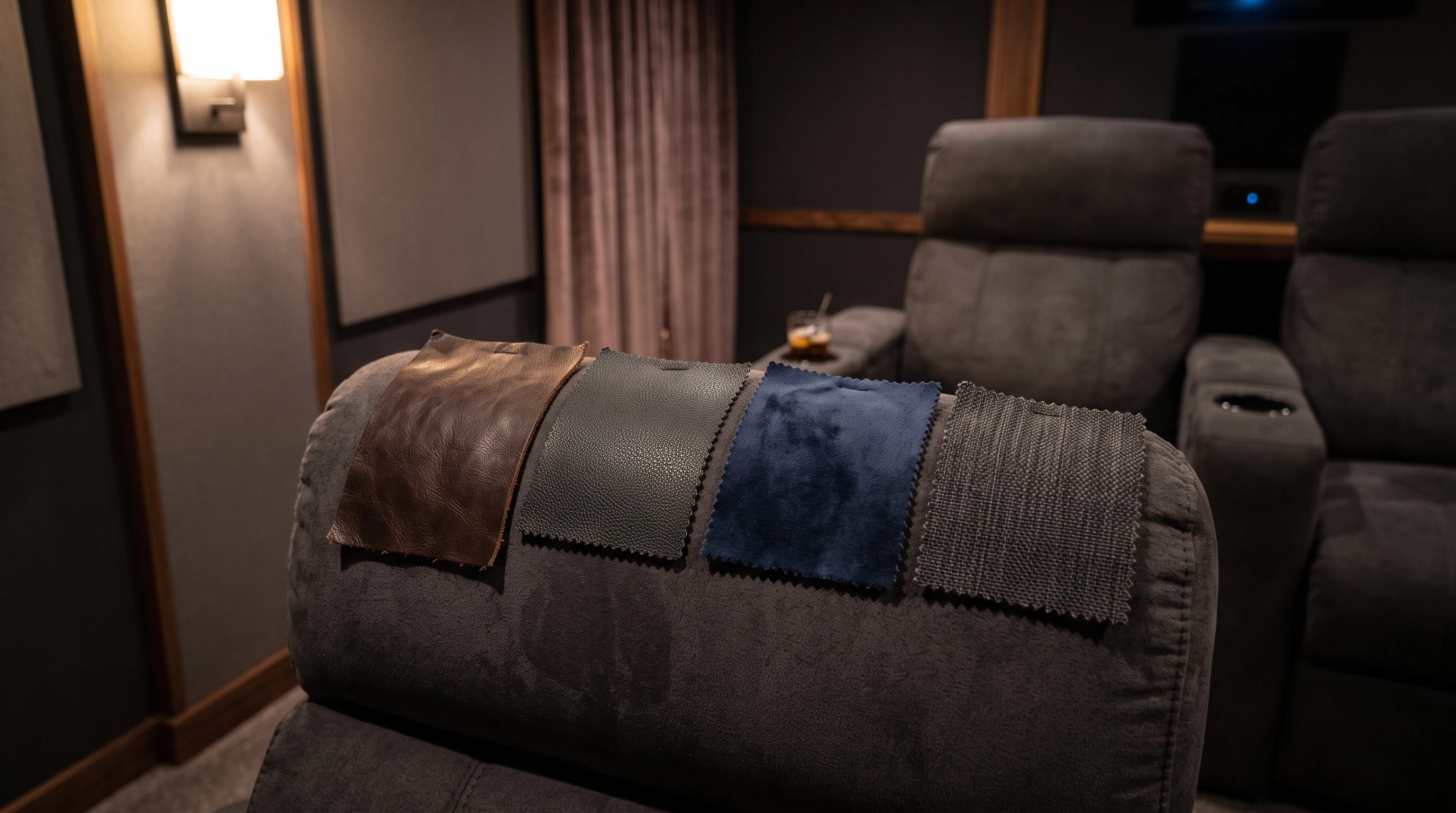
If pets regularly join you for movie night, it may be worth ordering upholstery swatches before buying your chairs. Seeing and touching the actual material can tell you much more than a product photo.
How to Choose the Right Material for Your Theater
Before buying, think about how your room is actually used rather than choosing upholstery based on appearance alone.
Ask Yourself:
Who uses the theater most?
An adults-only movie room has different needs from a busy family theater.
Do you eat in the room?
If movie night always includes snacks, easy cleaning becomes much more important.
Do pets use the furniture?
Look closely at weave, durability, cleaning instructions, and scratch resistance.
Is the theater warm or cool?
Basement theaters can make leather feel chilly at first, whereas fabric generally feels warmer right away.
Is this a formal theater or a casual media room?
Leather naturally creates a more traditional cinema look. Fabric blends more easily into multipurpose living spaces.
What is your budget?
Remember to multiply the seat price by the number of chairs you need. A small difference per chair becomes significant when you’re furnishing two rows.
How much maintenance are you willing to do?
The best material is one you’ll realistically care for.
Don’t Forget the Chair Construction
Upholstery is important, but it’s only one piece of the seating decision.
A beautiful material won’t make an uncomfortable chair comfortable.
Also look at:
- Seat width
- Cushion support
- Back height
- Head and neck support
- Reclining clearance
- Manual vs. power recline
- Armrest width
- Cup holder placement
- Storage compartments
- USB or charging ports
- Overall chair dimensions
Your seating also needs to fit the room correctly.
Leave enough clearance for recliners to open without hitting walls or the row behind them, and make sure walkways remain comfortable.
For help avoiding expensive layout problems, see my guide to home theater mistakes to avoid.
FAQs About Home Theater Chair Materials
What is the easiest home theater chair material to clean?
Smooth leather and faux leather surfaces are generally among the easiest to wipe clean. Performance fabrics can also be very practical, but cleaning instructions vary by manufacturer.
Is leather or fabric better for home theater seating?
Leather is a strong choice if you want a polished appearance and easy cleanup. Fabric may be better if you prefer softness, breathability, and a more relaxed look.
What is the best chair material for a basement theater?
Microfiber, standard fabric, and performance fabric are comfortable choices for cooler basement spaces because they don’t have the same cool initial feel as leather-style upholstery.
Is faux leather good for home theater seating?
Yes. Faux leather can be a practical choice when you want the traditional theater look at a lower price. Quality varies, so pay attention to recent reviews discussing peeling, cracking, and long-term wear.
Is microfiber good for movie-room seating?
Microfiber works particularly well in casual, cozy movie rooms. It feels soft and warm, but may require more vacuuming in homes with pets.
Is performance fabric worth the extra cost?
It can be, especially in homes with children, pets, frequent guests, or regular food and drinks in the theater. Just remember that stain resistance and cleaning requirements differ between fabric brands.
Final Thoughts
The best material for your home theater chairs is the one that fits the way you actually use your movie room.
For a polished, long-term theater, genuine leather remains a classic choice.
For a traditional cinema look on a tighter budget, faux leather offers excellent practicality.
If comfort and coziness come first, microfiber is an excellent choice.
If you want more freedom in color and texture, standard fabric offers the widest range of design options.
And for busy family theaters where spills, pets, and everyday use are part of life, performance fabric may offer the best balance of comfort and peace of mind.
Before ordering an entire row of seating, request upholstery samples whenever possible. Feel the material, look at it under your theater lighting, check the care instructions, and think about how it will hold up during your real movie nights.
The right seating material should make your theater easier to enjoy—not give you one more thing to worry about.
Related Articles
- What to Look for in a Comfortable Home Theater Recliner
- How to Choose the Perfect Home Theater Seating Layout
- Home Theater Seating Accessories You Didn’t Know You Needed
- Cozy Movie Room Ideas for Every Style
- Home Theater Mistakes to Avoid
- How to Organize a Home Theater

Lisa is the creator of Home Cinema Living. Together with her husband, a longtime home theater professional, she has spent years designing and enjoying home theater spaces that bring family and friends together for memorable movie nights.