

Affiliate Disclosure: This post contains affiliate links. If you make a purchase through one of these links, I may earn a small commission at no additional cost to you. As an Amazon Associate I earn from qualifying purchases.
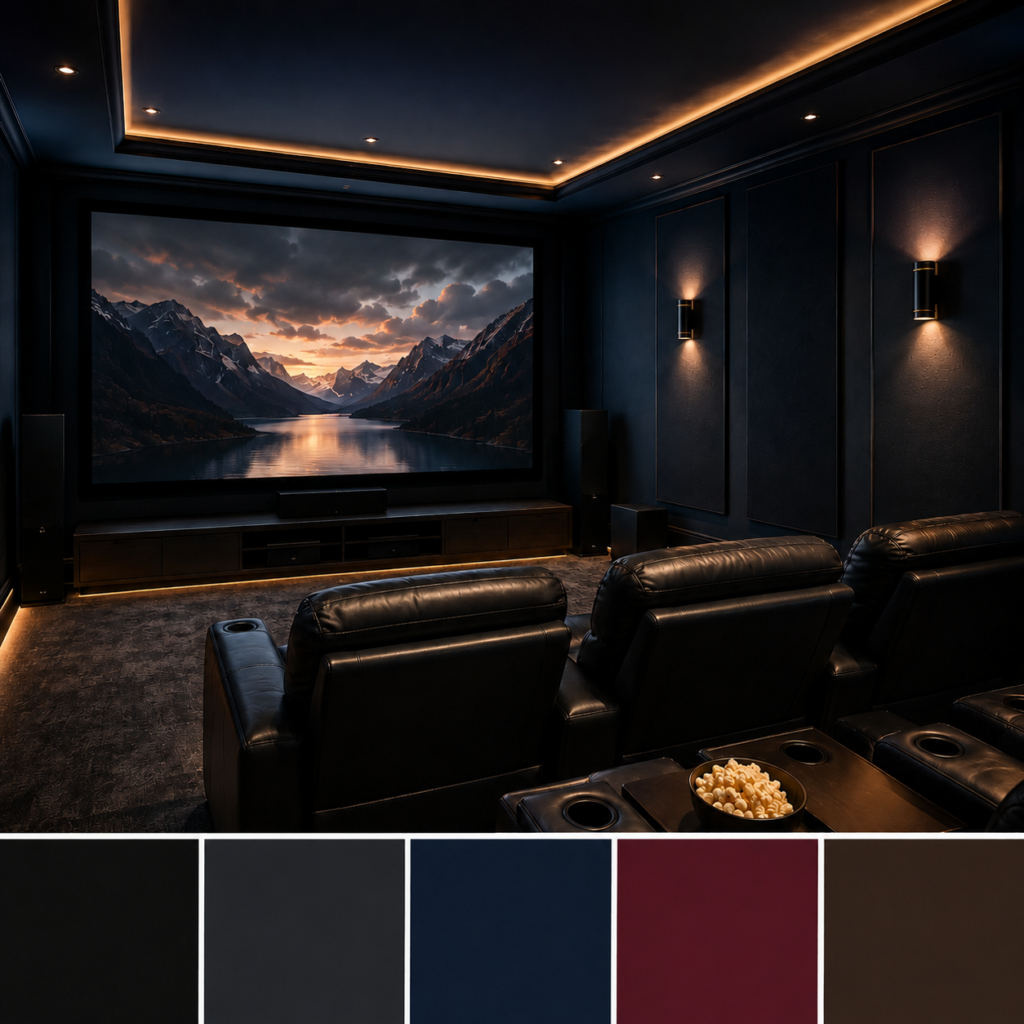
The best home theater paint colors are charcoal gray, matte black, deep navy, espresso brown, and dark burgundy. These darker shades help reduce distracting light reflections, keep attention on the screen, and create a more immersive movie-watching atmosphere.
For most dedicated theater rooms, charcoal gray is the most versatile choice. It absorbs light without making the entire room feel completely black. Matte black offers the strongest light control, while navy, burgundy, and espresso add warmth and personality.
In a shared family room or multipurpose media room, softer colors such as medium gray or greige can also work well when paired with blackout curtains and controlled lighting.
The finish matters just as much as the color. Flat or matte paint is generally the best choice because glossy surfaces can reflect light from the screen.
Why Paint Color Matters in a Home Theater
Paint color affects both the appearance of a home theater and the way light moves through the room.
Light-colored walls and glossy finishes can reflect light from the screen back into the room. These reflections may make dark scenes look washed out and create distracting glare around the viewing area.
Darker, low-sheen surfaces absorb more light and help keep attention on the screen. However, that does not mean every home theater needs to be painted entirely black.
A carefully chosen charcoal, navy, burgundy, or espresso shade can improve the viewing environment while creating a comfortable and attractive room.
Paint color also works together with the room’s lighting plan. After selecting your wall color, see my guide to layering home theater lighting for the perfect movie experience for ideas on sconces, accent lights, and low-glare illumination.
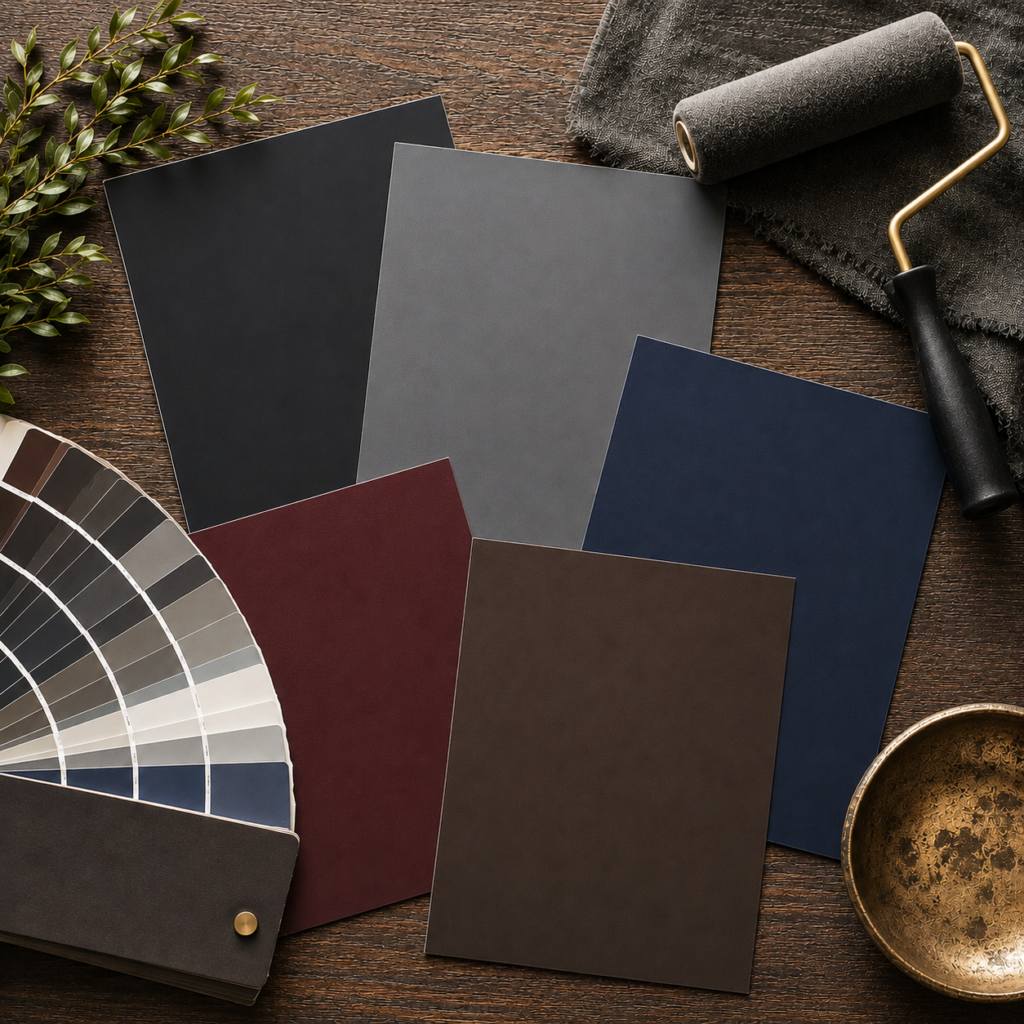
Best Home Theater Paint Colors at a Glance
| Color | Best for | Main benefit |
|---|---|---|
| Charcoal gray | Most home theaters | Dark, versatile, and easy to decorate |
| Matte black | Dedicated theater rooms | Maximum control of reflected light |
| Deep navy | Modern and elegant theaters | Cinematic without feeling completely black |
| Dark burgundy | Traditional cinema designs | Warm, dramatic, and classic |
| Espresso brown | Cozy theater rooms | Complements wood and leather furnishings |
| Medium gray or greige | Multipurpose media rooms | Balances brightness and viewing performance |
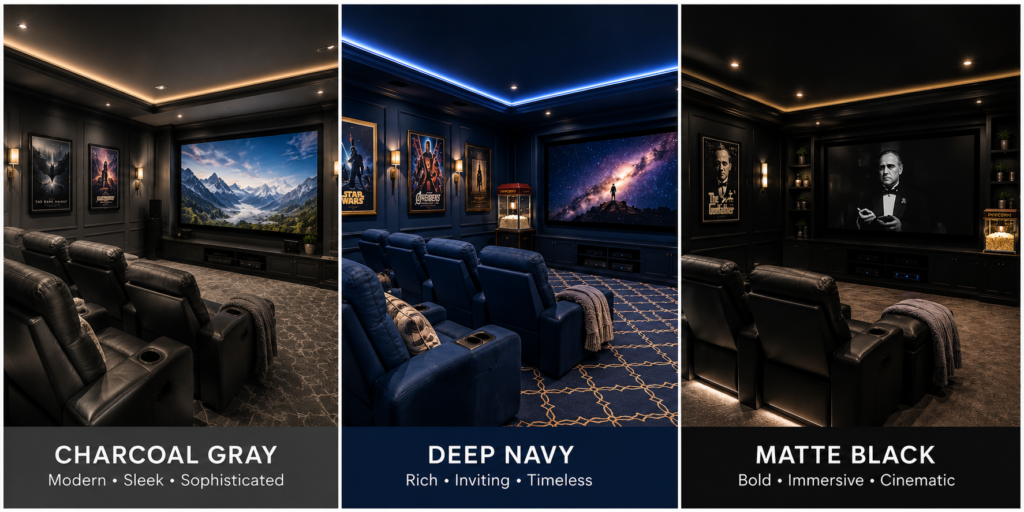
What Are the Best Paint Colors for a Home Theater?
What Are the Best Paint Colors for a Home Theater?
Dark colors are generally the strongest choice for dedicated theater rooms because they control reflected light and create a more immersive atmosphere.
The right option depends on the size of the room, the amount of natural light, your furniture, and the style you want to create.
Charcoal Gray
Charcoal gray is one of the best all-around home theater paint colors.
It is dark enough to absorb a significant amount of light, but it usually feels softer and more welcoming than solid black.
Benefits of charcoal gray include:
- Strong light control
- A sophisticated, modern appearance
- Easy coordination with furniture and décor
- Compatibility with both warm and cool lighting
- Less visual heaviness than an entirely black room
Charcoal works especially well with black seating, gray acoustic panels, metal accents, and blue or warm-white accent lighting.
For many homeowners, charcoal gray offers the best balance between viewing performance and attractive design.
Matte Black
Matte black provides the highest level of light control.
It is especially effective on the wall surrounding a television or projection screen because it reduces visual distractions and helps the image stand out.
Matte black can also work well on:
- The ceiling
- The front portion of the room
- Columns and trim
- Built-in equipment areas
- Areas immediately surrounding the screen
An entirely black room can feel overwhelming without proper lighting. Consider combining black with charcoal walls, warm sconces, wood accents, or comfortable upholstered seating.
Deep Navy Blue
Deep navy provides a cinematic appearance without making the room feel completely black.
It offers:
- Rich visual depth
- A refined, upscale appearance
- Strong compatibility with LED accent lighting
- A softer alternative to black
- Easy coordination with brass, gold, or wood accents
Navy is a particularly attractive option for modern luxury theaters. It pairs beautifully with brass sconces, dark furniture, and subtle blue lighting.
Rich Espresso Brown
Espresso brown adds warmth while remaining dark enough to control reflections.
It works especially well in traditional or cozy theater rooms featuring:
- Leather seating
- Wood trim
- Bronze lighting fixtures
- Warm-colored rugs
- Classic movie décor
Brown can make a dedicated theater feel more comfortable and inviting than black while still supporting a cinematic atmosphere.
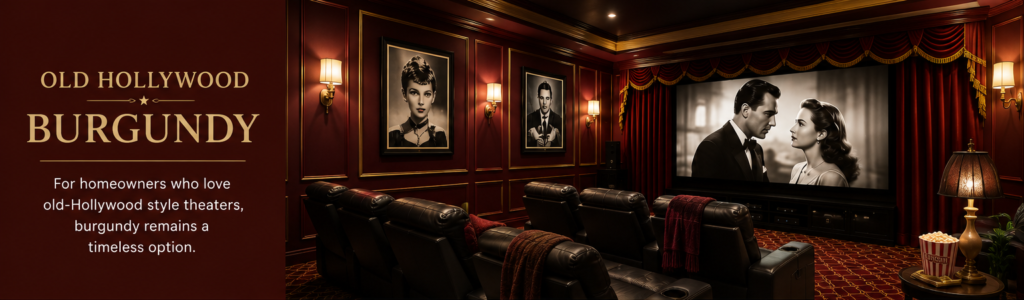
Deep Burgundy
Burgundy has long been associated with traditional cinemas and old-Hollywood design.
It creates a dramatic backdrop and works especially well with:
- Warm wall sconces
- Gold or bronze accents
- Dark wood trim
- Red or brown theater seating
- Framed classic movie posters
Burgundy is an excellent choice when you want a room that feels theatrical, luxurious, and nostalgic.
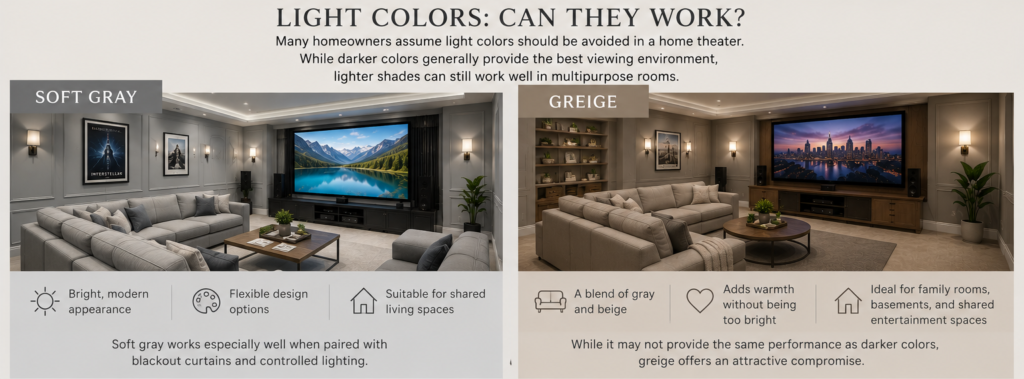
Can Light Paint Colors Work in a Home Theater?
Dark paint generally provides the strongest viewing environment, but lighter shades can still work in multipurpose rooms.
A family room may need to feel comfortable and bright during the day while also functioning as a movie space at night. In that situation, a medium gray, soft gray, or greige can provide a practical compromise.
Soft Gray
Soft gray is one of the safest choices for a shared media room.
It provides:
- A clean and modern appearance
- Flexible decorating options
- More brightness during everyday use
- Easy coordination with existing furniture
Choose a neutral or slightly darker gray rather than a nearly white shade. Pair it with blackout curtains and dimmable lighting to improve nighttime viewing.
Greige
Greige combines gray and beige, giving the room a warmer appearance than standard gray.
It works well in:
- Family rooms
- Basement media rooms
- Shared entertainment spaces
- Open living areas
- Rooms with warm-colored furniture
Greige will not absorb as much light as charcoal or black, but it can be a reasonable choice when the room needs to serve several purposes.
For help deciding between a shared entertainment room and a dedicated cinema, compare a home theater vs. living room setup.
Should the Screen Wall Be Darker?
Painting the screen wall matte black or very dark charcoal can reduce visual distractions around a television or projection screen.
A darker screen wall can also create a clear focal point while allowing the other walls to use a slightly lighter coordinating color.
Good combinations include:
- Matte black screen wall with charcoal side walls
- Charcoal screen wall with medium-gray side walls
- Black screen wall with deep navy side walls
- Dark burgundy walls with a charcoal screen wall
- Espresso walls with a matte-black screen area
In a multipurpose room, the screen wall can function as a dark accent wall while the remaining walls stay lighter.
This approach provides some of the visual benefits of a dedicated theater without making the entire room feel enclosed.
What Color Should a Home Theater Ceiling Be?
The ceiling is easy to overlook, but it can reflect as much distracting light as the walls.
A bright white ceiling may become especially noticeable during scenes with bright images. For a dedicated theater, black, charcoal, or another dark shade will usually provide better light control.
Matte Black Ceiling
A matte-black ceiling offers the greatest reduction in reflected light.
It works especially well:
- Near a projection screen
- In rooms with low ceilings
- In fully dedicated theaters
- With fiber-optic star lighting
- With black trim and acoustic treatments
Because black ceilings can make a room feel visually lower, use wall sconces or perimeter lighting to keep the space comfortable when the movie is not playing.
Dark Gray Ceiling
Dark gray is a softer alternative to black.
It absorbs light while maintaining a more open and refined appearance. It also pairs well with charcoal, navy, burgundy, and espresso walls.
Matching the Walls and Ceiling
Using the same color on the walls and ceiling creates a seamless appearance.
This approach minimizes visible boundaries and can make the room feel more immersive. It works particularly well in dark charcoal, deep navy, or espresso rooms.
Tray and Star Ceiling Accents
Tray ceilings provide an opportunity to combine a dark central color with perimeter lighting or contrasting trim.
A fiber-optic star ceiling can add a dramatic finishing touch while maintaining the room’s dark viewing environment.
For more ideas, see my guide to creating a star ceiling effect in your theater room.
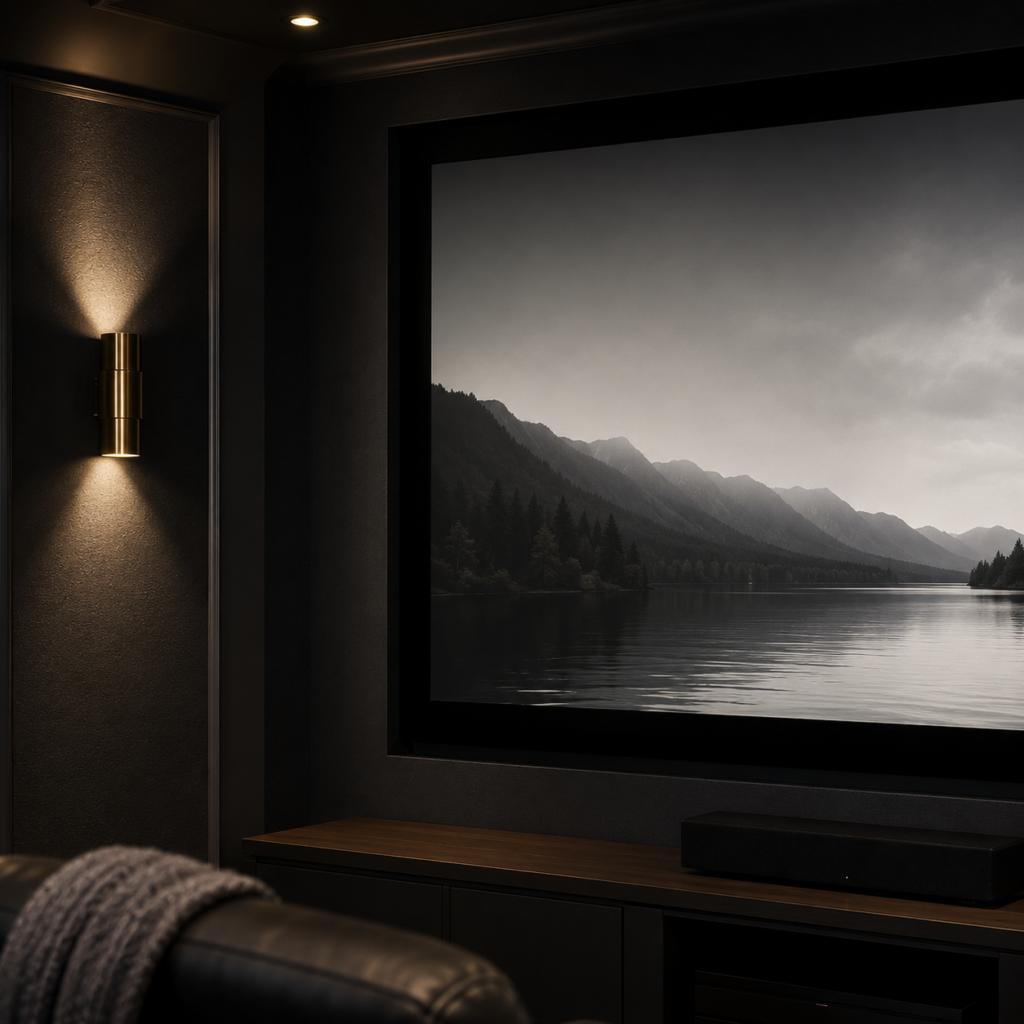
What Paint Finish Is Best for a Home Theater?
Flat or matte paint is usually the best finish for a dedicated home theater because it minimizes glare and reflected light.
Eggshell can be a practical alternative in family media rooms where easier cleaning and greater durability are important.
Avoid satin, semi-gloss, and high-gloss finishes near the screen whenever possible. Their added sheen can create distracting reflections.
Flat or Matte Finish
Flat and matte paints provide the lowest amount of visible sheen.
Benefits include:
- Minimal glare
- Better light absorption
- A smooth cinematic appearance
- Less distraction around the screen
Matte paint is particularly useful on the screen wall and ceiling.
The main drawback is that some flat paints can be more difficult to clean. Choosing a washable or durable matte formula can help in frequently used rooms.
Eggshell Finish
Eggshell has a slight sheen but is generally less reflective than satin or semi-gloss.
It may be a good choice for:
- Family media rooms
- High-traffic areas
- Homes with children or pets
- Walls that require frequent cleaning
Keep eggshell away from the immediate screen area when possible, especially if the room uses a projector.
Avoid Glossy Finishes
Satin, semi-gloss, and high-gloss paint reflect more light.
These finishes can create distracting bright spots and reduce the sense of immersion during movies.
Reserve higher-sheen finishes for small areas that require extra durability, such as doors or trim, and avoid using them on the ceiling or around the screen.
Our Top Home Theater Paint Picks
The right paint depends on your room, lighting, budget, and preferred color. Always confirm the available finish before purchasing.
Best Overall: BEHR MARQUEE Charcoal Matte
A charcoal shade from the BEHR MARQUEE line is a versatile choice for dedicated theater rooms.
It provides the light-control benefits of a dark color without creating the visual heaviness of pure black.
Best for the Screen Wall: BEHR MARQUEE Space Black Matte
Space Black is a strong option for the screen wall, ceiling, or front section of a dedicated theater.
Use the matte version rather than satin or semi-gloss to minimize reflections.
Best Budget Pick: BEHR Premium Plus Graphic Charcoal Flat
Graphic Charcoal offers a dark cinematic appearance at a more approachable price point.
The flat finish makes it especially suitable for walls where reflection control is important.
Best for a Family Media Room: BEHR Ultra Charcoal Extra Durable Flat
This option combines a low-sheen appearance with greater durability.
It may be a practical choice for a shared family space where walls are more likely to experience fingerprints and scuffs.
Best Premium Pick: Benjamin Moore Aura Interior Matte
Benjamin Moore Aura is a premium paint line available in a wide variety of dark colors.
Consider having it mixed in charcoal, deep navy, espresso, burgundy, or a soft black.
Best Premium Alternative: Sherwin-Williams Emerald Interior
Sherwin-Williams Emerald is another premium interior option available in numerous theater-friendly shades.
Choose a flat or matte finish where available and test the color under your actual room lighting.
The eggshell finish provides a slight sheen while remaining relatively theater-friendly.
This finish works well in multipurpose spaces where durability is important.
Helpful Amazon Picks for Home Theater Painting
These painting and light-control supplies can help you complete the room after choosing your color.
- Peel-and-Stick Paint Samples — best for comparing colors under your actual theater lighting
- Complete Interior Painting Kit — best for gathering rollers, brushes, trays, and edging tools
- Low-Reflectivity Black Painter’s Tape — useful for masking dark walls and trim
- Canvas Drop Cloths — best for protecting carpet, flooring, and theater seating
- Blackout Curtains — best for reducing daylight and screen glare
- Dimmable LED Wall Sconces — best for adding comfortable low-level theater lighting
Coordinating Paint Colors With Home Theater Décor
Paint should work with the room’s seating, lighting, acoustic treatments, flooring, and decorative elements.
Before choosing a final color, consider the undertones already present in:
- Theater seating
- Acoustic panels
- Area rugs
- Curtains
- Wood trim
- Wall sconces
- Posters and frames
- Equipment cabinets
Charcoal and black work well with most décor styles.
Navy pairs beautifully with brass, gold, black, and medium-toned wood.
Burgundy and espresso complement traditional furniture, warm lighting, and dark leather seating.
Once you have chosen the paint palette, explore these home theater wall décor ideas to coordinate posters, acoustic panels, lighting, and accessories.
Popular Home Theater Color Combinations
You do not need to use one color throughout the entire room. Combining two or three coordinated colors can create more depth while maintaining a focused viewing environment.
Modern Luxury Theater
- Charcoal-gray walls
- Matte-black screen wall
- Black or charcoal ceiling
- Blue LED accent lighting
- Black leather seating
- Brushed-metal or black fixtures
Classic Cinema
- Deep-burgundy walls
- Charcoal or black ceiling
- Bronze wall sconces
- Rich wood accents
- Traditional theater seating
- Framed classic movie posters
Cozy Theater Room
- Espresso-brown walls
- Dark charcoal screen wall
- Warm-white lighting
- Brown leather recliners
- Wood trim
- Soft area rugs and blankets
Multipurpose Family Media Room
- Medium-gray or greige walls
- Charcoal accent wall behind the television
- Warm dimmable lighting
- Comfortable sectional seating
- Blackout curtains
- Coordinated storage and décor
Common Home Theater Paint Mistakes
Even an attractive room can suffer from poor paint choices. Avoid these common mistakes when planning your theater.
Using Bright White Walls
White walls reflect a significant amount of light.
In a dedicated theater, this can reduce perceived contrast and make the walls more noticeable during a movie.
Ignoring the Ceiling
A bright ceiling can reflect light from the screen directly into the viewing area.
Consider painting at least the portion of the ceiling nearest the screen a dark color.
Choosing Glossy Paint
Glossy finishes may be durable, but they can create visible reflections.
Use flat or matte paint on the walls and ceiling whenever possible.
Making the Entire Room Too Dark Without Lighting
Dark paint needs a thoughtful lighting plan.
Add dimmable sconces, step lights, or indirect LED lighting so the room remains safe and comfortable before and after the movie.
Using Too Many Colors
A simple palette usually creates a more polished result.
Choose one primary wall color, one darker screen or ceiling color, and one or two accent colors.
Buying Paint Without Testing It
Dark colors can change dramatically depending on the room’s natural light, screen light, sconces, and flooring.
Test samples on more than one wall and view them during the day and at night.
Forgetting About Existing Furniture
A beautiful wall color can feel disconnected if it clashes with the seating, carpet, curtains, or woodwork.
Compare paint samples directly beside the materials already in the room.
Frequently Asked Questions
What is the best overall color for a home theater?
Charcoal gray is one of the best overall choices. It limits reflected light, coordinates with many décor styles, and usually feels less severe than solid black.
Should a home theater be painted black?
A home theater does not have to be entirely black. Matte black is excellent around the screen and on the ceiling, but charcoal, navy, burgundy, and espresso can also create an immersive viewing environment.
Should a home theater ceiling be black?
A black or dark-gray ceiling can reduce distracting reflections, especially near a projection screen. Matching the ceiling to the walls can also make a dedicated theater feel more immersive.
What is the best color for the wall behind a television?
Matte black or dark charcoal works well behind a television because it reduces visual distractions and creates contrast around the screen.
Can I use light-colored paint in a media room?
Yes. Medium gray, soft gray, and greige can work in shared spaces, particularly when windows can be covered and the room’s lighting is controlled.
Is matte or eggshell better for a theater room?
Matte is generally better for controlling glare. Eggshell may be more practical in a frequently used family room because it is usually easier to clean.
Should all four walls be the same color?
They do not have to be. A dark screen wall combined with slightly lighter side and rear walls can provide a good compromise in a multipurpose room.
Should I paint before installing theater equipment?
Painting before installing the screen, speakers, sconces, and acoustic panels is usually easier. However, finalize the room layout first so you know where equipment and decorative elements will be placed.
Final Thoughts
The best paint color for a home theater depends on whether the room is a dedicated cinema or a shared living space.
Charcoal gray is the strongest all-around option. Matte black offers maximum light control, while deep navy, burgundy, and espresso add warmth and personality.
For multipurpose rooms, medium gray or greige can provide a practical balance between everyday comfort and movie-night performance.
Whatever color you choose, use a low-sheen finish, consider darkening the ceiling and screen wall, and test samples under the lighting conditions you will use during movies.
With the right paint, lighting, seating, and décor, even a simple room can feel like a comfortable and immersive home cinema.
Continue Planning Your Home Theater
- How to Layer Lighting in a Home Theater for the Perfect Movie Experience
- Creating a Star Ceiling Effect in Your Theater Room
- Home Theater Wall Decor Ideas
- Home Theater Mistakes to Avoid
- Home Theater vs. Living Room: Which Setup Is Better?

Lisa is the creator of Home Cinema Living. Together with her husband, a longtime home theater professional, she has spent years designing and enjoying home theater spaces that bring family and friends together for memorable movie nights.