

Affiliate disclosure: This post may contain affiliate links. As an Amazon Associate, I earn from qualifying purchases at no extra cost to you.
There is something special about a room that feels like an event before the movie even begins. Opera houses create that feeling with rich fabrics, dramatic architecture, glowing lights, and a sense of anticipation as you enter the space.
That is what makes the Opera Aesthetic such an interesting fit for home theater design. Rather than recreating an actual opera house or filling the room with vintage movie memorabilia, you can borrow the elements that create the atmosphere: jewel-toned colors, velvet, architectural molding, elegant lighting, symmetry, and layered textures.
The result can feel luxurious and theatrical while still functioning as a comfortable movie room for everyday use.
Quick Guide: Opera-Inspired Home Theater Design
| Design Element | Best Approach |
|---|---|
| Color palette | Burgundy, plum, emerald, navy, charcoal, or aubergine |
| Seating | Velvet or upholstered recliners in rich, deep tones |
| Drapery | Floor-to-ceiling velvet or heavy woven curtains |
| Lighting | Brass or bronze sconces with dimmable accent lighting |
| Walls | Simple picture-frame molding or paneled detailing |
| Ceiling | Dark paint, subtle molding, or one elegant focal detail |
| Flooring | Dark carpet or one restrained patterned rug |
| Screen wall | Simple, symmetrical, and visually quiet |
| Overall mood | Elegant, intimate, dramatic, and comfortable |
The secret is restraint. You do not need every feature on this list. A few well-chosen theatrical details will usually look more convincing than trying to turn the entire room into a stage set.
1. Start With a Deep Jewel-Tone Palette
The easiest way to establish the Opera Aesthetic is through color.
Burgundy is the obvious classic, but it is not the only choice. Plum, dark emerald, navy, aubergine, charcoal, and warm chocolate can all create an enveloping theater atmosphere.
I would choose one dominant dark shade and allow the other materials to build around it. Burgundy walls with antique brass lighting feel traditional and dramatic, while charcoal walls with plum velvet can create a cleaner, more contemporary interpretation.
Dark navy is another beautiful choice if you want a sophisticated room that still feels theatrical without leaning too heavily into red.
The darker palette also works naturally in a home theater because it helps reduce light bouncing around the room during a movie.
If you are still deciding which colors will work best with your screen and lighting, see my guide to home theater paint colors.

2. Make Velvet the Signature Material
Velvet is probably the single material that communicates this look most effectively.
You can use it for curtains, seating, accent pillows, or a combination of those, but I would avoid covering every surface with it.
Floor-to-ceiling velvet drapery can make an ordinary rectangular room feel more theatrical almost immediately. Deep burgundy is classic, while plum, forest green, navy, and dark brown can create a quieter interpretation.
For this particular design, I especially like the idea of velvet recliners.
Instead of defaulting to black leather theater seating, imagine a row of deep burgundy, wine, charcoal, or forest green velvet recliners facing the screen. They would give the room a softer, more luxurious appearance while still providing the support and reclining function you want for movie night.
Performance velvet would be the practical choice for a room that sees regular use because it generally withstands everyday wear better than more delicate upholstery fabrics.
The seats still need to function primarily as theater seating. Every chair should face the screen, with enough room to recline and a clear walkway around the row.
If you are comparing seating options, my guide to what to look for in a comfortable home theater recliner can help.
Helpful Amazon Finds
- NICETOWN Burgundy Red Blackout Curtains – Full blackout panels in a deep burgundy tone give the theater a richer, more dramatic backdrop while helping control light around the screen. The current Amazon listing is a 52 x 84-inch, two-panel set with blackout lining.
- Gold Tassel Curtain Tiebacks – Hand-woven gold tassel tiebacks create the gathered opera-house look without adding bulky hardware.
- Brass Curtain Holdbacks – Add a polished architectural detail and keep heavy drapery neatly positioned.

3. Add Architectural Detail With Simple Wall Molding
You do not need ornate columns or elaborate plasterwork to make the room feel architectural.
Simple picture-frame molding can completely change a plain theater wall. Painted the same color as the wall, it adds depth through shadow rather than creating a busy contrasting pattern.
Crown molding can also give the room a finished edge, particularly if the walls and ceiling are painted in closely related dark shades.
This is also a smart way to integrate acoustic treatment. Fabric-wrapped acoustic panels can be installed within framed wall sections, making the technical elements feel more intentional.
A little molding goes a long way. I would use it primarily on the side or rear walls and keep the area immediately around the screen much simpler.
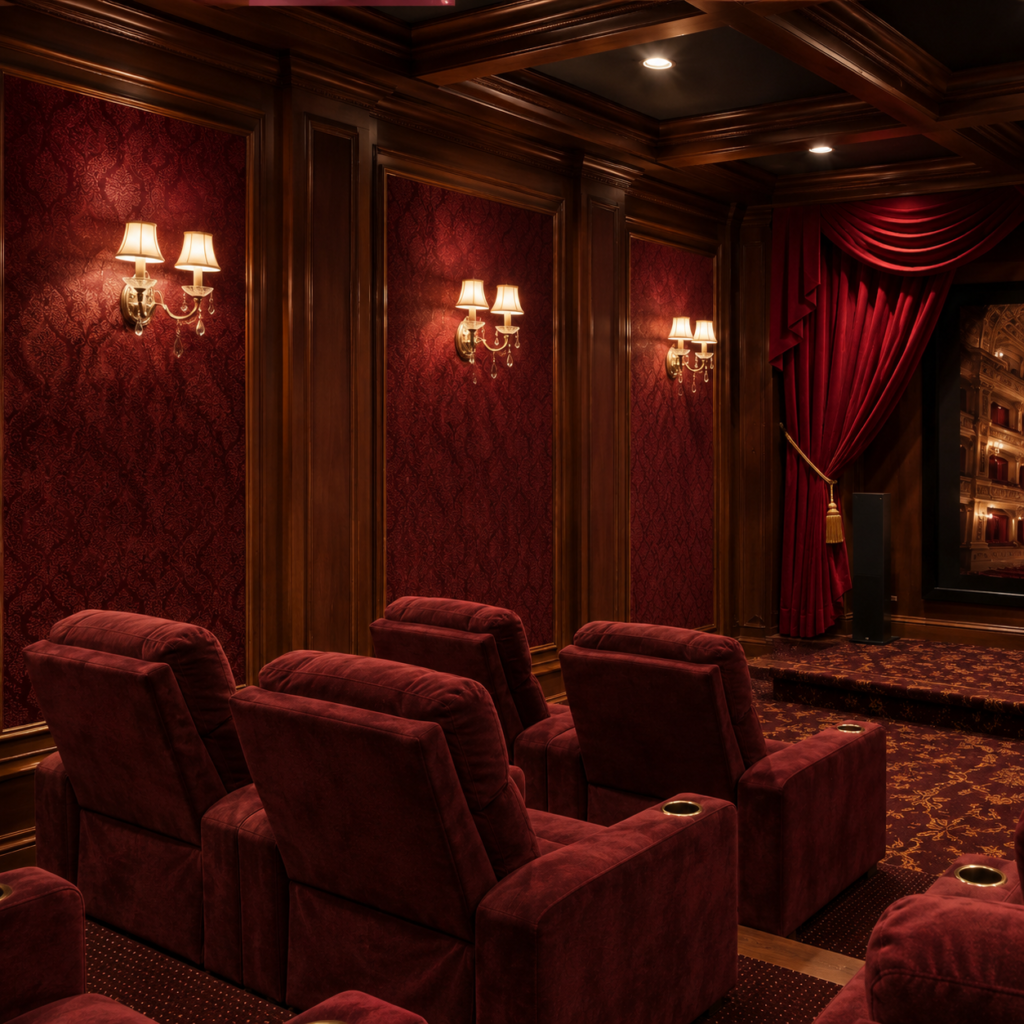
4. Treat Lighting Like Jewelry for the Room
Lighting is where the Opera Aesthetic can really come alive.
Warm brass or bronze sconces against a dark wall cast a soft glow, highlighting molding and fabric textures. In a room with sufficient ceiling height, a restrained chandelier or decorative ceiling fixture can serve as a strong focal point.
In a lower basement theater, sconces are usually a better choice than a large hanging fixture.
The decorative fixtures should still be part of a layered lighting plan. Combine them with recessed lighting, step lights, or subtle pathway lighting to keep the room safe and practical.
Most importantly, put everything on dimmers.
When the movie begins, the beautiful lighting should disappear.
For more help planning the layers, see my guide to how to layer lighting in a home theater.
Helpful Amazon Finds
- Vintage-Inspired Brass Wall Sconces – Add warm architectural character without using any floor space.
- Dimmable LED Bulbs – Make it easy to move from brighter entertaining light to a softer movie-night glow.
- Smart Dimmer Switch – Useful for creating repeatable lighting scenes without adding visible technology to the room.
5. Use Symmetry to Make the Theater Feel Intentional
One thing traditional performance spaces do particularly well is balance.
You can create the same effect by placing sconces evenly along the walls, centering drapery around architectural features, and repeating molding panels at consistent intervals.
Symmetry helps a dramatic room feel elegant rather than chaotic.
It is especially useful toward the front of the theater, where the screen should remain the clear focal point. Matching wall treatments or evenly spaced lighting can frame the room without competing with what you are watching.
That does not mean every surface needs to match perfectly. The goal is simply to give the eye a sense of order.
6. Give the Ceiling One Strong Detail
The ceiling does not need several competing features.
Choose one.
That could be a deep charcoal or navy paint color, simple perimeter molding, a small decorative ceiling medallion, or a subtle star ceiling.
For a taller room, a restrained chandelier can become the focal point. In a lower room, I would skip it and allow the sconces and wall architecture to carry the design.
A star ceiling can also work surprisingly well in this setting when it is kept subtle. The combination of traditional wall detailing and delicate points of light creates a beautiful bridge between theatrical design and modern home cinema.
If you are considering that option, see my guide to creating a star ceiling effect in your theater room.
7. Bring Pattern In Through the Floor
Patterned carpet is another idea borrowed naturally from traditional theaters, but it should not compete with the rest of the room.
Choose a relatively small-scale pattern in colors already used elsewhere, such as burgundy, charcoal, navy, or muted gold.
If patterned wall-to-wall carpet feels like too much of a commitment, a large area rug can create the same layered feel in a media room.
This also gives you the practical benefit of adding another soft surface to the room.
For more on choosing materials for both appearance and sound, see my guide to the best flooring for home theater sound.
Helpful Amazon Finds
- SAFAVIEH Golden Jaipur Burgundy & Gold Wool Rug – This hand-tufted wool design combines burgundy and gold in a traditional pattern that feels especially well suited to an opera-inspired theater. The GJ250C collection is sold on Amazon in several sizes.
- MIULEE Burgundy Velvet Lumbar Pillow Covers – Velvet lumbar pillows are an easy way to repeat the jewel-tone palette on larger recliners or sofa seating without adding another major pattern.
8. Make the Entrance Feel Like Part of the Experience
The Opera Aesthetic is partly about anticipation, so the entrance deserves some attention.
You could frame the doorway with molding, use a deeper paint color around the entrance, add a pair of sconces, or install curtains just inside the room.
If there is space outside the theater, a narrow console can create a simple transition point without turning the entrance into a full concession area.
This is also a good place for one decorative element that feels slightly more dramatic than what you would use around the screen.
The important thing is keeping it functional. Doors should open fully, walkways should stay clear, and fabric should never block vents or access points.
My guide to home theater door ideas covers both design and practical sound-control considerations.
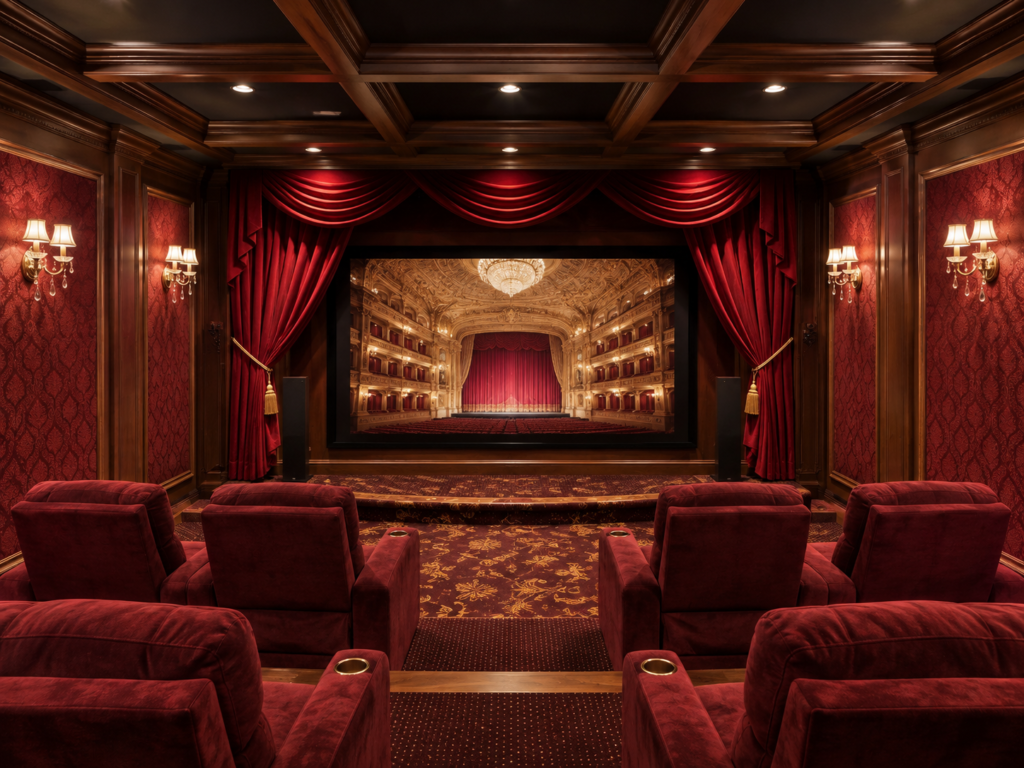
9. Keep the Screen Wall Restrained
The screen wall is one place where I would deliberately pull back the Opera Aesthetic.
You already have plenty happening elsewhere in the room.
A dark screen wall with clean architectural lines, properly positioned speakers, and perhaps restrained drapery at the outer edges is enough.
Avoid crowding the screen with decorative objects, ornate molding, posters, or lighting that remains visible during the movie.
This is also what separates this article from a vintage cinema room.
The theatrical feeling should come from the interior design, not from movie memorabilia.
If you do want to add artwork elsewhere in the room, my guide to home theater wall décor ideas has options that can work without overwhelming the space.
10. Try a Modern Opera-Inspired Home Theater
The Opera Aesthetic does not have to look historical.
A modern version may actually be one of the most attractive ways to use it at home.
Picture matte charcoal walls, slim molding, deep wine-colored velvet recliners, floor-to-ceiling curtains, clean brass sconces, and a simple projection screen.
There are no ornate columns, antique props, or elaborate decorations. The room feels theatrical because of the color, texture, lighting, and proportions.
You could create the same effect with navy walls and plum drapery, or with deep green walls and warm bronze lighting.
This approach also makes the look easier to blend with the rest of a contemporary home.
11. Scale the Look Down for a Smaller Movie Room
A smaller room can absolutely use this style, but every element needs to be scaled appropriately.
Use two sconces rather than a chandelier. Choose one curtain wall instead of draping multiple surfaces. Keep the molding simple.
A compact theater might need nothing more than dark plum walls, two velvet recliners, restrained brass lighting, and a dark rug.
Because the room already has a strong visual identity, you do not need many accessories.
And in a smaller theater, preserving enough room for reclining clearance, speakers, and walkways matters far more than squeezing in another decorative detail.
If you are working with a compact layout, it can also help to review my home theater seating layout guide.
12. Finish With Small Details, Not More Themes
Once the major materials are in place, the room should need very little additional decoration.
A beautiful side table, a restrained framed print, a decorative pillow, or an elegant lamp may be enough.
I would avoid adding film reels, old projectors, marquee signs, and collections of vintage movie posters here. Those elements can look wonderful, but they belong much more naturally in a vintage cinema-style room.
The Opera Aesthetic works because it feels like an interior rather than a collection of themed props.
Helpful Amazon Finds
- Kate and Laurel Jaspur Gold Drink Table – A slim gold accent table adds a refined metallic detail beside a recliner while giving you a practical spot for a drink or remote.
- Battery-Operated Picture Light – Ideal for highlighting a single framed piece without visible wiring.
- Decorative Velvet Pillow Covers – An inexpensive way to repeat a jewel tone elsewhere in the room.
How to Keep the Look Elegant Instead of Overdone
A useful rule for this style is to choose three major theatrical elements and allow everything else to stay quiet.
For example:
- Velvet recliners
- Architectural wall molding
- Brass sconces
Or:
- Jewel-tone walls
- Floor-to-ceiling curtains
- A dramatic ceiling treatment
Once those features are working together, you probably do not need another layer.
A home theater still has to be comfortable, functional, and pleasant to use after the novelty of the design has worn off.
The best rooms feel theatrical because the materials and architecture work together, not because every surface has been decorated.
Frequently Asked Questions
What is the Opera Aesthetic?
Opera Aesthetic is a theatrical interior style characterized by rich colors, dramatic fabrics, architectural details, elegant lighting, and a romantic atmosphere.
For a home theater, that translates naturally into jewel-tone walls, velvet, wall molding, warm metallic finishes, and layered lighting.
Is an opera-inspired theater the same as a vintage home theater?
No.
Vintage cinema design usually leans into movie-theater nostalgia with retro posters, film equipment, marquees, concession details, and memorabilia.
Opera-inspired design focuses on architecture, fabric, lighting, symmetry, and atmosphere.
Would velvet recliners work in a home theater?
Yes.
Velvet or performance-velvet recliners can work beautifully, particularly in burgundy, plum, charcoal, dark green, or navy.
Choose actual reclining theater seating with proper support rather than decorative accent chairs.
Is velvet practical for movie-room seating?
Performance velvet is the more practical choice if the room is used frequently. It provides the rich look without requiring the same level of care as some traditional delicate velvets.
For households with children, pets, or frequent movie nights, I would prioritize durability and easy cleaning over the most delicate upholstery.
Do I need red walls?
No.
Burgundy is classic, but navy, plum, emerald, charcoal, aubergine, and dark brown can all create a dramatic theater atmosphere.
Can this design work in a small theater?
Yes.
Use fewer elements at a smaller scale. Rich paint, velvet seating, two sconces, and simple molding can establish the look without overwhelming the room.
Should I decorate around the screen?
Usually not.
Keep the screen area relatively simple and place the strongest architectural and decorative details on the side walls, entrance, ceiling, and rear of the theater.
Final Thoughts
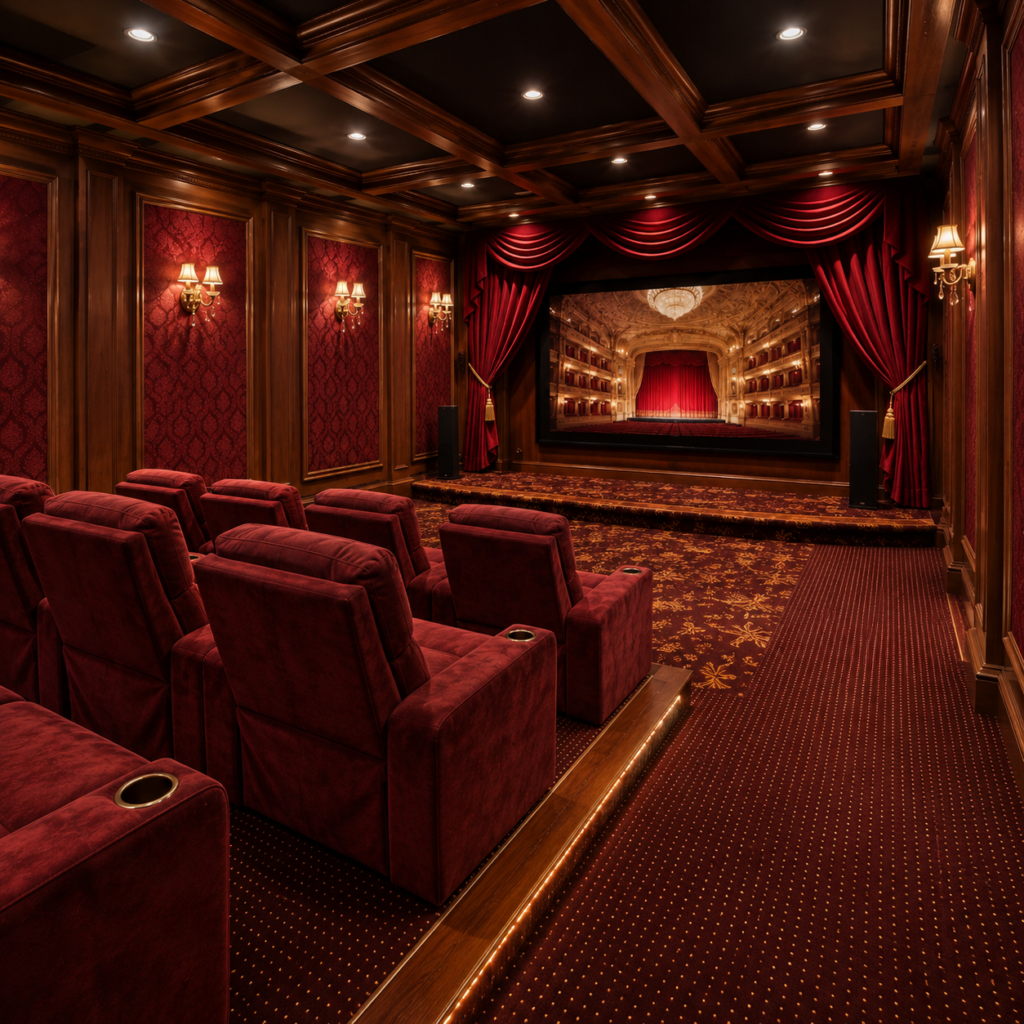
An opera-inspired home theater is not about recreating an opera house. It is about borrowing the elements that make theatrical spaces feel special.
Rich color creates atmosphere. Velvet introduces softness and luxury. Architectural molding adds depth to the room, while warm lighting brings those details to life.
I particularly like the idea of using velvet recliners as a defining feature because they immediately set this room apart from the typical black-leather home theater while keeping comfort at the center of the design.
Once the major pieces are in place, resist the temptation to keep decorating.
Let the materials, lighting, architecture, and seating create the drama.
That is what will keep the room feeling sophisticated rather than themed.
Related Articles
- Home Theater Paint Colors: Best Colors for a Cinematic Experience
- How to Layer Lighting in a Home Theater
- Creating a Star Ceiling Effect in Your Theater Room
- How to Choose the Perfect Home Theater Seating Layout
- What to Look for in a Comfortable Home Theater Recliner
- Best Flooring for Home Theater Sound
- Home Theater Door Ideas
- Home Theater Wall Décor Ideas

Lisa is the creator of Home Cinema Living. Together with her husband, a longtime home theater professional, she has spent years designing and enjoying home theater spaces that bring family and friends together for memorable movie nights.