
Affiliate disclosure: This post may contain affiliate links. As an Amazon Associate, I earn from qualifying purchases at no extra cost to you.
There is nothing wrong with watching TV in the living room. It is convenient, comfortable, and where most families naturally gather every day.
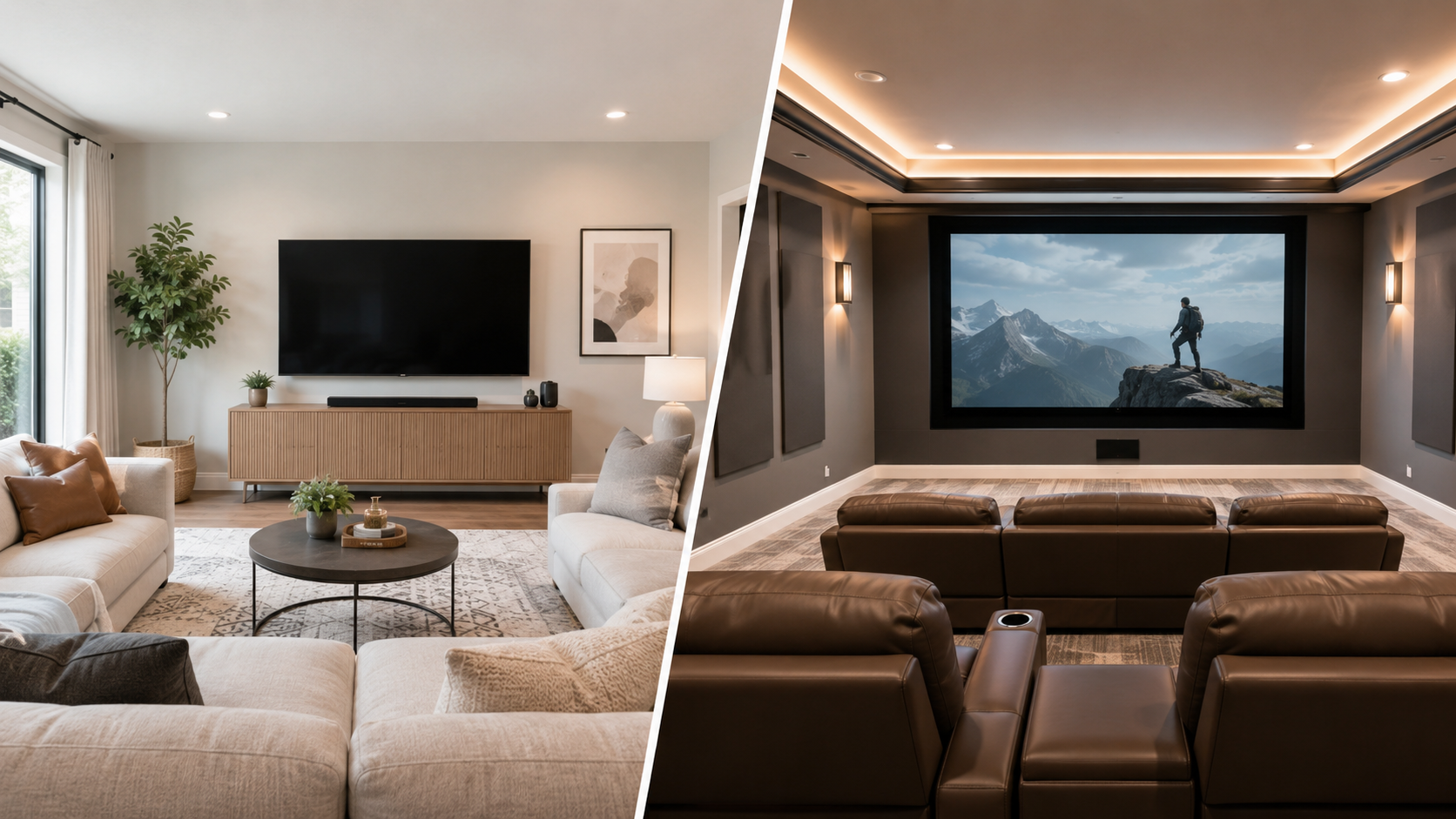
But a dedicated home theater can make movies, sports, gaming, and even regular TV feel completely different. The biggest difference is not just the screen size. It is the way the room controls light, sound, seating, distractions, and atmosphere.
If you have ever wondered whether a home theater is really worth it, this guide compares a standard living room setup with a dedicated theater room so you can decide which one fits your home, budget, and movie-night style.
If you are still deciding on your screen setup, read my guide, “TV vs. Projector for a Home Theater.”
Quick Comparison: Home Theater vs. Living Room
Here is a simple way to compare the two setups:
| Feature | Living Room | Home Theater |
|---|---|---|
| Main purpose | Everyday living and casual TV | Movies, sports, gaming, and immersive entertainment |
| Lighting | Often bright and multipurpose | Controlled, dimmable, and cinematic |
| Sound | Usually open and less focused | Designed for clearer, more immersive audio |
| Seating | Sofas, sectionals, and everyday furniture | Recliners, rows, sectionals, or planned seating layouts |
| Screen setup | TV or casual projector setup | Larger TV, projector, or dedicated screen |
| Distractions | More foot traffic and multitasking | Fewer distractions and more focus |
| Best for | Casual viewing and everyday use | Movie nights, sports, gaming, and entertaining |
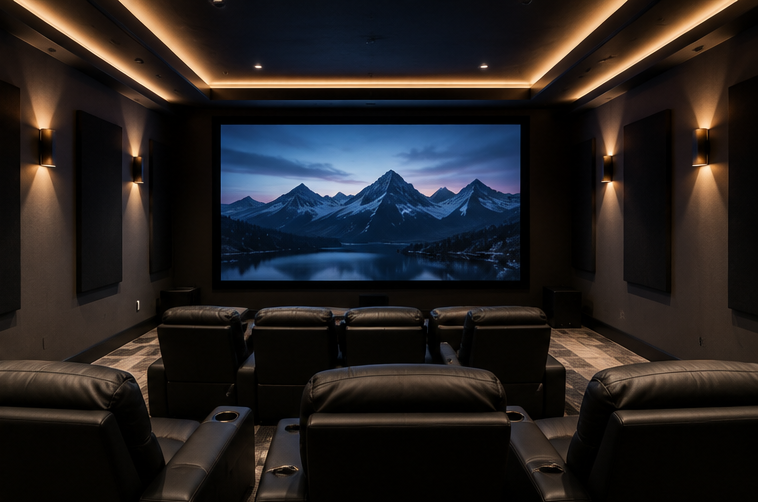
The Biggest Difference Is Immersion
A living room is designed for many purposes:
- Conversations
- Eating
- Multitasking
- Daily family activity
- Background television
A home theater, however, is built around one main purpose: entertainment immersion.
From the moment the lights dim, distractions fade. The room is intentionally designed to draw your focus to the screen and sound.
Whether you are watching an action movie, a championship game, or a streaming series, the experience becomes more engaging and emotional.
Watching Movies Feels More Cinematic in a Home Theater
Movies can still be enjoyable in a living room, but the experience often competes with everyday distractions.
In the living room
Movies in a living room often compete with:
- Lamps and sunlight
- Phones and interruptions
- Kitchen noise
- Awkward viewing angles
- Weaker sound performance
Even a large television can lose impact in a bright, open space.
In a home theater
A dedicated theater creates a more cinematic atmosphere with:
- Larger screen sizes
- Surround sound immersion
- Controlled lighting
- Comfortable theater seating
- Acoustic treatments for clearer audio
Instead of simply watching a movie, you feel pulled into it.
Quiet dialogue becomes easier to hear. Explosions feel more powerful. Emotional scenes feel more intense because the room reduces distractions and supports the viewing experience.
For help improving sound, read my guide, “Best Soundbars for Home Theaters and Media Rooms.” Add your soundbar article link once it is published.
Sporting Events Become More Exciting
Sports are another area where a home theater can feel dramatically different.
Watching sports in the living room
Sports in a standard family room can still be enjoyable, but it rarely captures the energy of being in the middle of the action.
Sound can feel flat, crowd noise gets lost, and the atmosphere often competes with everyday household noise.
Watching sports in a home theater
This is where home theaters really shine.
With a large screen and immersive audio, sporting events feel larger than life:
- Crowd reactions feel louder and more realistic
- Announcers sound clearer
- Every play feels bigger
- Friends and family feel more connected to the event
Game day becomes an experience instead of background entertainment.
A dedicated theater can also feel like a private sports lounge, especially when you add comfortable seating, snack trays, a drink area, and dimmable lighting.
Regular TV Shows Feel Better Too
You do not need a blockbuster movie to enjoy a home theater.
Streaming shows, documentaries, and binge-worthy series can all benefit from:
- Improved picture quality
- Richer sound
- Reduced distractions
- More comfortable seating
A theater room encourages intentional viewing rather than passive watching.
Instead of casually leaving the TV on while scrolling your phone, the room helps you become more engaged with the content itself.
Comfort Plays a Huge Role
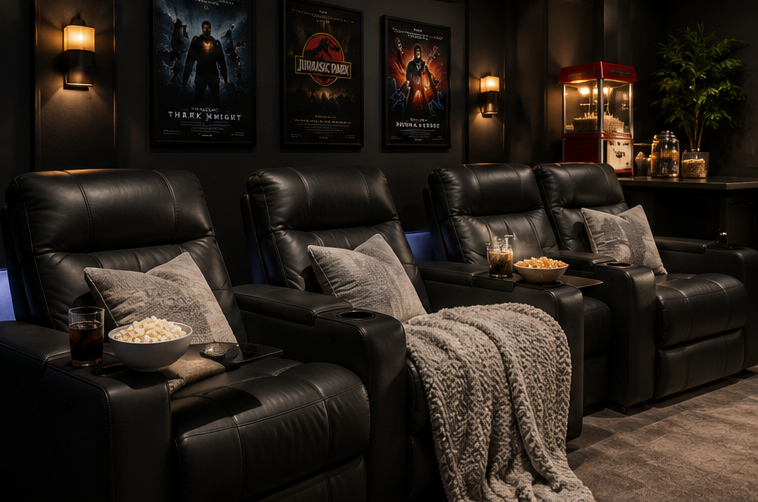
One overlooked advantage of a dedicated home theater is comfort.
Modern home theater seating is designed for extended viewing sessions with features such as:
- Reclining chairs
- Cup holders
- Tray tables
- Plush cushioning
- Better sightlines
Combined with dim lighting and a cozy atmosphere, the room naturally becomes a favorite gathering spot for family and guests.
For help planning seating, read my guide, “How to Choose the Perfect Home Theater Seating Layout.”
Helpful Amazon searches for home theater comfort
Comfort accessories can make either a living room or a home theater feel better for movie night.
- Home Theater Recliners — best for a dedicated theater room or luxury media space
- Cup Holder Tray — best for adding snack and drink space to sofas or recliners
- Plush Throw Blankets — best for making movie nights feel cozy and comfortable
Lighting Creates a Completely Different Atmosphere
Lighting has a major impact on how entertainment feels.
Most living rooms are bright and multifunctional. Sunlight, lamps, overhead fixtures, and open floor plans can cause glare and distractions, reducing picture quality and immersion.
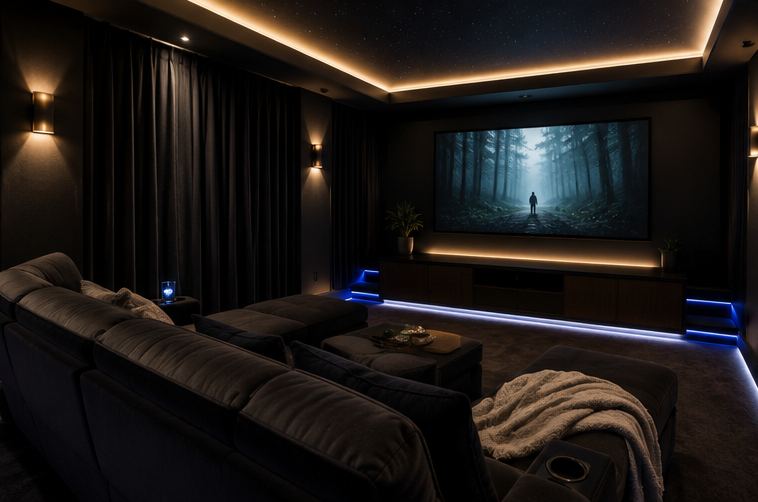
A home theater is designed to control lighting intentionally.
Features often include:
- Dimmable sconces
- LED accent lighting
- Fiber optic ceilings
- Backlit risers
- Blackout curtains
These elements create a more cinematic mood while improving screen visibility and reducing eye strain.
For more lighting help, read my guide, “How to Layer Lighting in a Home Theater.“
Helpful Amazon searches for lighting and blackout control
Lighting upgrades can make a big difference whether you are improving a living room setup or building a dedicated home theater.
- Blackout Curtains — best for reducing glare in living rooms and media rooms
- Dimmable Wall Sconces — best for creating soft theater-style lighting
- LED Strip Lights for TV — best for adding soft backlighting behind a TV or media wall
Home Theater Sound Is on Another Level
One of the biggest differences between a living room and a theater room is audio performance.
Living rooms often have sound problems because of:
- Open layouts
- Hard surfaces
- Background noise
- Poor speaker placement
A home theater is usually designed with acoustics in mind.
This allows:
- Clearer dialogue
- Deeper bass
- More precise surround effects
- Balanced sound throughout the room
The result is a more realistic and emotionally powerful experience.
Instead of simply hearing sound, you feel surrounded by it.
For more help with room acoustics, read “Acoustic Panels vs. Soundproofing for Home Theaters.”
Helpful Amazon searches for better home theater sound
These sound upgrades can enhance dialogue, bass response, and overall movie-night impact.
- Home Theater Soundbars — best for upgrading TV sound without a full speaker system
- Acoustic Panels for Home Theater — best for reducing echo and improving dialogue clarity
- Subwoofer for Home Theater — best for adding deeper bass to movies, sports, and gaming
Gaming in a Home Theater Feels More Immersive
Gaming is another area where the difference between a living room and a home theater is especially noticeable.
Gaming in the living room
For casual gaming, a living room setup can work perfectly fine. But many players deal with:
- Glare from windows and lights
- Smaller screens
- Distracting background noise
- Limited sound immersion
- Seating that is not ideal for long sessions
In an open family room, it can also be harder to focus on competitive or story-driven games fully.
Gaming in a home theater
A dedicated home theater delivers a more immersive gaming experience.
Large screens make gameplay feel massive and cinematic, while surround sound adds depth and realism that standard TV speakers cannot match.
Many modern home theater systems are also optimized for:
- Next-generation gaming consoles
- Low input lag
- High refresh rates
- 4K visuals
- Immersive Dolby Atmos sound
Comfort is also a major advantage. Reclining theater seating and controlled lighting can make long gaming sessions more enjoyable and less tiring.
A Home Theater Creates Better Shared Experiences
One of the most overlooked benefits of a dedicated theater room is how it brings people together.
A living room often encourages distraction. People walk in and out, check phones, talk over scenes, or split their attention between multiple activities.
A home theater naturally creates a more focused and connected environment.
Movie nights become special occasions. Big games feel more exciting. Kids remember family movie nights. Friends want to gather for playoff games and streaming premieres.
The room itself becomes part of the entertainment experience.
For snack ideas that make movie nights more fun, read my guide, “DIY Snack Stations for Home Theaters.”
Helpful Amazon searches for movie-night upgrades
Small movie-night upgrades can make either setup feel more special.
- Movie Night Snack Trays — best for serving popcorn, candy, and drinks together
- Popcorn Machine for Home Theater — best for creating a classic theater-style snack experience
- Rolling Snack Cart — best for organizing snacks and drinks near the seating area
Is a Home Theater Worth It?
For casual viewing, a living room may be enough.
But for people who truly love:
- Movies
- Sports
- Gaming
- Family movie nights
- Immersive entertainment
A dedicated home theater can be worth it.
It creates an experience that is hard to duplicate in a traditional family room. It turns ordinary nights at home into something memorable.
That does not mean everyone needs a separate theater room. You can also create a living room theater by improving lighting, seating, sound, and organization.
For more ideas, read my guide, “Home Theater Accessories and Decor.”
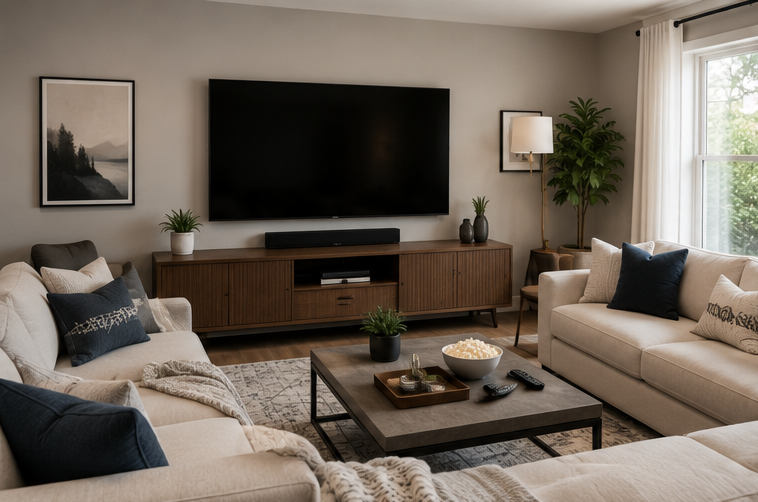
Living Room Theater vs. Dedicated Home Theater
If you are not ready for a full dedicated theater, a living room theater can still be a great option.
A living room theater may include:
- A larger TV
- A soundbar or subwoofer
- Blackout curtains
- Cozy seating
- A small snack station
- Better cable organization
- Soft lighting
A dedicated home theater usually goes further with:
- A projector or a large screen
- Reclining theater seating
- Acoustic treatment
- Controlled lighting
- Surround sound
- A more intentional room layout
Both can work beautifully. The best choice depends on your space, budget, and how often you watch movies, sports, or play games.
More Home Theater Ideas
Keep improving your movie room with these helpful guides:
- TV vs. Projector for a Home Theater — compare screen options and decide which setup works best for your space.
- How to Choose the Perfect Home Theater Seating Layout — plan seating around screen distance, sightlines, walkways, and comfort.
- How to Layer Lighting in a Home Theater — learn how to use soft lighting, accent lighting, and task lighting.
- Acoustic Panels vs. Soundproofing for Home Theaters — understand what improves sound inside the room and what helps block noise.
- DIY Snack Stations for Home Theaters — create a snack area for popcorn, candy, drinks, and movie-night essentials.
- Home Theater Accessories and Decor — add finishing touches that make the room feel more complete.
Frequently Asked Questions
Is a home theater better than a living room?
A home theater is usually better for movies, sports, gaming, and immersive entertainment because it controls lighting, sound, seating, and distractions. A living room is better for casual everyday viewing and multipurpose family use.
Can a living room work as a home theater?
Yes. A living room can work as a home theater if you improve the screen, sound, lighting, seating, and organization. Blackout curtains, a soundbar, cozy seating, and better cable management can make a living room feel much more cinematic.
Is a dedicated home theater worth it?
A dedicated home theater can be worth it if your family watches movies often, hosts game days, plays video games, or wants a more immersive entertainment space at home.
What is the biggest difference between a home theater and a living room?
The biggest difference is immersion. A home theater is designed around the screen, sound, lighting, and seating, while a living room is designed for everyday life and multiple activities.
What should I upgrade first in a living room theater?
Start with the biggest problem. If the room is too bright, add blackout curtains. If the sound is weak, add a soundbar or subwoofer. If the room feels uncomfortable, improve seating, blankets, trays, and lighting.
Final Thoughts
At the end of the day, the difference between watching entertainment in a living room and in a home theater comes down to how deeply you want to experience it.
A living room is designed for convenience and everyday life. It is where people multitask, walk through, eat dinner, check phones, and casually leave the TV on in the background.
A home theater is intentionally different.
It creates a space dedicated to entertainment, comfort, and immersion.
Movies feel more cinematic. Sports feel more exciting. Gaming feels more intense. Even ordinary TV shows become more engaging.
Beyond the technology itself, a home theater also offers what many families are looking for: shared experiences at home.
Movie nights become events. Big games feel unforgettable. Friends and family naturally gather. The room itself becomes part of the memory.
That is why so many homeowners eventually realize that a dedicated theater room is about far more than a bigger screen or louder speakers. It is about creating an environment where entertainment feels special again.
Would you rather watch movies in a dedicated theater room or upgrade a living room setup?

Lisa is the creator of Home Cinema Living. Together with her husband, a longtime home theater professional, she has spent years designing and enjoying home theater spaces that bring family and friends together for memorable movie nights.
My husband and I are in the middle of renovating our house to give it a more modern feel, and one idea we keep coming back to is adding an extra room dedicated to watching movies and online entertainment. We don’t go to movie houses anymore, so most of our favorite films and shows are enjoyed right in our living room. Reading this really highlights how different the experience could be with a proper home theater setup, especially the immersion and comfort you described.
For families like ours considering this upgrade, what would you say is the single most important feature to prioritize: sound, screen size, or seating?
Thank you so much! It sounds like such an exciting project, and I love that you’re considering adding a dedicated entertainment space during the renovation. Honestly, if you already enjoy movie nights at home, a theater room can completely change the experience.
If I had to choose just one feature to prioritize, I would actually say sound. People naturally focus on screen size first, but great audio is what really creates that immersive feeling and makes you feel like you’re in the movie. Even a smaller screen with excellent sound can feel cinematic.
That said, I always think of it as a balance: sound first, comfortable seating second, and screen size third. If the seating isn’t comfortable, no one wants to stay for a long movie marathon!
Are you thinking of creating a fully dedicated theater room, or a more flexible media room that blends with the rest of the house? That decision can really influence the design.