Affiliate disclosure: This post may contain affiliate links. As an Amazon Associate, I earn from qualifying purchases at no extra cost to you.
Lighting can completely change the way a home theater feels. A room can have a great screen, comfortable seating, and good sound, but it’s the lighting that creates that true movie-theater atmosphere.
Decorative lighting accessories add warmth, style, and personality. They can make a theater room feel more polished, help reduce glare, highlight favorite features, and make movie nights feel more special.
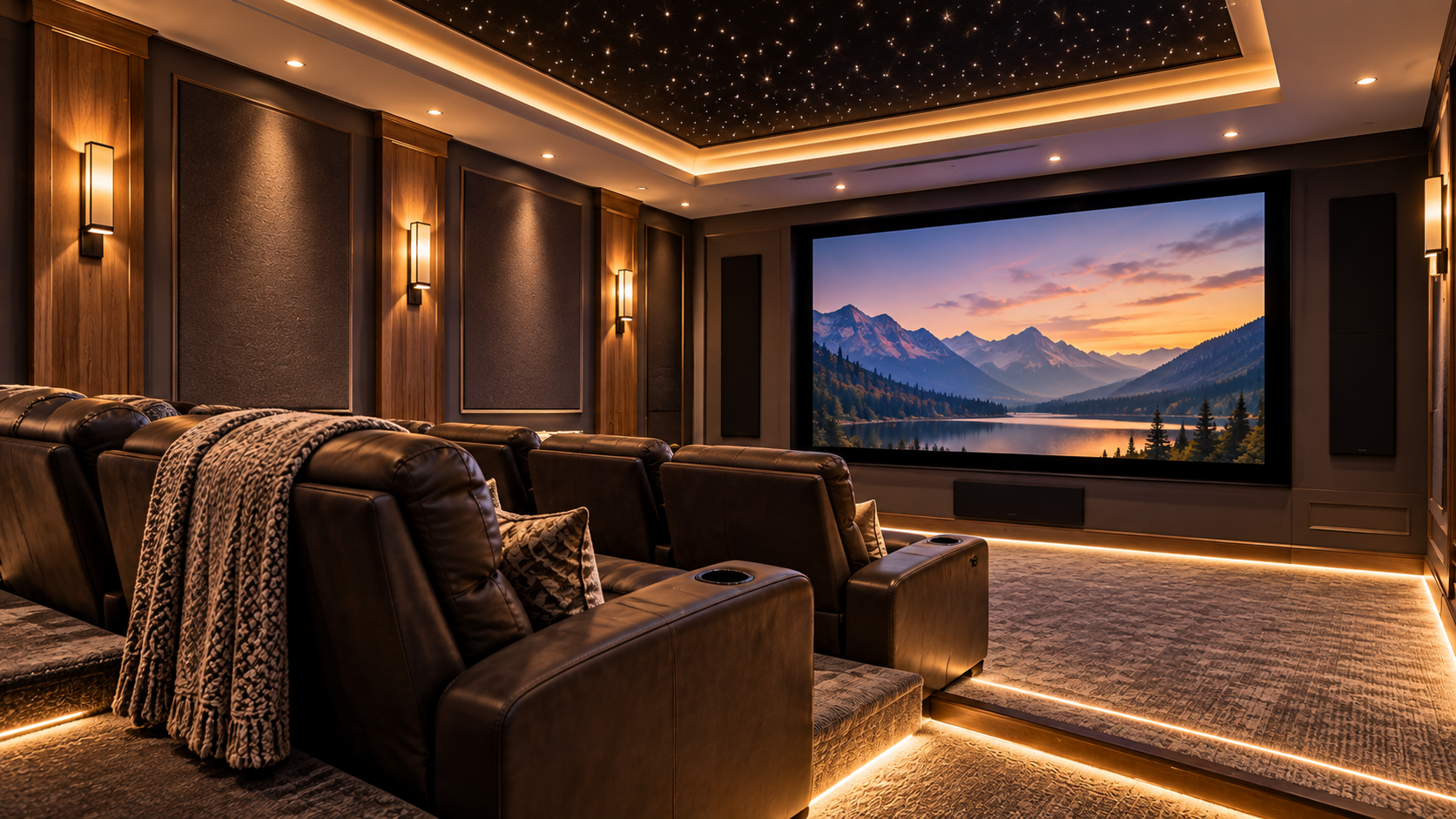
The best home theater lighting does not rely on one bright overhead fixture. Instead, it uses a mix of soft accent lights, wall sconces, LED strips, star ceilings, pathway lights, and smart controls to create a layered, cinematic look.
For a complete lighting plan, read my guide to How to Layer Lighting in a Home Theater.
Quick Guide to Decorative Home Theater Lighting Accessories
Here is a simple way to choose decorative lighting accessories based on the look and function you want:
| Lighting Accessory | Best For |
|---|---|
| LED strip lights | Adding glow behind screens, shelves, risers, and ceilings |
| Fiber optic star ceiling | Creating a luxury cinema or night-sky effect |
| Wall sconces | Adding classic theater-style side lighting |
| Recessed lights | Clean ceiling lighting that blends into the room |
| Smart lighting | Creating movie, sports, gaming, and entertaining scenes |
| Bias lighting | Reducing eye strain from a TV or screen |
| Step and pathway lights | Safer walking around risers, steps, and aisles |
| Neon signs and LED wall art | Adding personality and movie-room style |
Why Lighting Accessories Matter in a Home Theater
Decorative lighting accessories do more than make a room look nice. They help shape the entire viewing experience.
The right lighting can:
- Make the room feel more cinematic
- Reduce glare on the screen
- Help guests move around safely
- Highlight posters, shelves, and decor
- Make the room feel warmer and more inviting
- Support different moods for movies, sports, gaming, and entertainment
A living room usually uses lighting for everyday tasks. A home theater uses lighting to create atmosphere. That difference is what makes the room feel more intentional.
Even small lighting upgrades can make a big impact. A few wall sconces, hidden LED strips, or a soft glow behind the screen can make a basic media room feel much more finished.

LED Strip Lighting for a Soft Theater Glow
LED strip lights are one of the easiest decorative lighting accessories to add to a home theater. They are flexible, affordable, and can be used in many different places.
Popular places to use LED strip lighting include:
- Behind a TV or projector screen
- Under floating shelves
- Along tray ceilings
- Behind acoustic panels
- Under risers
- Around media consoles
- Inside display shelves
- Behind snack stations or cabinets
The best LED strip lighting looks soft and hidden. Try not to leave bright strips fully exposed, because that can look distracting. Instead, tuck them behind furniture, trim, shelves, or panels so the room gets a glow without directly seeing the light source.
Warm white LED strips are great for a cozy theater look. Color-changing strips can work well for gaming rooms, sports nights, or more playful media rooms.
Helpful Amazon searches for LED strip lighting
LED strip lights are one of the easiest decorative lighting upgrades for a home theater. They work well behind screens, under shelves, around tray ceilings, and along risers.
- LED Strip Lights for TV — best for soft backlighting behind a TV or screen
- Warm White LED Strip Lights — best for a cozy movie-night glow
- Smart LED Strip Lights — best for changing scenes for movies, sports, and gaming

Fiber Optic Star Ceilings for a Luxury Theater Look
A fiber optic star ceiling can make a home theater feel dramatic, relaxing, and luxurious. It creates the look of a night sky above the seating area and adds a special effect that guests notice right away.
Star ceilings work especially well in:
- Dedicated theater rooms
- Basement theaters
- Luxury home cinemas
- Sci-fi themed rooms
- Kids’ movie rooms
- Rooms with dark ceilings
- Spaces with tray ceilings or ceiling panels
A true fiber-optic star ceiling usually requires more planning than basic LED lighting. It may involve ceiling panels, fiber optic strands, a light source, and careful installation. But the finished look can be stunning.
For a simpler version, a galaxy projector can create a temporary starry effect without permanent installation. It will not look as custom as a fiber optic ceiling, but it can still create a fun movie-night atmosphere.
For a more dramatic ceiling effect, read my guide to Creating a Star Ceiling Effect in Your Theater Room.
Helpful Amazon searches for star ceiling lighting
A star ceiling can make a home theater feel more luxurious and immersive. These searches are helpful because kits vary by ceiling size, fiber count, color options, and installation style.
- Fiber Optic Star Ceiling Kit — best for creating a permanent star ceiling effect
- Twinkle Fiber Optic Star Ceiling Kit — best for a more realistic night-sky effect
- Galaxy Projector — best for a temporary starry ceiling effect

Wall Sconces for Classic Cinema Style
Wall sconces are one of the most classic decorative lighting choices for a home theater. They instantly make a room feel more like a real cinema.
Sconces work well because they provide soft side lighting without flooding the room with brightness. They can also add style to plain walls and help frame the seating area.
Wall sconces can be used to:
- Add classic movie-theater style
- Highlight wall panels or posters
- Create a warm glow alongside the walls
- Reduce the need for overhead lighting
- Make the room feel more finished
- Add symmetry and structure to the walls
For a traditional theater look, choose black, bronze, brass, frosted glass, or Art Deco-style fixtures. For a modern theater, choose simple sconces with clean lines and warm light.
If you’re choosing fixtures for your own room, see my guide to the Best Wall Sconces for Movie Rooms for stylish options that work with modern, classic, and cinematic theater designs.
The key is dimmability. Wall sconces should be bright enough for guests to enter the room, but soft enough to dim during the movie.
Helpful Amazon searches for home theater wall sconces
Wall sconces add classic cinema style while keeping the room softly lit. Choose dimmable styles whenever possible so the lights can be lowered during movies.
- Home Theater Wall Sconces — best for classic theater-style side lighting
- Dimmable Wall Sconces — best for adjusting brightness during movie night
- Art Deco Wall Sconces — best for a vintage or luxury cinema look
Recessed Lighting for a Clean, Modern Look
Recessed lighting is a good choice when you want the ceiling to look clean and uncluttered. Instead of hanging fixtures, recessed lights sit inside the ceiling and blend into the room.
This works especially well in modern home theaters, basement theaters, and rooms with lower ceilings.
Recessed lights can be used for:
- General room lighting
- Cleaning and setup
- Entertaining before a movie
- Soft background light
- Lighting near snack or equipment areas
The most important feature is dimming control. Recessed lights should not stay bright during a movie. They should be adjustable so you can brighten the room when needed and dim everything when the movie starts.
Warm white lighting usually looks better than cool white lighting in a theater room. Cool lighting can feel too harsh and less relaxing.
Helpful Amazon searches for recessed lighting and dimmers
Recessed lighting works best when it is soft, dimmable, and used with other lighting layers. Dimmer control makes the room more flexible for cleaning, entertaining, and movie night.
- Dimmable Recessed Lighting — best for clean ceiling lighting in a theater room
- Smart Dimmer Switch — best for adjusting brightness from a switch or app
- Warm White Recessed Lighting — best for a softer home theater atmosphere
Smart Lighting Systems for Movie, Sports, and Gaming Modes
Smart lighting can make a home theater much easier to control. Instead of adjusting each light manually, you can create preset scenes for different activities.
For example, you might create:
Movie night mode
Dim the sconces, lower the ceiling lights, turn on soft LED accent lighting, and keep step lights low.
Sports night mode
Use slightly brighter lighting so guests can talk, eat, and move around while still keeping the room comfortable.
Gaming mode
Use more colorful accent lighting, screen backlighting, and dim room lighting for a more immersive setup.
Entertaining mode
Brighten the room before guests arrive, light the snack station, and keep the room warm and welcoming.
Smart lighting is especially helpful if your room has multiple light sources. You can control bulbs, LED strips, dimmers, and switches from an app, remote, or voice assistant.
Helpful Amazon searches for smart home theater lighting
Smart lighting makes it easier to create different lighting scenes for movie nights, sports, gaming, and everyday use.
- Smart Light Bulbs — best for simple app or voice control
- Smart LED Strip Lights — best for color-changing accent lighting
- Smart Dimmer Switch — best for controlling sconces and ceiling lights
Bias Lighting for Better TV Viewing Comfort
Bias lighting is a soft light placed behind a TV or screen. It can make the screen easier to watch, especially during long movie nights or gaming sessions.
This type of lighting is popular in living room theaters and TV-based media rooms because it adds a glow without shining directly into your eyes.
Bias lighting can help:
- Reduce eye strain
- Make the screen feel more comfortable
- Add visual depth behind the TV
- Create a cozy movie-night feel
- Improve the look of a media wall
Bias lighting should be subtle. If it is too bright or too colorful, it can become distracting. Warm white or soft neutral lighting is usually the safest choice for movie watching.
Helpful Amazon searches for bias lighting
Bias lighting is a simple upgrade for TV-based home theaters. It can make long viewing sessions more comfortable and help the screen feel easier on the eyes.
- TV Bias Lighting — best for adding soft light behind a TV
- LED Backlight for TV — best for simple screen backlighting
- Warm White TV Backlight — best for a softer, less distracting glow

Step and Pathway Lighting for Safety and Style
Step and pathway lighting is both practical and decorative. It helps people move safely through a dark theater room without turning on bright overhead lights.
This is especially useful if your home theater has:
- Riser platforms
- Stairs
- Aisles
- Multiple rows of seating
- Dark walkways
- Raised seating areas
Low-level lighting can make the room feel more polished while also helping guests avoid tripping.
Common options include LED step lights, stair-strip lights, under-riser lighting, motion-sensor lights, and small pathway lights.
For seating and riser planning, read my guide to How to Choose the Perfect Home Theater Seating Layout.
Helpful Amazon searches for step and pathway lighting
Step and pathway lights are helpful for home theaters with risers, stairs, platforms, or darker walkways.
- LED Step Lights — best for stairs and riser steps
- LED Strip Lights for Stairs — best for low-level riser lighting
- Motion Sensor Night Lights — best for subtle pathway lighting

Neon Signs and LED Wall Art for Personality
Once the main lighting layers are planned, decorative signs and LED wall art can add personality.
These pieces are not necessary for every theater, but they can make the room feel more fun and memorable. They work especially well in themed spaces, snack areas, game rooms, sports rooms, and family movie rooms.
Popular options include:
- Home theater neon signs
- “Now Showing” signs
- Movie theater light boxes
- LED wall art
- Cinema marquee signs
- Popcorn or concession signs
- Custom family theater signs
The key is to use signs intentionally. One or two well-placed pieces can look great. Too many bright signs can make the room feel busy or distracting.
For more decor ideas, read my guide to Home Theater Accessories and Decor.
Helpful Amazon searches for decorative theater signs
Decorative signs and LED wall art add personality once your main lighting layers are in place.
- Home Theater Neon Sign — best for a fun movie-room accent
- Now Showing Sign — best for a classic cinema-style display
- Movie Theater Light Box — best for adding vintage theater personality
Living Room Theater Lighting vs. Dedicated Theater Lighting
Decorative lighting can work in both living rooms and dedicated home theaters, but the approach may be different.
A living room theater often needs lighting that blends with everyday decor. You may use a TV backlight, blackout curtains, warm table lamps, LED shelf lighting, or a dimmer switch to make the space more comfortable for movies.
A dedicated theater room can go further with wall sconces, riser lights, star ceilings, acoustic panel lighting, and smart lighting scenes.
Both setups can look beautiful. The best choice depends on how much control you have over the room and how often you use it for movie nights.
For room comparison ideas, read Home Theater vs. Living Room.
Common Decorative Lighting Mistakes to Avoid
Decorative lighting should make the room feel better, not busier. A few mistakes can make the space feel harsh or distracting.
Try to avoid:
- Using only one bright overhead light
- Choosing bulbs that are too cool or blue
- Leaving LED strips exposed
- Using too many colors at once
- Placing bright lights near the screen
- Forgetting dimmer controls
- Ignoring step or pathway lighting
- Using signs that are too bright during movies
- Mixing too many fixture styles
The best home theater lighting usually feels layered, warm, and intentional. Start with the biggest issue, such as glare, darkness around the stairs, or a room that feels too plain. Then add decorative lighting slowly.
More Home Theater Lighting Ideas
Keep improving your theater room with these helpful guides:
- How to Layer Lighting in a Home Theater — create a complete lighting plan with ambient, accent, safety, task, and smart lighting.
- Best Wall Sconces for Home Theaters — explore stylish wall lighting options that add warm, cinematic light without overpowering the screen.
- Creating a Star Ceiling Effect in Your Theater Room — learn how fiber-optic lighting and galaxy-style effects can create a night-sky ceiling.
- Home Theater vs. Living Room — compare how lighting, sound, seating, and distractions affect each setup.
- Home Theater Accessories and Decor — find finishing touches that make a theater room feel more complete.
- How to Choose the Perfect Home Theater Seating Layout — plan seating around screen distance, walkways, sightlines, and comfort.
- DIY Snack Stations for Home Theaters — add lighting around a popcorn, candy, or drink station.
Frequently Asked Questions
What decorative lighting is best for a home theater?
The best decorative lighting for a home theater usually includes wall sconces, LED strip lights, smart lighting, step lights, and soft accent lighting. These create an atmosphere without making the room too bright.
Are LED strip lights good for home theaters?
Yes, LED strip lights can work very well in a home theater when they are hidden or diffused. They are great behind TVs, under shelves, around ceilings, and along risers.
Do wall sconces work well in a home theater?
Yes. Wall sconces are one of the most classic home theater lighting choices. They add soft side lighting, help create a cinema-style mood, and make the room feel more finished.
Is a star ceiling worth it in a home theater?
A star ceiling can be worth it if you want a luxury theater look or a dramatic night-sky effect. It takes more planning than simple lighting, but it can make the room feel very special.
What is bias lighting?
Bias lighting is soft light placed behind a TV or screen. It can reduce eye strain, add depth, and make a TV-based home theater feel more comfortable.
Should home theater lights be dimmable?
Yes. Dimmable lighting is one of the best upgrades for a home theater because it lets you adjust the room for movie nights, sports, gaming, cleaning, and entertaining.
Final Thoughts
Decorative lighting accessories can make a home theater feel warmer, more cinematic, and more complete.
You do not need every lighting feature at once. Start with the lighting upgrade that solves your biggest issue. If the room feels plain, add wall sconces or LED accents. If the screen causes eye strain, try bias lighting. If the room has steps or risers, add safety lighting. If you want a luxury feel, consider a star ceiling or smart lighting scenes.
The best home theater lighting feels intentional. It should support the movie experience, make the room easier to use, and add personality without distracting from the screen.
Whether your room is a small media space, a living room theater, or a dedicated home cinema, the right decorative lighting can make movie nights feel more special.
What decorative lighting would you add first: LED strips, wall sconces, a star ceiling, or a neon sign?

Lisa is the creator of Home Cinema Living. Together with her husband, a longtime home theater professional, she has spent years designing and enjoying home theater spaces that bring family and friends together for memorable movie nights.
I’ve been helping my sister with their home theater upgrade, since she and her husband love winding down after work or on weekends by watching their favorite movies together. Reading through your ideas really opened my eyes to how much lighting can change the whole atmosphere. I especially like the idea of LED strip lights for that soft glow and the fiber optic star ceiling for a real cinematic vibe; it sounds like the perfect way to make movie nights feel extra special.
From your experience, which lighting upgrade do you think makes the biggest impact right away, something that instantly transforms the room even before adding all the other details?
Thank you so much! I love that you’re helping your sister with their theater upgrade. It sounds like such a fun project, and honestly, those movie nights together are what make these spaces so special.
If I had to pick one lighting upgrade that creates the biggest immediate impact, I would probably say LED accent lighting first. Adding soft LED lighting along tray ceilings, under seating, risers, or shelving instantly changes the mood of the room and gives it that polished theater feel without requiring a huge renovation.
The fiber optic star ceiling is absolutely stunning and adds that wow factor, but I think of it as the finishing touch that takes the room from “beautiful” to a true cinematic experience.
Have you and your sister started planning the lighting layout yet, or are you still in the inspiration stage?