
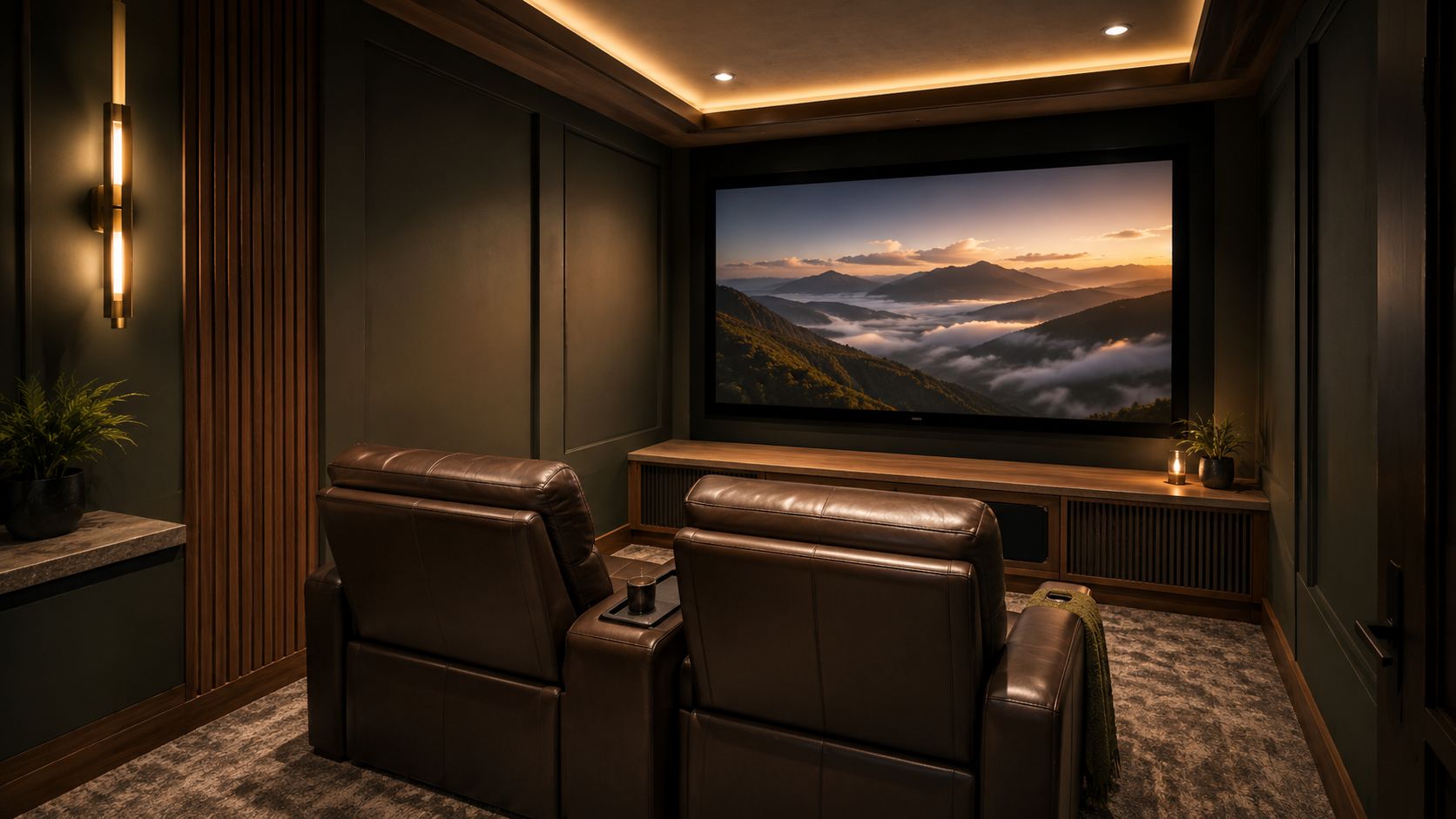
A home theater does not need to take over an entire basement to feel special. Some of the most inviting movie rooms are actually smaller spaces where every design choice has a purpose.
A spare bedroom, compact basement room, bonus room, loft, or unused den can become an incredibly comfortable place to watch movies when the layout is planned around the space you actually have. The key is resisting the urge to squeeze a full-size theater into a smaller footprint.
That may mean choosing two comfortable recliners instead of six oversized seats, mounting a TV rather than forcing an enormous projection screen into the room, or using shallow storage instead of filling the floor with bulky cabinets.
The result can still feel polished, cinematic, and surprisingly luxurious. These small movie room ideas focus on practical layouts, furniture scale, storage, screen placement, and thoughtful design choices that help compact spaces feel intentional rather than crowded.
Affiliate disclosure: This post may contain affiliate links. As an Amazon Associate, I may earn from qualifying purchases at no extra cost to you.
Quick Guide: What Works Best in a Small Movie Room?
| Small Room Challenge | Try This |
|---|---|
| Limited seating space | Two recliners, a loveseat, or a compact sectional |
| Narrow room | One seating row with a clear side walkway |
| Short viewing distance | A properly sized TV or projection screen |
| Lack of storage | Shallow cabinets, floating shelves, or built-ins |
| No room for a snack bar | A narrow console or rolling cart |
| Visible equipment | Wall-mounted components and concealed cables |
| Room feels crowded | Fewer, more intentional design elements |
| Limited floor space | Vertical storage and wall-mounted lighting |
| Multipurpose room | Flexible seating and movable furniture |
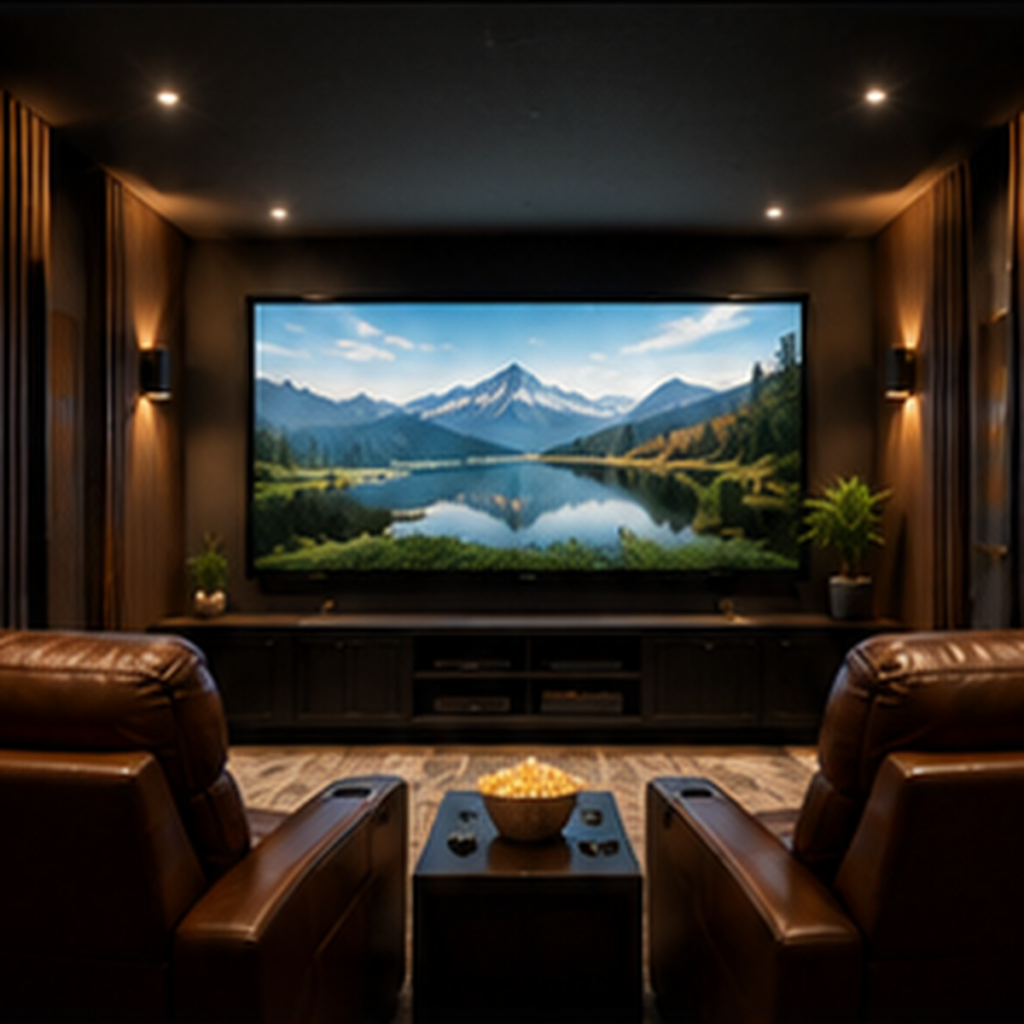
1. Start With Two Really Comfortable Seats
One of the easiest ways to overwhelm a small movie room is to begin with too much seating.
If the room is usually used by one or two people, a pair of comfortable recliners may create a much better experience than squeezing four or five chairs into every available inch. Give the seats enough room to recline properly while maintaining a clear path around them.
Always check a recliner’s full dimensions, including how much space it requires when fully extended. Some chairs that look compact in product photos require considerably more space once reclined.
Two well-positioned seats facing the screen can make a compact theater feel deliberate rather than undersized. Add a slim table between them for drinks and remotes, and you already have the foundation of a private mini cinema.
If you are comparing seating options, my guide to What to Look for in a Comfortable Home Theater Recliner explains the comfort features worth considering.
Helpful Amazon Finds
- Compact Wall-Hugger Recliner – A good option when you want reclining comfort without requiring as much clearance behind the chair.
- Slim Drink Table – Fits between two seats without taking up the floor space of a traditional side table.
- Recliner Armrest Organizer – Keeps remotes, glasses, and small accessories nearby without adding another piece of furniture.
2. Use a Loveseat When Individual Chairs Take Up Too Much Space
A loveseat can be an excellent alternative when two separate recliners take up too much width.
Look for a design with supportive cushions and relatively narrow arms rather than an oversized frame. A reclining loveseat can provide much of the comfort of theater seating while taking up less space than two bulky chairs.
This setup works especially well in spare bedrooms and compact media rooms where you want the space to feel relaxed rather than overly formal.
If you are unsure how much space to leave around the seating, my Home Theater Seating Layout Guide covers placement and spacing in more detail.
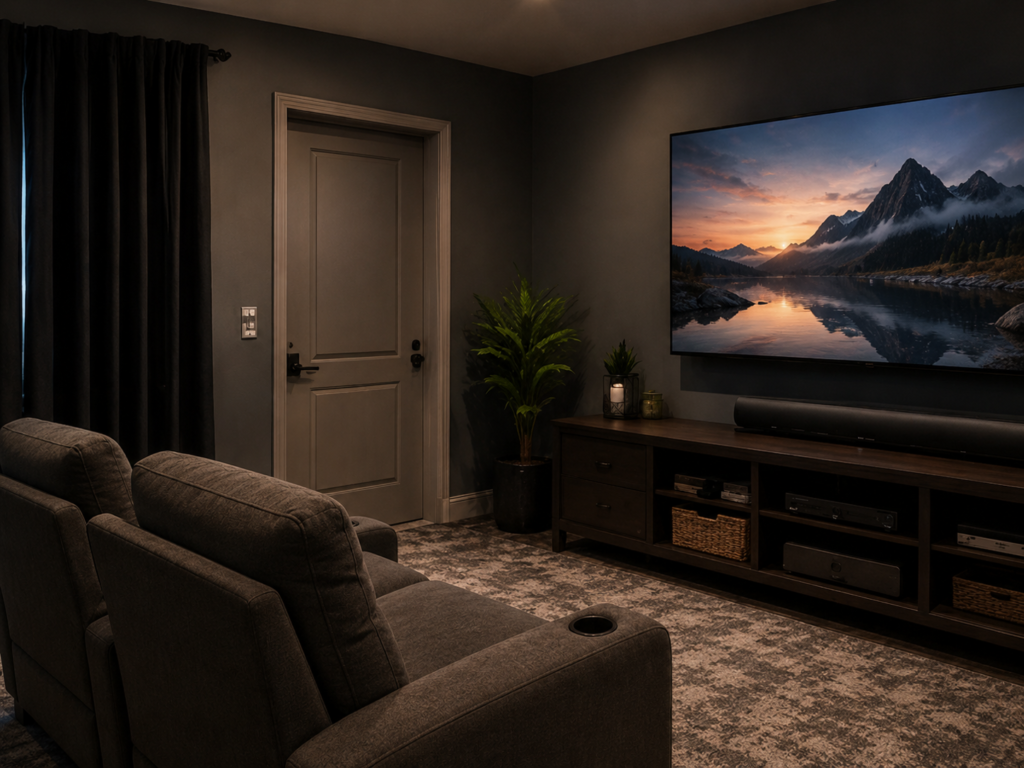
3. Turn a Spare Bedroom Into a Mini Theater
A spare bedroom is one of the most realistic places to create a small movie room because much of the basic infrastructure is already in place.
Start by giving the screen wall a clear purpose. Mount the TV or screen, position the seating directly in front of it, and use the remaining walls for lighting, acoustic treatment, and storage.
If the room has a closet, use it. Blankets, games, spare cables, controllers, and less attractive equipment can all be stored behind closed doors instead of taking up valuable space in the room.
Blackout curtains can also be helpful in a bedroom conversion because they control daylight without requiring permanent changes to the windows.
The transformation does not have to be elaborate. Once the bed, dresser, and other traditional bedroom furniture are removed, even a modest room may have enough space for a convincing two- to four-person theater.
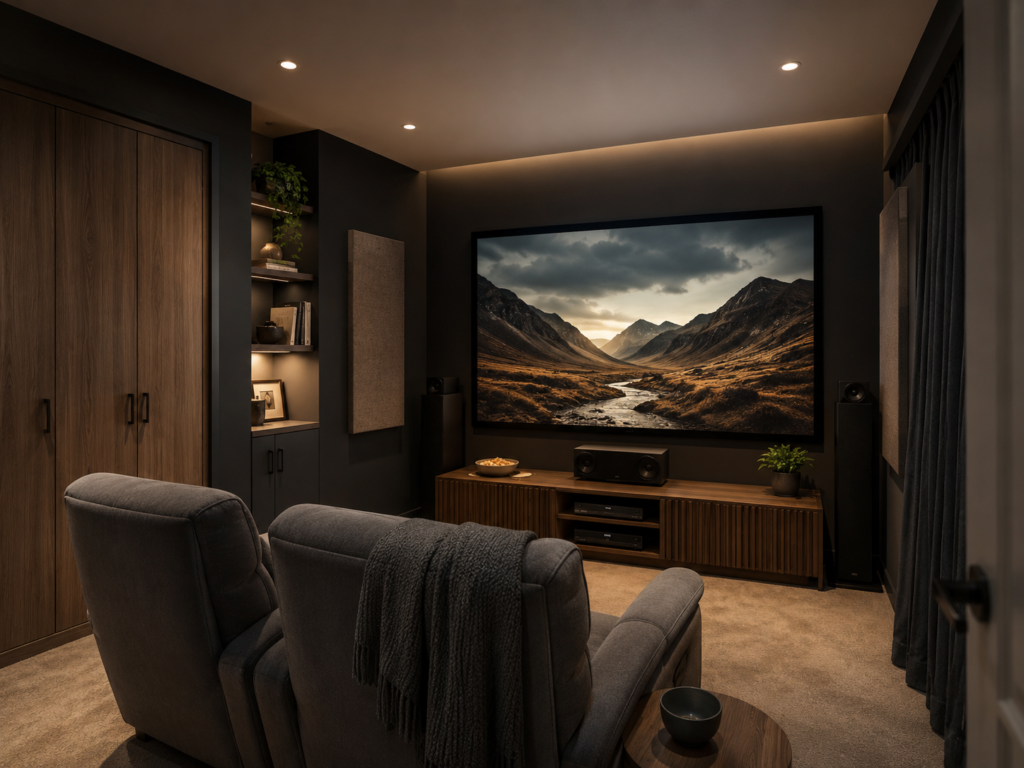
4. Choose a TV or Projector Based on the Room
A projector is not automatically the better choice simply because you are creating a home theater.
In a small room, viewing distance, available wall space, ambient light, and projector placement all matter. A large wall-mounted television may provide a cleaner installation when viewers are sitting relatively close to the screen.
A projector can still work beautifully in a compact theater, particularly when you have a clear screen wall and want a larger cinematic image. Just avoid choosing an enormous screen simply because it physically fits. A screen that is too large for the viewing distance can become uncomfortable rather than immersive.
My TV vs. Projector for a Home Theater guide compares both options in much more detail.
Helpful Amazon Finds
- Low-Profile TV Wall Mount – Keeps the television close to the wall, making the room feel cleaner and less crowded.
- Compact Projector Ceiling Mount – Helps keep the projector off furniture and preserves valuable floor space.
- Blackout Curtains – Useful for controlling daylight and glare in spare bedrooms and other rooms with windows.
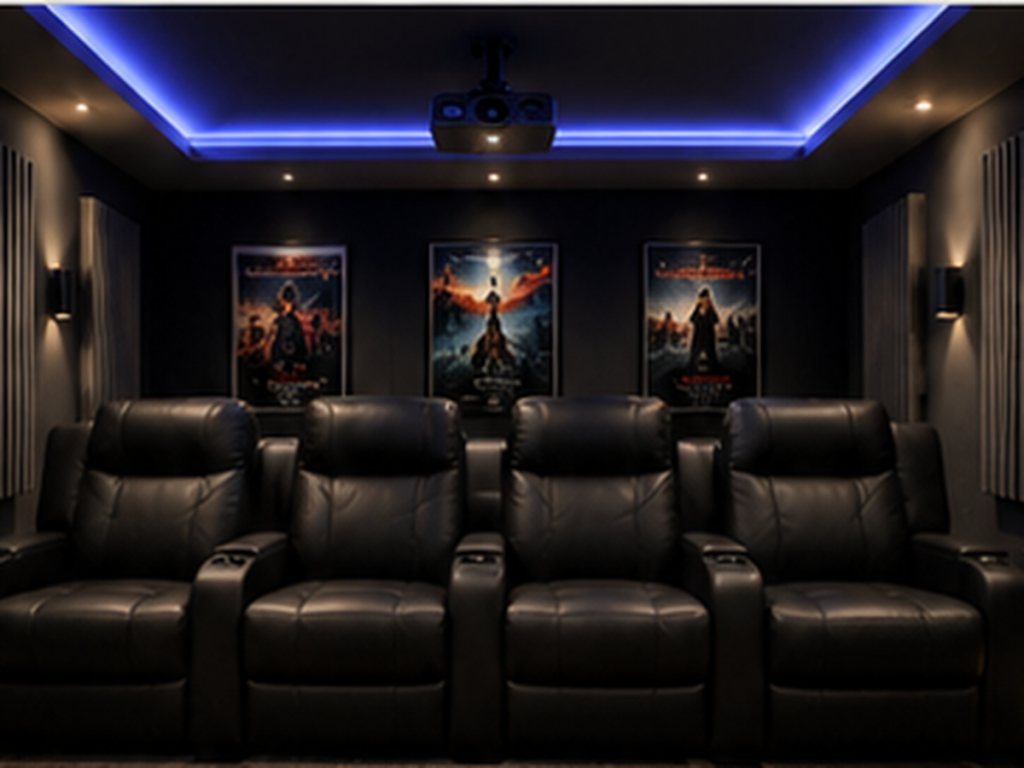
5. Build a Narrow Theater Around One Seating Row
Long, narrow rooms can make excellent small theaters when you work with their shape rather than against it.
Rather than forcing multiple seating rows into the space, use one comfortable row and preserve a walkway along one side. This prevents people from squeezing around furniture or walking directly in front of the screen whenever they enter or leave.
A narrow room also makes the side walls more noticeable. Shallow acoustic panels, sconces, or a few carefully chosen decorative pieces can add character without taking up valuable floor space.
Keep the screen wall relatively simple and let the room’s shape naturally direct attention forward.
Before committing to a layout, it is also worth reviewing my Home Theater Mistakes to Avoid to catch common spacing and placement problems early.
6. Use a Compact Sectional for a Family Movie Room
Not every small home theater needs traditional theater recliners.
If the room will be used by children, family members, and friends, a compact sectional may provide more flexible seating. Choose one that is appropriately scaled to the room, with the primary seating position facing the screen.
Avoid oversized U-shaped arrangements that force people sitting at the ends to watch from uncomfortable angles.
An ottoman can add flexibility without committing to another permanent chair. It can serve as a footrest during a movie and move out of the way when you want more open floor space.
7. Keep the Screen Wall Simple
In a compact movie room, the screen already has a strong visual presence.
You usually do not need shelves, signs, cabinets, posters, decorative objects, and lighting all competing for attention around it.
A simpler screen wall can make the room feel wider and calmer. Consider subtle wall paneling, a darker paint color, acoustic treatment, or a low-profile media console.
If you use cabinetry, keep it shallow enough not to interfere with circulation or speaker placement. In a small room, even a few additional inches of furniture depth can affect the walkway.
For more color inspiration, see my guide to Home Theater Paint Colors.
8. Move Storage Up the Wall
When floor space is limited, vertical space becomes much more valuable.
Shallow wall-mounted shelves and cabinets can hold media, remotes, accessories, and a few decorative pieces without requiring another large piece of furniture.
Closed storage is especially useful in a small movie room because clutter becomes noticeable quickly. You do not need to display every piece of movie memorabilia you own. A few favorite pieces usually look more intentional than shelves filled from end to end.
For items you want to keep nearby but out of sight, attractive bins can make open shelving or closet storage much easier to manage.
My guide to How to Organize a Home Theater has additional ideas for keeping equipment and movie-night essentials under control.
Helpful Amazon Finds
- Floating Wall Shelves – Add storage without using valuable floor space.
- Storage Baskets With Lids – Useful for blankets, controllers, remotes, and other items you do not want left in view.
- Cable Management Raceway – Helps conceal visible wiring when running cables inside the wall is not practical.
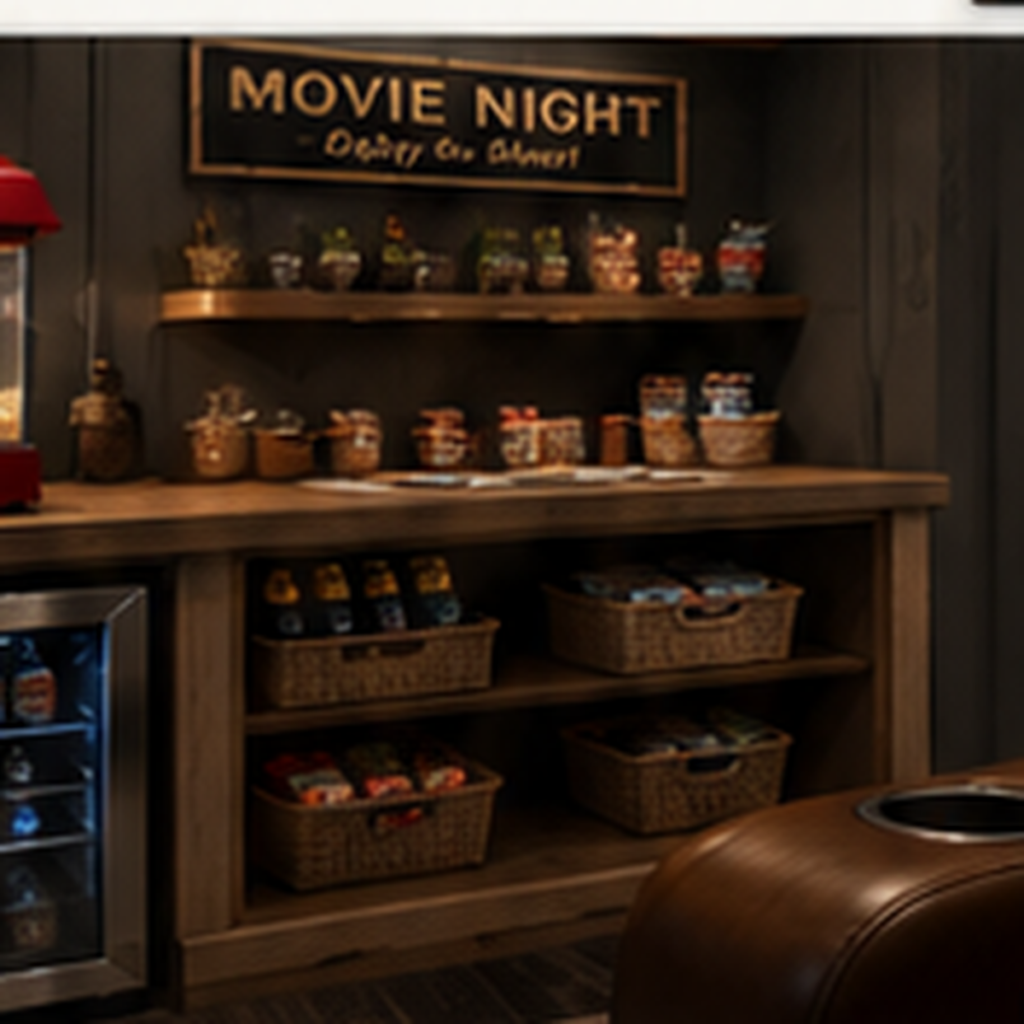
9. Create a Tiny Snack Station Near the Entrance
A small movie room can still have a snack station. It simply needs to be scaled appropriately.
Instead of dedicating an entire wall to a concession area, try a narrow cabinet, small bar cart, or rolling storage unit near the entrance.
This placement keeps food and drinks within reach without interfering with the seating or screen. It also allows someone to grab a drink without crossing directly in front of the movie.
A compact snack station can still feel special. A few containers, popcorn supplies, napkins, and a small beverage refrigerator can provide everything you need without turning the room into a full concession stand.
If you want more ideas, my DIY Snack Stations for Home Theaters guide covers carts, cabinets, concession-style displays, and other setups in much greater detail. You can also find larger-scale inspiration in my article, Home Theater Popcorn Bar Ideas.
Helpful Amazon Finds
- Rolling Snack Cart – A flexible choice because it can be moved whenever you need more floor space.
- Small Bar Cabinet – Provides concealed storage while keeping a compact snack area looking like part of the room.
- Mini Beverage Refrigerator – Keeps cold drinks close at hand and reduces trips to the kitchen during movie night.
10. Use Lighting That Does Not Take Up Floor Space
Floor lamps can quickly become obstacles in a compact theater.
Wall sconces, recessed lighting, under-cabinet lighting, and carefully positioned accent lighting can provide illumination without using valuable floor space.
The goal is to create enough light to enter the room safely, find a drink, or locate a remote without flooding the entire space with brightness.
Decorative lighting near the screen should be turned off during movies if it creates glare, reflections, or distracting light around the picture.
For a complete lighting plan, see How to Layer Lighting in a Home Theater.
11. Plan Cable Management Before Decorating
Cable clutter becomes much more noticeable in a small room.
Before decorating, decide where the television, projector, speakers, streaming devices, game systems, and power outlets will go. Planning those details early can prevent cords from running across walls, floors, and furniture later.
Wall-mounted components, cable raceways, sleeves, clips, and concealed power solutions can all help create a cleaner finished space.
My Hidden Cable Management Ideas for a Clean Home Theater Setup guide goes deeper into the options.
12. Let Acoustic Treatment Become Part of the Design
Acoustic treatment can be useful in a smaller theater, but that does not mean covering every wall with bulky panels.
Choose treatments that fit the room visually and place them where they serve an acoustic purpose. Fabric-wrapped panels can blend into the design almost like architectural details when their size, spacing, and finish work with the overall room.
It is also important to remember that acoustic treatment and soundproofing are not the same thing. If your primary concern is sound traveling into adjoining rooms, acoustic panels alone will not solve the problem.
My guide to Acoustic Panels vs. Soundproofing for Home Theaters explains the difference without duplicating that information here.
For a more involved sound-control project, you can also read my Soundproofing Techniques for a Home Theater guide.
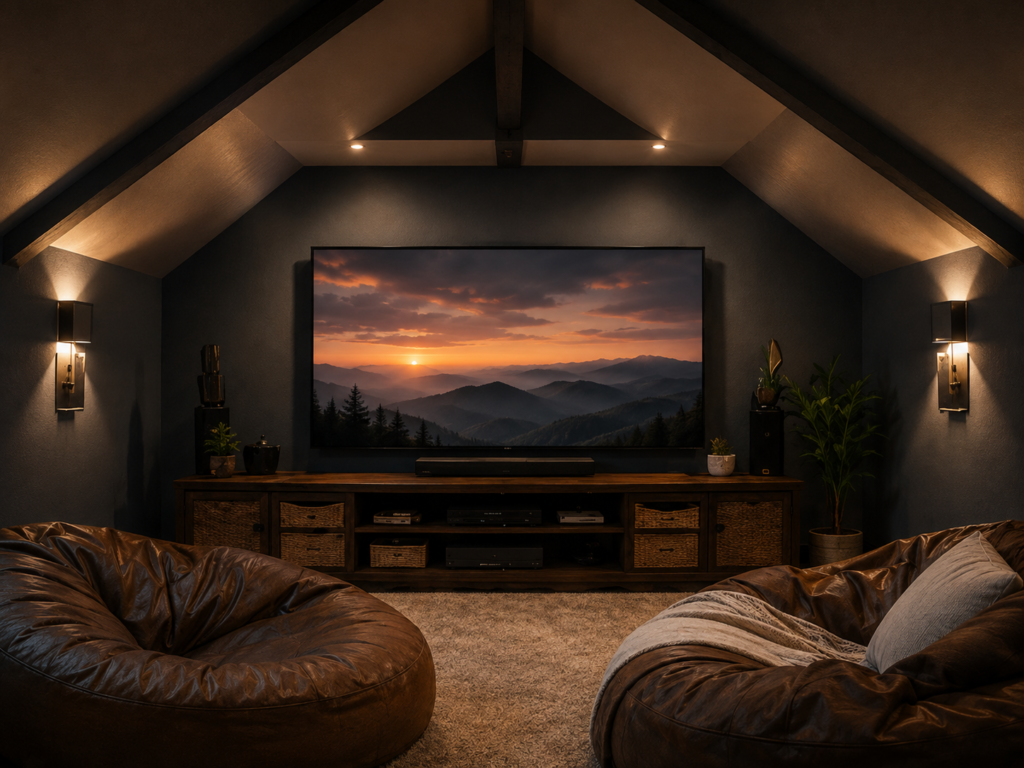
13. Make Awkward Corners Useful
Not every small room is a perfect rectangle.
You may be working with a sloped ceiling, a shallow alcove, an unusual corner, a bump-out, or a low section of wall. Instead of forcing seating into these areas, use them for secondary functions.
A shallow alcove can become storage. A rear corner can hold a compact snack cart. A low wall beneath a sloped ceiling may work well for cabinets or baskets. A narrow section beside the door can hold shallow shelves.
Keep the screen and seating in the most comfortable positions first. Then let the room’s awkward architecture handle storage and accessories.
This approach often works particularly well in attic rooms, bonus rooms, and compact basement spaces, where the architecture offers less flexibility.
14. Use a Controlled Color Palette
Small does not mean the room has to be painted white.
Deeper colors can work beautifully in a home theater because they reduce reflected light and help create a more immersive atmosphere.
Charcoal, deep navy, muted brown, dark olive, and burgundy can all work well. The key is keeping the palette controlled so the room does not become visually heavy.
For example, charcoal walls paired with warm wood and camel-colored seating can feel sophisticated without making the room look gloomy.
A few carefully chosen materials will usually look better than mixing too many colors, patterns, and finishes in a compact room.
If you want more guidance before choosing a finish, my Home Theater Paint Colors article covers this subject in depth.
15. Give the Room One Memorable Feature
A small theater does not have enough visual breathing room for several competing focal points.
Choose one feature to make memorable.
It might be beautiful wall paneling, a dramatic ceiling detail, a pair of exceptional recliners, a carefully edited display of movie memorabilia, or a beautifully designed snack cabinet at the back of the room.
Then allow the rest of the space to support that feature.
This is one of the easiest ways to make a modest theater feel more polished. Instead of spreading the budget across dozens of small decorative additions, concentrate attention where it will make the greatest impact.
If movie décor will be that feature, my How to Use Movie Posters and Memorabilia guide can help you create a display that feels intentional rather than crowded.
Four Small Movie Room Layouts That Work
Before buying furniture, sketch the room and mark the doors, windows, closets, outlets, and any areas that need to remain accessible.
Two-Seat Mini Theater
Place two recliners or theater chairs centered on the screen with a small table between them. This is one of the simplest and most comfortable layouts for a small dedicated room.
Four-Seat Single Row
Four narrower theater seats can work if the room is wide enough while still leaving a usable walkway. Avoid pressing the outside chairs directly against the walls simply to make the row fit.
Compact Sectional Layout
Use a small sectional facing the television or screen with a movable ottoman. This is a flexible option for families and for rooms that serve multiple purposes.
Loveseat With Flexible Extra Seating
Use a loveseat as the permanent seating and bring in lightweight chairs or floor cushions only when additional guests arrive. This keeps the room comfortable during everyday use instead of permanently filling it with furniture that is rarely needed.
For more detailed seating guidance, see How to Choose the Perfect Home Theater Seating Layout.
What Should You Avoid in a Small Home Theater?
One of the biggest mistakes is treating a small room like a miniature version of an enormous luxury theater.
Trying to fit two seating rows, a giant screen, a full concession stand, oversized recliners, large cabinets, and extensive décor into one compact room will usually make the space less comfortable.
Pay attention to blocked doors, seats that cannot fully recline, furniture positioned at awkward viewing angles, speakers hidden behind seating, and walkways that are too narrow to use comfortably.
The best small theater is not the one with the most things in it. It is the one where everything feels like it belongs.
Frequently Asked Questions
How small can a home theater room be?
There is no single minimum size. Even a spare bedroom can work if the screen, seating, equipment, and walkways are scaled appropriately.
Is a TV better than a projector in a small movie room?
Sometimes. A TV often works well at shorter viewing distances, while a projector can be a good choice when the room has enough depth and a practical mounting location.
How many seats should I put in a small home theater?
For many compact theaters, two to four comfortable seats are enough. Plan around the number of people who will use the room regularly.
Can a small movie room still feel luxurious?
Absolutely. Comfortable seating, thoughtful lighting, concealed cables, and one strong design feature can make a compact theater feel surprisingly high-end.
Where should I put a snack station in a small movie room?
The back or side of the room near the entrance usually works best. A narrow cabinet or rolling cart can keep snacks accessible without interfering with seating or viewing.
How do I keep a small movie room from feeling cluttered?
Use fewer freestanding pieces, choose closed or wall-mounted storage, conceal cables, and keep décor edited.
Final Thoughts
A small movie room does not have to feel like a compromise.
Start with the screen and seating, protect the walkways, and make smart use of the walls for storage and lighting. Keep the equipment organized so the technology does not take over the room.
Once the functional pieces are in place, add the character.
That might be a pair of comfortable recliners, a small popcorn cart near the door, a rich wall color, subtle acoustic panels, or a carefully edited display of favorite movie memorabilia.
You do not need a huge dedicated theater to create a room that feels special. Sometimes a smaller room simply makes every design decision matter more.
Related Articles
- Cozy Movie Room Ideas for Every Style
- TV vs. Projector for a Home Theater
- How to Choose the Perfect Home Theater Seating Layout
- What to Look for in a Comfortable Home Theater Recliner
- Home Theater Paint Colors
- How to Layer Lighting in a Home Theater
- DIY Snack Stations for Home Theaters
- Hidden Cable Management Ideas for a Clean Home Theater Setup
- How to Organize a Home Theater

Lisa is the creator of Home Cinema Living. Together with her husband, a longtime home theater professional, she has spent years designing and enjoying home theater spaces that bring family and friends together for memorable movie nights.