
Affiliate disclosure: This post may contain affiliate links. As an Amazon Associate, I earn from qualifying purchases at no extra cost to you.
Lighting can completely change the feel of a home theater. Many people focus on the screen, speakers, or seating first, but lighting is often what transforms a room from a simple TV space into a true cinematic experience.
The right lighting helps create atmosphere, improve comfort, reduce glare, make the room safer, and make every movie night feel more immersive. The mistake many people make is relying on one bright overhead light. That may work in a regular living room, but it can wash out the screen and ruin the cozy theater feeling.
The secret is layered lighting.
Instead of relying on a single light source, a well-designed home theater uses several layers of lighting that work together. Each layer has a different purpose, from soft room glow to accent lighting, wall sconces, safety lights, and task lighting.
For more ideas on overall setup, read my guide to Home Theater Accessories and Decor.
Quick Guide to Home Theater Lighting Layers
Here is a simple way to understand the main lighting layers in a home theater:
| Lighting Layer | Best For |
|---|---|
| Ambient lighting | Creating a soft overall glow in the room |
| Accent lighting | Adding depth behind screens, shelves, panels, and ceilings |
| Wall sconces | Creating classic cinema-style side lighting |
| Safety lighting | Lighting steps, risers, aisles, and walkways |
| Task lighting | Brightening snack stations, cabinets, and equipment areas |
| Smart lighting | Controlling scenes for movies, sports, gaming, and entertainment |
| Blackout control | Reducing glare from windows and outside light |
Start With Ambient Lighting
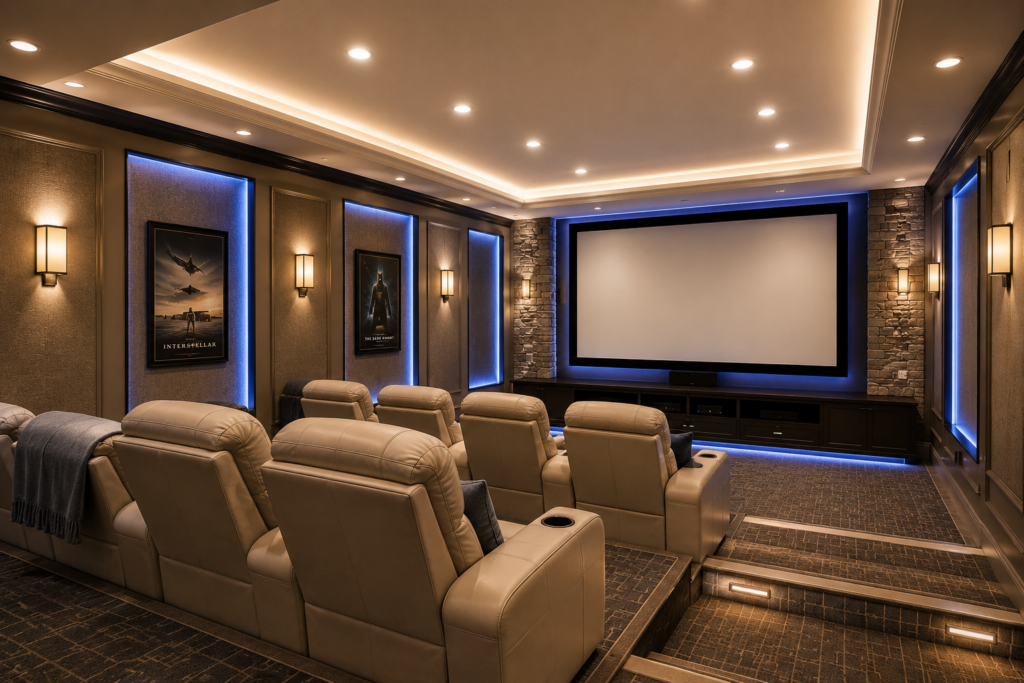
Ambient lighting forms the foundation of the room. Think of it as the soft overall glow that keeps the space comfortable without distracting from the screen.
This lighting should be warm, gentle, and dimmable. The goal is to provide enough visibility for movement and comfort while still preserving a cinematic atmosphere.
Popular ambient lighting options include:
- Recessed ceiling lights with dimmers
- Cove lighting around tray ceilings
- Soft perimeter lighting
- Warm wall-mounted fixtures
- Low-level lamps in media rooms
Warm color temperatures generally work best in home theaters because they create a cozy, inviting feel. Cool white light can feel harsh during movies.
One of the best upgrades is adding dimmer control. This lets you brighten the room when cleaning or entertaining, then lower the lights when the movie starts.
Helpful Amazon searches for ambient home theater lighting
Ambient lighting should feel soft and flexible. These searches are helpful because the right fixture depends on your ceiling, room size, and theater style.
- Dimmable Recessed Lighting — best for soft ceiling lighting in a home theater
- LED Cove Lighting — best for creating a soft glow around tray ceilings
- Smart Dimmer Switch — best for controlling lighting levels during movie night
Add Accent Lighting for Depth
Accent lighting is where a theater room starts to feel more premium.
Instead of lighting the whole room, accent lighting highlights certain features and adds visual depth. Hidden LED strips are especially popular because they create a glow without showing the light source.
Great locations for accent lighting include:
- Behind the screen
- Behind a TV
- Around tray ceilings
- Under floating shelves
- Behind acoustic panels
- Around media consoles
- Inside display shelves
- Around memorabilia cases
The best accent lighting is often subtle. Hidden lighting usually looks cleaner than exposed LED strips. The goal is to create a soft glow, not a distracting line of lights.
Accent lighting also pairs beautifully with star ceilings and decorative wall treatments. For more inspiration, read my guide to Creating a Star Ceiling Effect in Your Theater Room.
Helpful Amazon searches for accent lighting
Accent lighting can make a home theater feel more custom. These searches work well for media walls, shelves, ceilings, and behind-screen lighting.
- LED Strip Lights for TV — best for soft backlighting behind a TV or screen
- LED Strip Lights for Shelves — best for lighting shelves, memorabilia, and display areas
- Warm White LED Strip Lights — best for a softer, more cinematic glow
Wall Sconces Add Classic Cinema Style
Wall sconces deserve special attention because they combine both function and design.
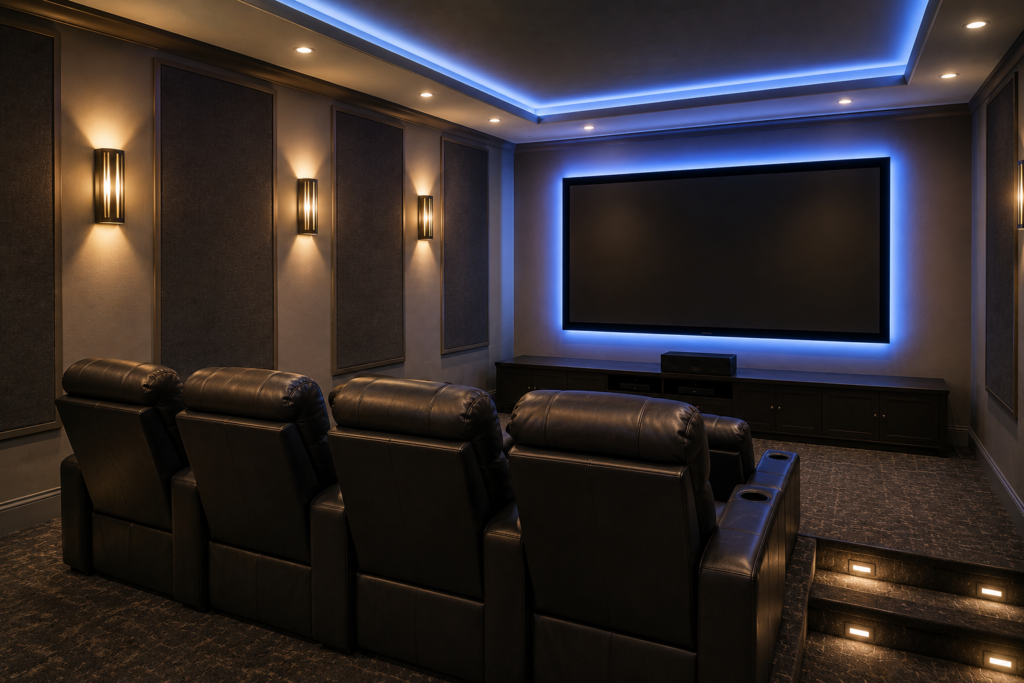
Traditional movie theaters have used wall sconces for decades because they provide soft side lighting without creating too much screen glare. In a home theater, they can make the room feel more finished and intentional.
Wall sconces can help:
- Add character and elegance
- Frame seating areas
- Highlight movie posters
- Showcase acoustic panels
- Reduce dependence on overhead lighting
- Create a warmer movie-room atmosphere
Traditional theaters often look great with bronze, black, or frosted-glass fixtures. Modern theaters may look better with simple, minimalist sconces that provide indirect light.
Placement matters too. Even spacing alongside walls usually creates the most balanced appearance.
If you want more wall lighting ideas, read my guide to Top Decorative Lighting Accessories for Home Theaters.
Helpful Amazon searches for home theater wall sconces
Wall sconces are one of the easiest ways to make a home theater feel more like a real cinema.
- Home Theater Wall Sconces — best for classic theater-style side lighting
- Dimmable Wall Sconces — best for adjusting brightness during movies
- Art Deco Wall Sconces — best for a vintage or luxury cinema look

Don’t Forget Safety Lighting
Safety lighting may not be the most glamorous lighting layer, but it is one of the most practical.
Many home theaters include risers, steps, platforms, dark walkways, or rows of seating. Small, low-level lights help guests move around safely without ruining the movie-night atmosphere.
Popular safety lighting options include:
- Stair lighting
- Step lights
- Toe-kick lighting
- Under-seat lighting
- LED riser strips
- Low-level aisle lights
These subtle additions create a polished appearance while improving visibility.
Safety lighting is especially helpful if your room has multiple rows, a riser platform, or a dark walkway along the seating area.
For more help with layout planning, read my guide to How to Choose the Perfect Home Theater Seating Layout.
Helpful Amazon searches for safety lighting
Safety lighting is helpful for risers, steps, platforms, and darker walkways in home theaters.
- LED Step Lights — best for lighting stairs and riser steps
- LED Strip Lights for Stairs — best for adding low-level riser lighting
- Motion Sensor Night Lights — best for subtle pathway lighting in dark rooms
Add Task Lighting Where You Need Function
Not every light in a home theater needs to focus on atmosphere. Some areas simply need better visibility.
Task lighting works especially well around:
- Snack stations
- Equipment cabinets
- Remote storage areas
- Beverage counters
- Mini bars
- Game storage
- Media shelves
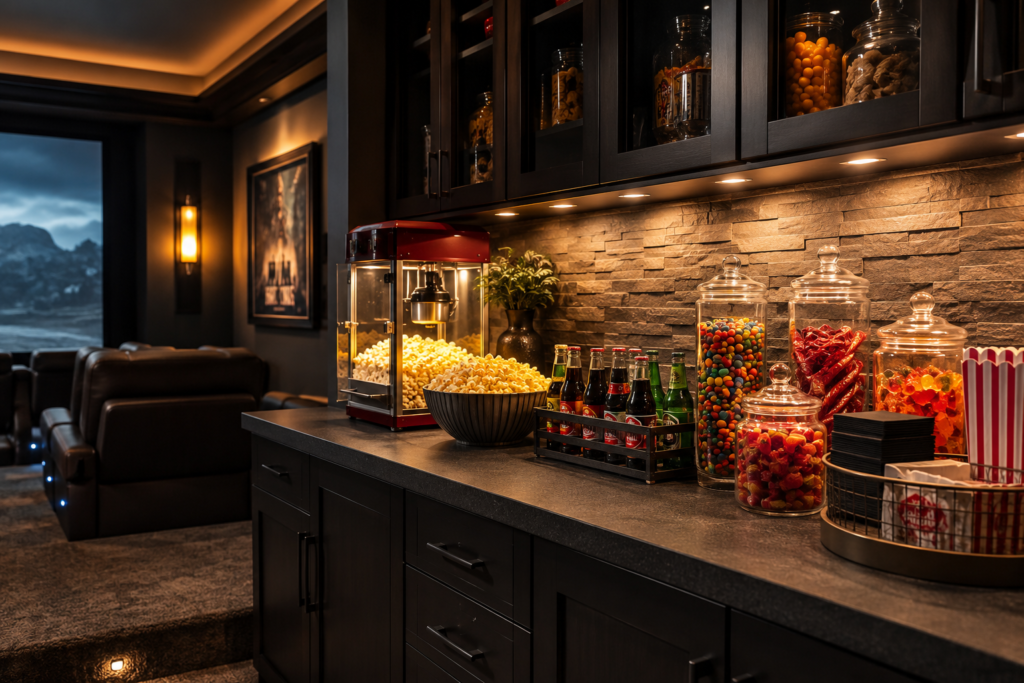
A snack station, for example, may need brighter lighting than the main seating area. This keeps the room functional without making the entire theater too bright.
The key is to keep task lighting focused. Light the area that needs it, but avoid shining a bright light toward the screen.
For snack setup inspiration, read my guide to DIY Snack Stations for Home Theaters.
Helpful Amazon searches for task lighting
Task lighting is helpful near snack stations, cabinets, shelves, and storage areas.
- Under Cabinet Lighting — best for snack stations and beverage counters
- Rechargeable Picture Lights — best for posters, shelves, and display areas
- LED Puck Lights — best for cabinets, shelves, and small theater storage areas
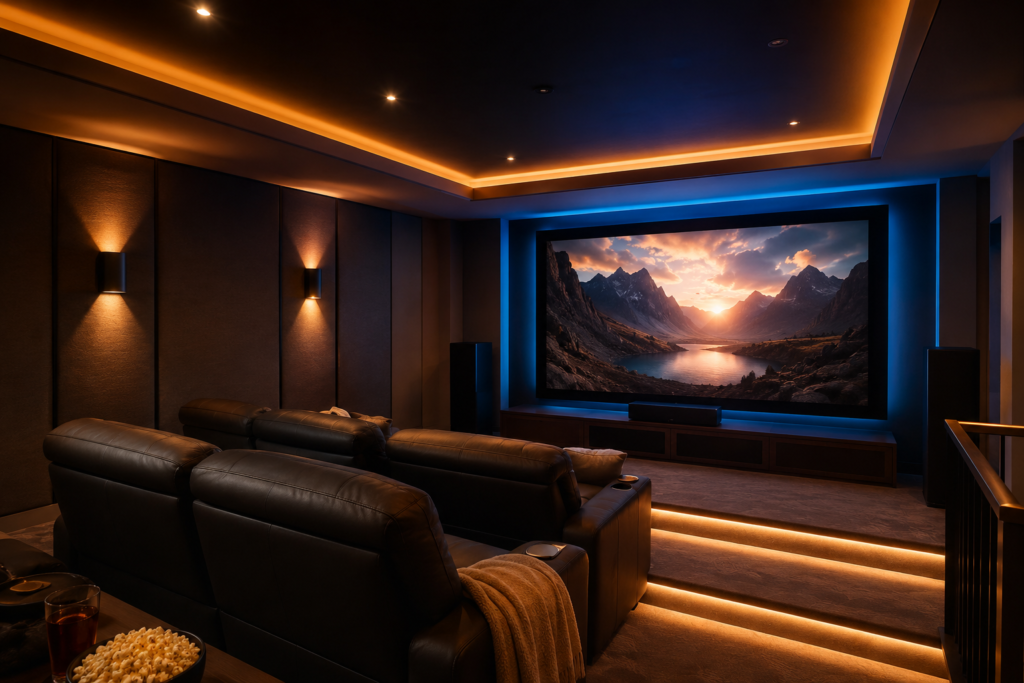
Create Different Lighting Scenes
One of the biggest advantages of layered lighting is flexibility.
The same room can feel completely different depending on how the lights are set. You can create separate lighting scenes for movie night, sports, gaming, cleaning, or entertaining.
Movie night mode
For movies, many homeowners prefer:
- Dim ambient lighting
- Soft wall sconces
- Accent lighting around the room
- Low-level riser or step lighting
This creates an immersive cinema atmosphere without distractions.
Sports night mode
Sports gatherings usually benefit from slightly brighter lighting.
Consider:
- Moderate ambient lighting
- Decorative accent lighting
- Brighter snack station lighting
- Comfortable social lighting around seating
This keeps the room comfortable for conversation while still maintaining a theater feel.
Gaming mode
Gaming rooms often lean more heavily into accent lighting.
Popular combinations include:
- Hidden LED strips
- Backlighting behind displays
- Shelf lighting
- Dim room lighting for immersion
- Smart lighting scenes
Smart lighting systems make switching between these modes much easier.
For more luxury theater inspiration, read my guide to Creating a Luxury Home Theater Experience.
Helpful Amazon searches for smart home theater lighting
Smart lighting can make it easier to switch between movie night, sports night, gaming, and everyday use.
- Smart Light Bulbs — best for simple app or voice control
- Smart LED Strip Lights — best for changing lighting scenes behind screens or shelves
- Smart Dimmer Switch — best for controlling ceiling lights and sconces
Control Glare and Outside Light
Layered lighting is not only about adding lights. It is also about controlling unwanted light.
Windows, glass doors, bright lamps, and overhead fixtures can create glare on the screen. This can make movies harder to see and reduce the cinematic feel.
Helpful ways to control glare include:
- Blackout curtains
- Room-darkening shades
- Dimmable lamps
- Matte paint colors
- Careful lamp placement
- Avoiding bright lights near the screen
A living room theater may need more blackout control than a dedicated basement theater. The more you can control outside light, the better your screen will look.
For more room setup help, read Home Theater vs. Living Room.
Helpful Amazon searches for blackout control
Blackout control is especially useful in living room theaters, media rooms, and rooms with windows.
- Blackout Curtains — best for reducing sunlight and screen glare
- Room-Darkening Shades — best for windows in media rooms and living rooms
- Blackout Curtain Rod — best for helping curtains block more side light
Common Home Theater Lighting Mistakes to Avoid
Even beautiful rooms can lose their impact if the lighting is not well planned.
Common mistakes include:
- Using only one overhead light
- Installing bulbs that are too cool or bright
- Leaving LED strips exposed
- Creating reflections on the screen
- Ignoring safety lighting
- Mixing too many lighting temperatures
- Placing bright lights too close to the screen
- Forgetting dimmers
- Using lighting that feels too harsh for movie night
Keeping the lighting design simple and layered usually produces the best results.
A good home theater does not need every lighting feature at once. Start with the biggest issue first, such as glare, harsh overhead lighting, or dark walkways. Then add layers over time.
More Home Theater Lighting Ideas
Keep improving your theater room with these helpful guides:
- Creating a Star Ceiling Effect in Your Theater Room — learn how fiber-optic lighting and galaxy-style effects can create a night-sky ceiling.
- Top Decorative Lighting Accessories for Home Theaters — explore sconces, LED strips, signs, and accent lighting ideas.
- Home Theater vs. Living Room — compare how lighting, sound, seating, and distractions affect each setup.
- Home Theater Accessories and Decor — find finishing touches that make a theater room feel more complete.
- How to Choose the Perfect Home Theater Seating Layout — plan seating around screen distance, walkways, sightlines, and comfort.
- DIY Snack Stations for Home Theaters — add task lighting to a popcorn, candy, or drink station.
Frequently Asked Questions
What is layered lighting in a home theater?
Layered lighting means using several types of lighting together instead of relying on one overhead light. A home theater may include ambient lighting, accent lighting, wall sconces, safety lighting, task lighting, and smart controls.
What lighting is best for a home theater?
Soft, warm, dimmable lighting is usually best for a home theater. Wall sconces, cove lighting, hidden LED strips, step lights, and smart dimmers can all help create a more cinematic atmosphere.
Should home theater lights be warm or cool?
Warm lighting usually works better in a home theater because it feels cozy and relaxing. Cool white lighting can feel harsh and may make the room feel less cinematic.
Are LED strip lights good for home theaters?
LED strip lights can work very well in a home theater when they are hidden or diffused. They are useful behind screens, under shelves, around tray ceilings, and along risers.
How do I reduce glare in a home theater?
Use blackout curtains, dimmable lights, careful lamp placement, and matte finishes. Avoid placing bright lights directly across from the screen or too close to the viewing area.
Final Thoughts
Lighting is one of the most powerful design tools in a home theater. It affects comfort, atmosphere, safety, and the overall viewing experience.
Rather than relying on a single overhead fixture, combine ambient, accent, wall sconce, safety, and task lighting. These layers work together to make the room feel more intentional and immersive.
Whether you have a dedicated theater room or a family media space, thoughtful lighting choices can transform ordinary movie nights into a more cinematic experience.
What lighting feature would you add first to your dream theater: wall sconces, hidden LEDs, or a star ceiling?

Lisa is the creator of Home Cinema Living. Together with her husband, a longtime home theater professional, she has spent years designing and enjoying home theater spaces that bring family and friends together for memorable movie nights.
Good lighting in a home theater isn’t necessarally always complicated, but most people get it wrong by defaulting to a single overhead light, which creates glare, washes out the screen, and makes the room feel more like a living room than a cinema.
The approach that tends to work best is layering: dimmable ambient lighting for general visibility, accent LEDs hidden behind the screen or along shelves for atmosphere, and wall sconces if the space calls for it. Safety lighting on steps or risers is a small detail that’s easy to skip but worth doing right. A few things to keep in mind before diving in — warm bulbs generally outperform cool white in these spaces, exposed LED strips tend to look cheap no matter the budget, and mixing too many color temperatures in one room can feel chaotic. Smart controls are a nice convenience but far from essential; a few well-placed dimmers can accomplish most of the same thing for a fraction of the cost.