
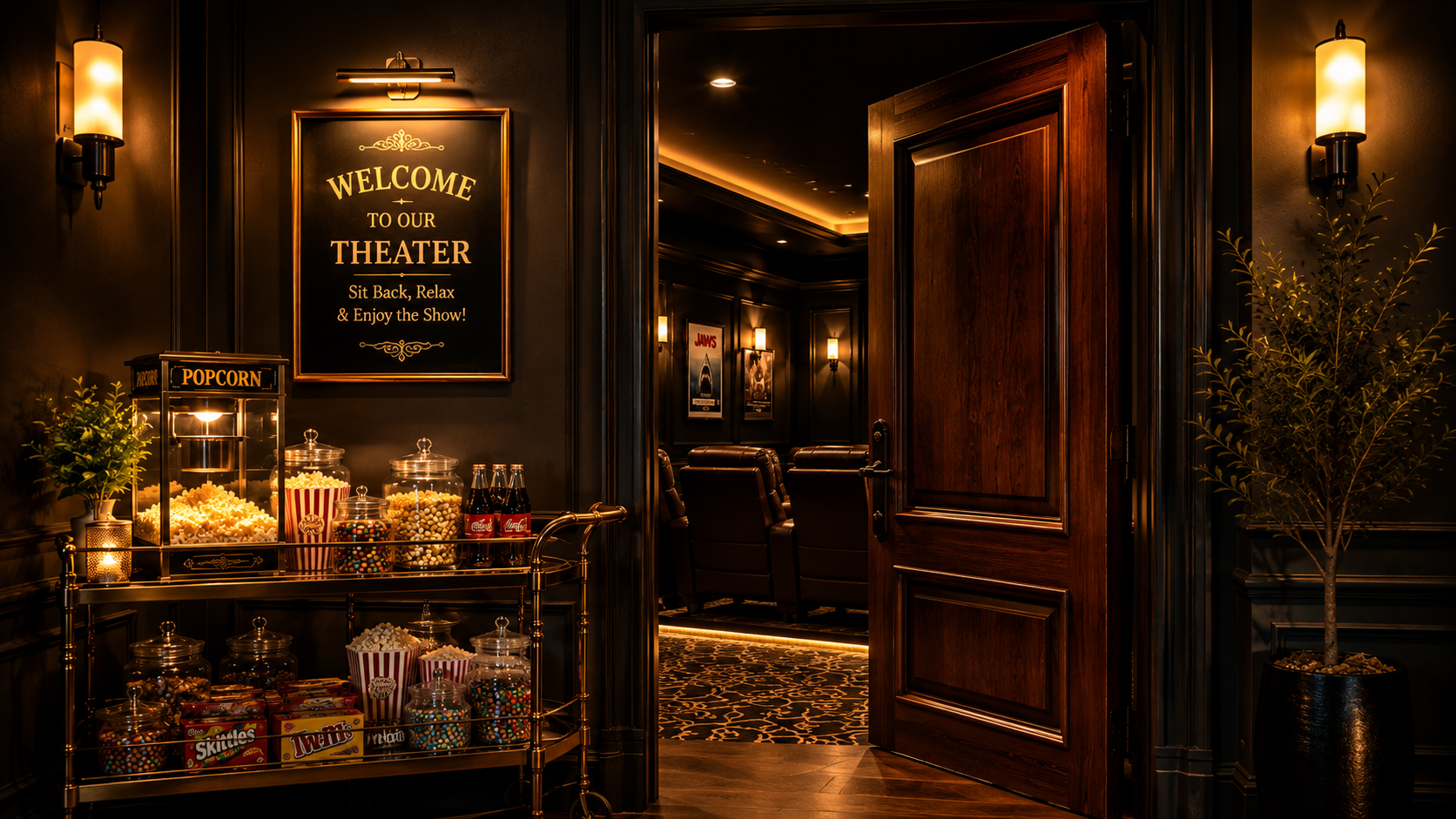
A home theater door may not feel as exciting as the screen, seating, or lighting, but it can make a noticeable difference in how the room looks and performs.
A lightweight door can allow movie sound to travel into nearby rooms. Gaps around the frame may also let hallway light spill into the theater, creating distractions during darker scenes.
The right door will not make a room completely soundproof on its own, but it can help the theater feel quieter, darker, more private, and more intentionally designed.
For most homes, the best solution is a solid-core hinged door combined with effective seals around the frame and bottom. Depending on your room, you may also want a blackout curtain, decorative theater sign, or darker finish that helps the entrance blend into the walls.
Quick Guide: Best Doors for a Home Theater
| Door Type | Best For | Sound Control | Light Control |
|---|---|---|---|
| Solid-core hinged door | Most home theaters | Very good | Very good when sealed |
| Solid wood door | Traditional or luxury rooms | Very good | Very good when sealed |
| Acoustic-rated door | Serious sound isolation | Excellent | Excellent |
| Double doors | Large theater entrances | Moderate to good | Good when sealed |
| Existing door with upgraded seals | Budget-friendly improvement | Moderate | Very good |
| Door with blackout curtain | Added light control | Limited to moderate | Excellent |
| Pocket door | Space-saving rooms | Limited | Limited |
| Barn door | Decorative media rooms | Poor | Poor |
Why the Home Theater Door Matters
The entrance can become a weak point in an otherwise well-planned theater.
Sound does not only pass through the door panel. It can also travel through gaps around the sides, top, and bottom. Light, drafts, and dust can enter through the same openings.
A good home theater doorway should help:
- Reduce sound leakage
- Block light from adjoining rooms
- Maintain privacy
- Support safe movement in and out of the room
- Coordinate with the theater’s overall style
It is also important to understand the difference between sound treatment and sound isolation.
Acoustic panels help control reflections inside the theater. They do not prevent significant amounts of sound from passing through a lightweight or poorly sealed door.
For a fuller explanation, read Acoustic Panels vs. Soundproofing for Home Theaters.
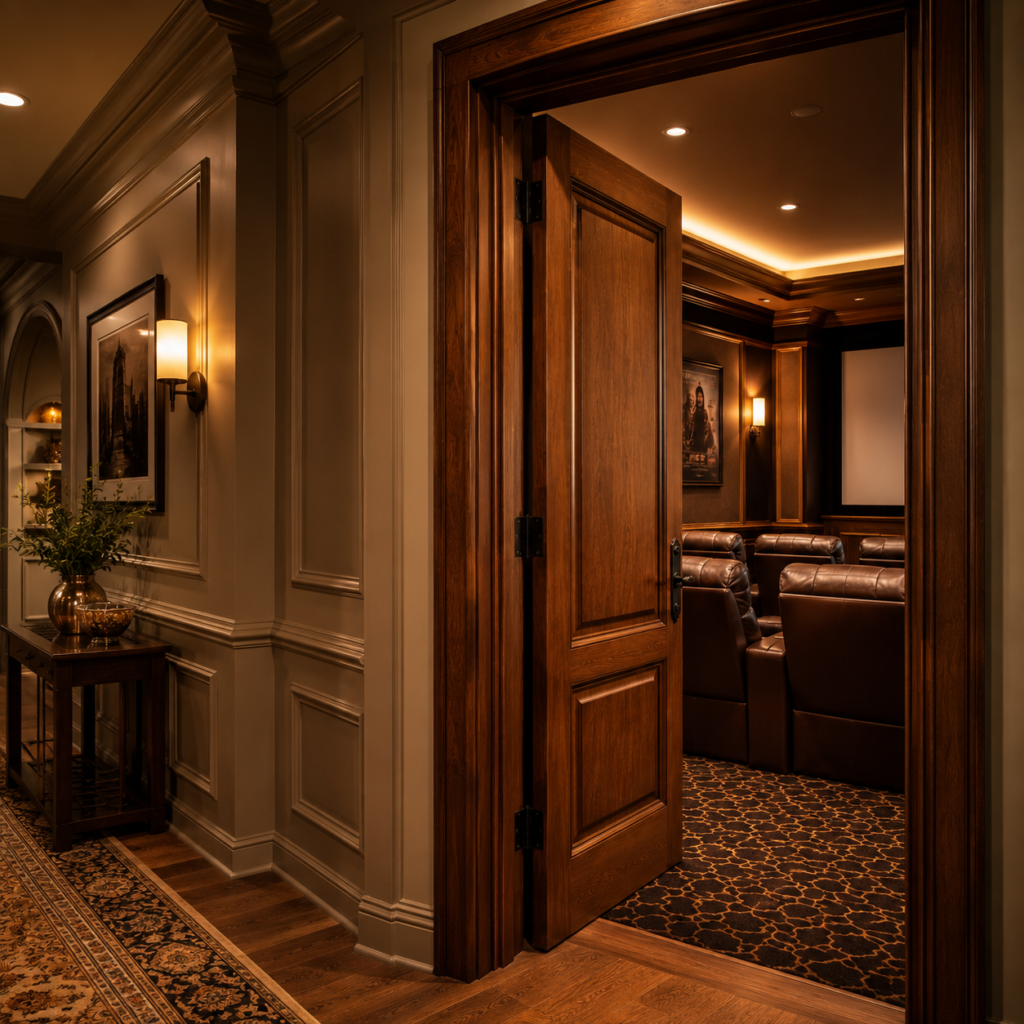
1. Choose a Solid-Core Door
A solid-core hinged door is the best overall option for most home theaters.
Unlike a hollow-core interior door, a solid-core model contains dense wood or composite material. The added weight and mass generally make it better at reducing room-to-room sound transmission.
Solid-core doors are available in many familiar residential styles, including:
- Flush doors
- Shaker-style doors
- Traditional paneled doors
- Wood-veneer finishes
- Primed doors that can be painted
- Modern flat-panel designs
This makes it relatively easy to find one that suits both the theater and the surrounding home.
A solid-core door will not fully soundproof the room. Its performance also depends on the frame, seals, threshold, hinges, and installation. However, replacing a lightweight hollow-core door is often one of the most practical improvements you can make.
Why It Works Well
- Denser than a hollow-core door
- Available in many styles and sizes
- Can be painted or stained
- Provides better privacy
- Works with standard residential hardware
- More affordable than a specialized acoustic assembly
Keep in Mind
Solid-core doors are heavy. Make sure the frame, hinges, and screws can support the weight.
The door should also close evenly against the frame. A heavy door with large gaps around it will still allow sound and light to pass through.
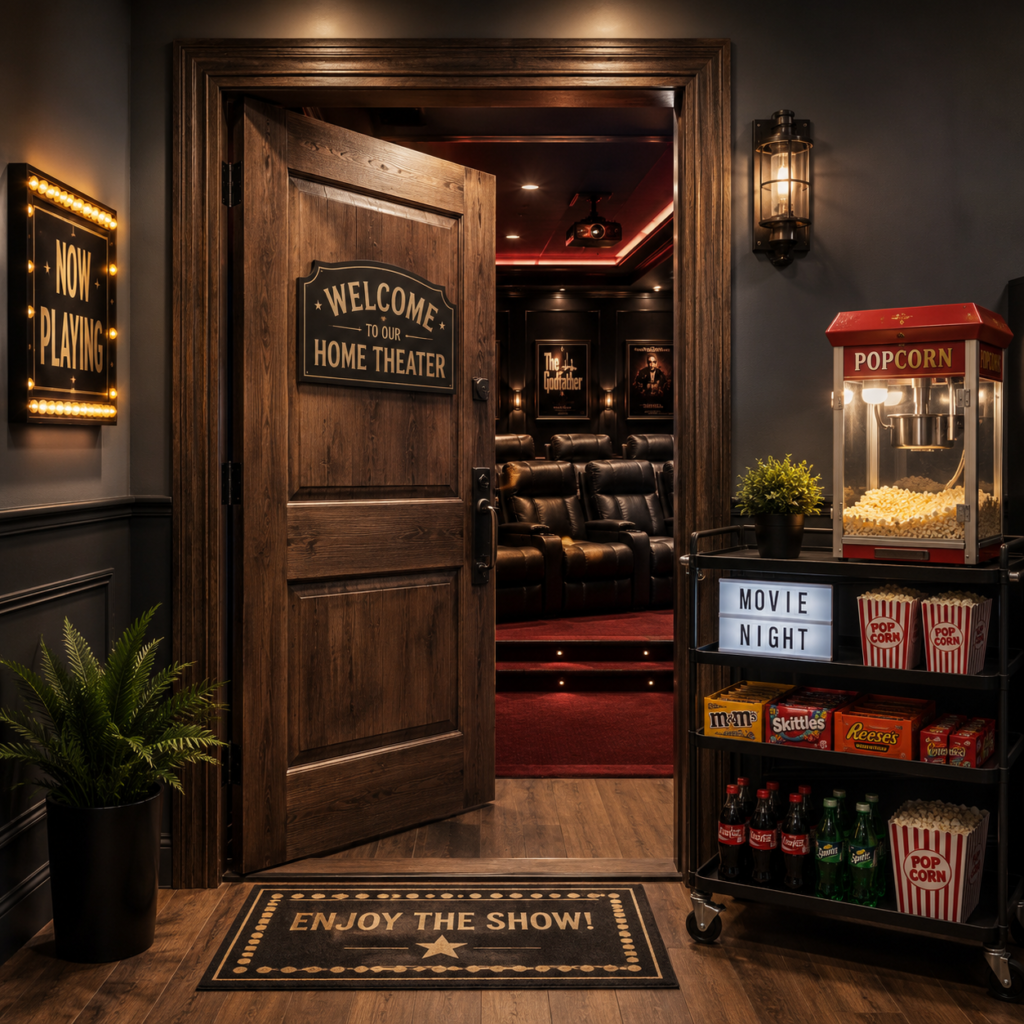
2. Consider a Solid Wood Door
A solid wood door can create a substantial, upscale entrance for a traditional or luxury home theater.
Rich wood finishes pair especially well with:
- Burgundy or navy walls
- Brass or antique-gold hardware
- Decorative molding
- Traditional theater sconces
- Framed movie posters
- Dark patterned carpet
A stained wood door can become part of the room’s design rather than disappearing into the wall.
Solid wood also provides useful mass, although performance varies according to the wood species, door thickness, panel construction, and seals.
Best For
- Traditional cinema-inspired rooms
- Luxury basement theaters
- Entrances visible from a bar or game room
- Homes with existing wood trim and millwork
- Rooms where the doorway should feel decorative
Natural wood can be expensive and may respond to changes in temperature or humidity. Also confirm whether the product is truly solid wood or a wood veneer over an engineered core.
An engineered solid-core door with a quality veneer may still be an excellent choice.
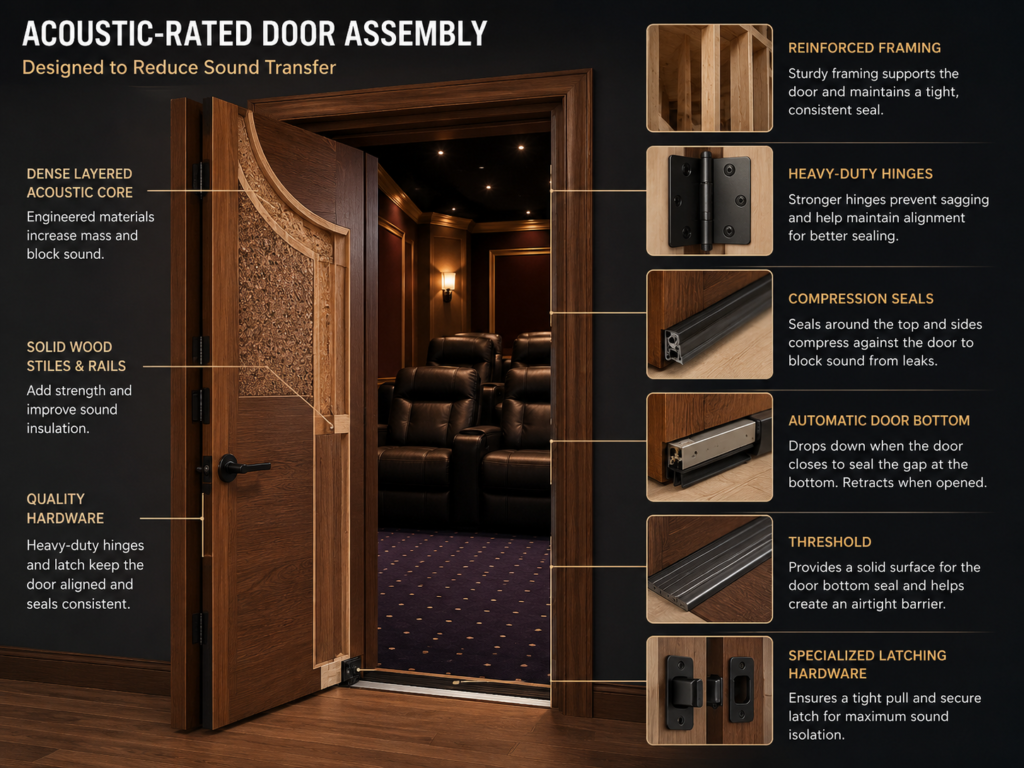
3. Use an Acoustic-Rated Door When Sound Isolation Is a Priority
An acoustic-rated door assembly may be worth considering when reducing sound transfer is one of the primary goals of the theater.
These doors are designed and tested as complete systems. Depending on the product, the assembly may include:
- A dense specialty door core
- Reinforced framing
- Heavy-duty hinges
- Compression seals
- An automatic door bottom
- A threshold
- Specialized latching hardware
Acoustic performance is often described using an STC, or Sound Transmission Class, rating. A higher rating generally indicates better resistance to airborne sound under controlled test conditions.
However, the rating applies to the tested assembly. Installing an acoustic door slab in an ordinary frame without the correct seals will not deliver the same result.
An Acoustic Door May Be Worth It When
- The theater shares a wall with a bedroom
- Movies are watched late at night
- The sound system includes powerful subwoofers
- The room is used for music or gaming
- The rest of the theater is already designed for sound isolation
- You are building a dedicated theater from the ground up
Specialized doors can be expensive and extremely heavy. They may also look more commercial than a standard residential door.
Before investing in one, consider whether sound is also escaping through the ceiling, walls, HVAC system, outlets, or floor. The door is only one part of the complete room.
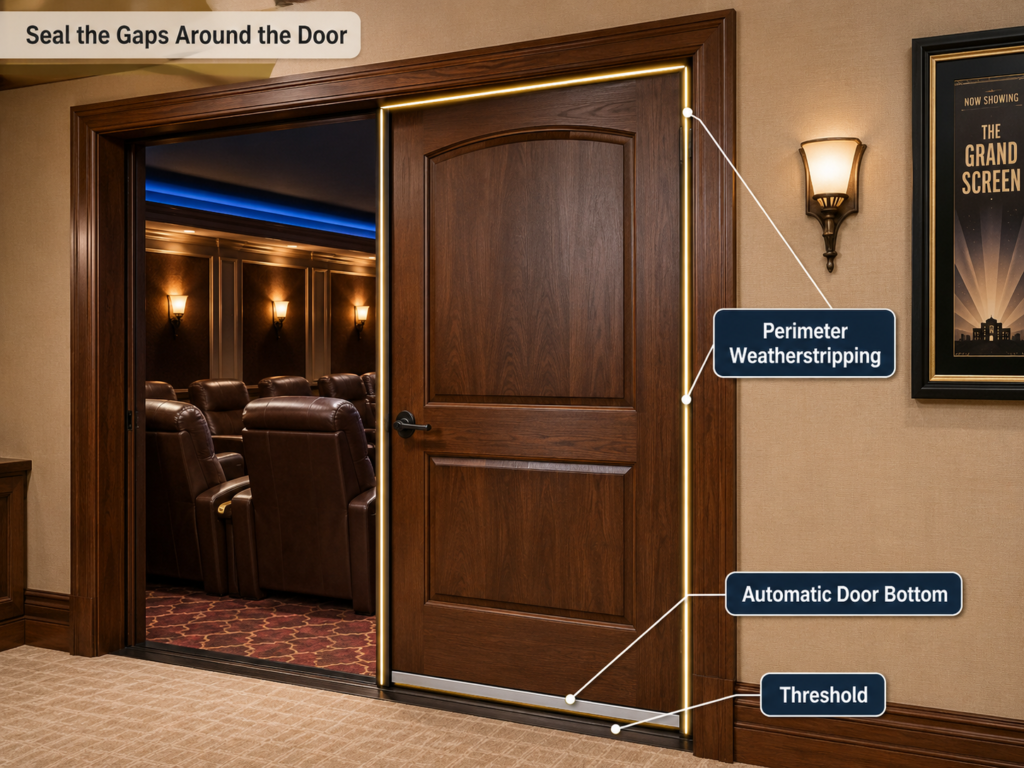
4. Seal the Gaps Around the Door
A dense door will underperform if air and light can move freely around it.
Use perimeter weatherstripping or acoustic seals around the two sides and top of the frame. The material should compress when the door closes without preventing the latch from engaging.
Then address the gap beneath the door with a sweep, door shoe, or automatic door bottom.
Common Sealing Options
Adhesive weatherstripping: An affordable way to improve an existing residential door.
Compression seals: A more substantial option that presses firmly against the closed door.
Surface-mounted sweep: A simple solution for reducing light and drafts beneath the door.
Automatic door bottom: A retractable seal that lowers when the door closes and lifts when it opens.
Threshold and door shoe: A durable combination that creates a solid surface for the bottom seal.
A simple way to find gaps is to turn off the theater lights while leaving the hallway illuminated. Stand inside the room and look for visible light around the frame.
Anywhere light passes through is also an opening where air and sound may travel.
Avoid weatherstripping that is so thick that the door becomes difficult to close. The seal should make consistent contact while allowing the latch to operate normally.
5. Improve Light Control
Light leakage is often easier to correct than sound transmission.
Begin by sealing visible gaps around the frame and beneath the door. Dark weatherstripping will be less noticeable than white foam in a black, navy, charcoal, or dark brown theater.
You can also paint the theater side of the door and trim in a dark, low-sheen finish.
Good color choices include:
- Matte black
- Charcoal gray
- Deep navy
- Espresso brown
- Dark burgundy
- The same color used on the surrounding wall
Avoid glossy finishes inside the theater because they can reflect light from the screen, sconces, and LED accents. Matte or low-sheen paint will help the door blend into the room and create a more immersive viewing environment.
For help choosing a coordinated color and finish, read my guide on Home Theater Paint Colors: Best Colors for a Cinematic Experience.
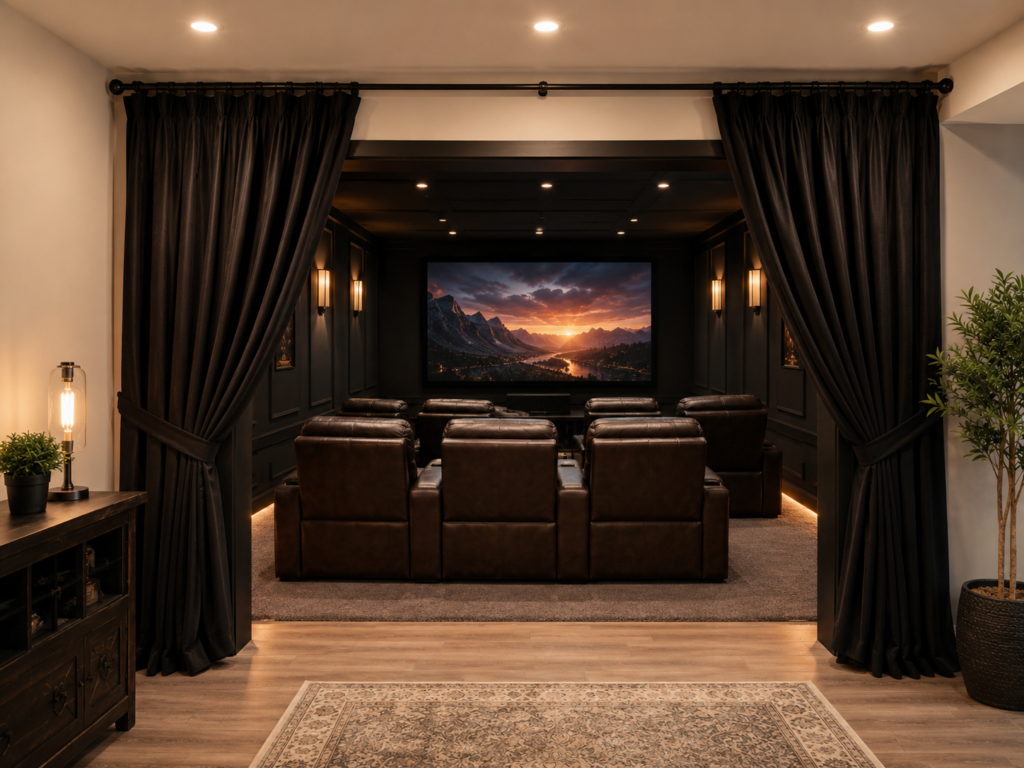
6. Add a Blackout Curtain When Needed
A blackout curtain can provide another layer of light control while making the entrance feel softer and more cinematic.
Mount the curtain above the doorway and extend it beyond both sides of the frame. The extra overlap helps reduce light entering around the edges.
A heavy curtain may absorb a small amount of high-frequency sound, but it should not be treated as a replacement for a dense, properly sealed door.
A Door Curtain Works Well In
- Basement theaters
- Multipurpose media rooms
- Rental homes
- Rooms where the existing door cannot be replaced
- Theater entrances with persistent light leakage
- Traditional cinema-inspired designs
Choose a fabric that coordinates with the room. Black velvet creates a classic theater look, while charcoal, deep navy, burgundy, or dark brown can feel more tailored.
Make sure the curtain can be opened completely without obstructing the doorway.
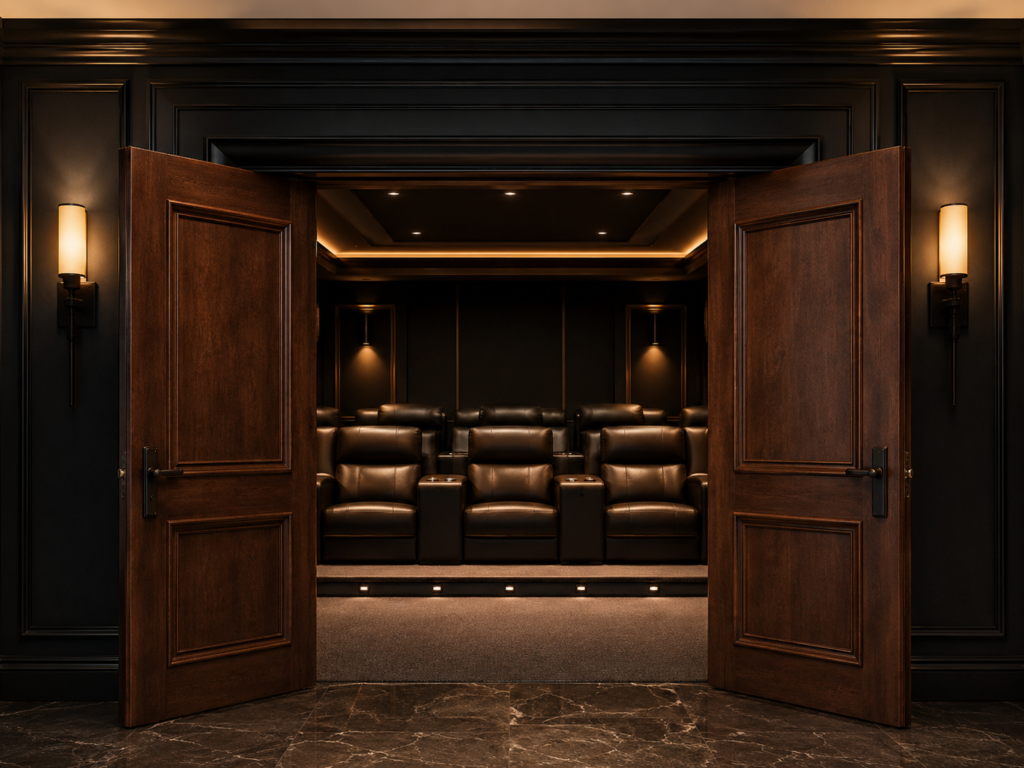
7. Use Double Doors Carefully
Double doors can create an impressive entrance to a large home theater.
They are also useful when moving wide recliners, equipment racks, or other large furnishings into the room.
However, two doors create more edges and potential gaps than one. The center seam, door bottoms, and expanded perimeter all need to be sealed carefully.
Better-performing double doors may require:
- Solid-core construction
- An overlapping center astragal
- Compression seals
- Properly aligned latches
- Bottom seals
- A threshold
Double doors are best when appearance and wide access matter. When sound isolation is the main priority, a single well-fitted solid-core door is usually simpler to seal.
8. Avoid Pocket and Barn Doors When Sound Control Matters
Pocket and barn doors can save space or add decorative character, but neither style is ideal for a dedicated home theater.
Pocket Doors
Pocket doors slide into a wall cavity instead of closing against a traditional stop.
They are difficult to seal around every edge because they require clearance to move. The wall pocket can also complicate sound-isolation construction.
A pocket door may be acceptable in a casual media room where sound containment is not a major concern.
Barn Doors
Barn doors hang in front of the wall opening. Gaps typically remain along the sides, top, and bottom.
These gaps allow both light and sound to pass around the door.
A barn door may work in a rustic game room or multipurpose entertainment space, but it is not the strongest choice for a theater located near bedrooms or other quiet areas.
9. Choose a Door That Fits the Theater Style
The door can either blend into the room or become a decorative focal point.
Modern Home Theater
Choose a flush solid-core door painted matte black or charcoal. Pair it with simple black hardware and minimal trim.
Traditional Cinema
Use a paneled wood door or a painted door in burgundy, navy, or black. Brass hardware, molding, and a small cinema sign can reinforce the classic theater look.
Luxury Contemporary Theater
Consider a dark wood veneer, oversized vertical handle, upholstered wall panels around the entrance, and subtle low-level lighting.
Casual Movie Room
A painted solid-core door with a simple lever handle and removable theater sign may be all you need.
Popular door-sign wording includes:
- Cinema
- Movie Room
- Screening Room
- Now Showing
- Feature Presentation
- Quiet Please
Keep signs proportional to the door. A small plaque usually looks more polished than oversized graphics covering the entire surface.
10. Plan the Door Swing and Installation
The direction of the door swing affects seating, walkways, equipment placement, and safety.
An inward-swinging door should not collide with:
- Recliners
- Speaker stands
- Side tables
- Equipment racks
- Raised platforms
- Wall decor
An outward-swinging door preserves more interior space but may interfere with the hallway or adjoining room.
Mark the complete swing arc on the floor with painter’s tape before installing the door.
For help coordinating the entrance with seating and traffic flow, read How to Choose the Perfect Home Theater Seating Layout.
The threshold should also coordinate with the flooring. Carpet can make a bottom seal less consistent, so a firm threshold beneath the closed door may create a better sealing surface.
Avoid abrupt transitions that could become a tripping hazard in a dark room.
Quality hardware matters as well. Use hinges and screws rated for the door’s weight, and make sure the latch pulls the door firmly against the weatherstripping.
11. Consider Ventilation Before Sealing the Door
Sealing the doorway may improve light and sound control, but it can also change how air moves through the room.
Some rooms rely on the gap beneath the door for return-air circulation. Closing that opening without evaluating the ventilation system may cause the theater to feel warm or stuffy.
This is especially important when the room contains:
- Several viewers
- A projector
- An AV receiver
- Amplifiers
- Gaming systems
- A closed equipment rack
A dedicated return-air pathway or professionally planned ventilation solution is better than leaving a large gap beneath the door.
Do not block an essential ventilation opening without considering the room’s HVAC design.
Common Home Theater Door Mistakes
Keeping a Hollow-Core Door
A lightweight hollow-core door is usually the weakest option when sound containment is important.
Ignoring the Gaps
Replacing the door panel without sealing the frame and bottom limits the improvement.
Using Acoustic Foam as Soundproofing
Foam can reduce reflections, but it does not add enough mass or sealing to soundproof a door.
Choosing a Barn Door for a Dedicated Theater
Barn doors are decorative, but their open perimeter allows sound and light to pass through.
Blocking Necessary Airflow
Do not seal the doorway without confirming how the room receives supply and return air.
Forgetting the Door Swing
A door that strikes a recliner or blocks a walkway will become frustrating every time the theater is used.
Helpful Amazon Searches for Home Theater Doors
Door weatherstripping — seal gaps around the top and sides
Acoustic door seals — compare heavier perimeter gaskets
Automatic door bottoms — create a retractable bottom seal
Door sweeps — reduce light and drafts beneath the door
Blackout curtains — add another layer of light control
Home theater door signs — decorate the theater entrance
Illuminated cinema signs — add a subtle theater-style detail
More Home Theater Ideas
Acoustic Panels vs. Soundproofing for Home Theaters — understand the difference between controlling reflections and reducing sound transmission.
How to Choose the Perfect Home Theater Seating Layout — coordinate the doorway with seats, walkways, and viewing angles.
How to Layer Lighting in a Home Theater — plan safe, dimmable lighting around the entrance and seating.
Home Theater Paint Colors: Best Colors for a Cinematic Experience — choose a dark, low-reflection finish for the door, trim, walls, and ceiling.
Hidden Cable Management Ideas for a Clean Home Theater — prevent cords from crossing the doorway or creating a trip hazard.
How to Organize a Home Theater — improve storage, equipment placement, and room flow.
Home Theater Mistakes to Avoid — prevent common problems involving seating, lighting, sound, and layout.
Frequently Asked Questions
What type of door is best for a home theater?
A solid-core hinged door is the best practical option for most home theaters. It provides more mass than a hollow-core door and can be combined with perimeter seals and a bottom seal.
Will a solid-core door soundproof the room?
No single door will completely soundproof a theater. The walls, ceiling, floor, frame, ductwork, outlets, and other openings also affect sound transmission.
How can I stop light from entering around the door?
Install weatherstripping along the top and sides, then seal the gap beneath the door with a sweep or automatic door bottom. A blackout curtain can provide additional light control.
Are barn doors suitable for home theaters?
Barn doors are usually better for casual media rooms than dedicated theaters. Their exposed gaps make them difficult to seal against sound and light.
Is an automatic door bottom worth it?
It can be worthwhile when you want a more complete bottom seal without having a sweep drag continuously across the floor.
Do blackout curtains help with sound?
Heavy curtains may absorb some high-frequency sound and reduce reflections, but their main benefit at the doorway is blocking light.
Should the theater door open inward or outward?
Either can work, provided the door does not obstruct seating, equipment, hallways, or a safe exit path.
Final Thoughts
For most home theaters, a properly fitted solid-core door offers the best balance of appearance, sound control, light blocking, and cost.
Combine it with perimeter weatherstripping and an effective bottom seal. These details are often more important than decorative foam, oversized signs, or complicated door styles.
A solid wood or acoustic-rated assembly may be worthwhile in a premium dedicated theater, while an upgraded existing door can still provide a meaningful improvement on a smaller budget.
Choose the door early enough to coordinate it with the seating layout, flooring, lighting, ventilation, and traffic flow. A thoughtfully planned entrance helps the entire theater feel darker, quieter, and more complete.

Lisa is the creator of Home Cinema Living. Together with her husband, a longtime home theater professional, she has spent years designing and enjoying home theater spaces that bring family and friends together for memorable movie nights.