
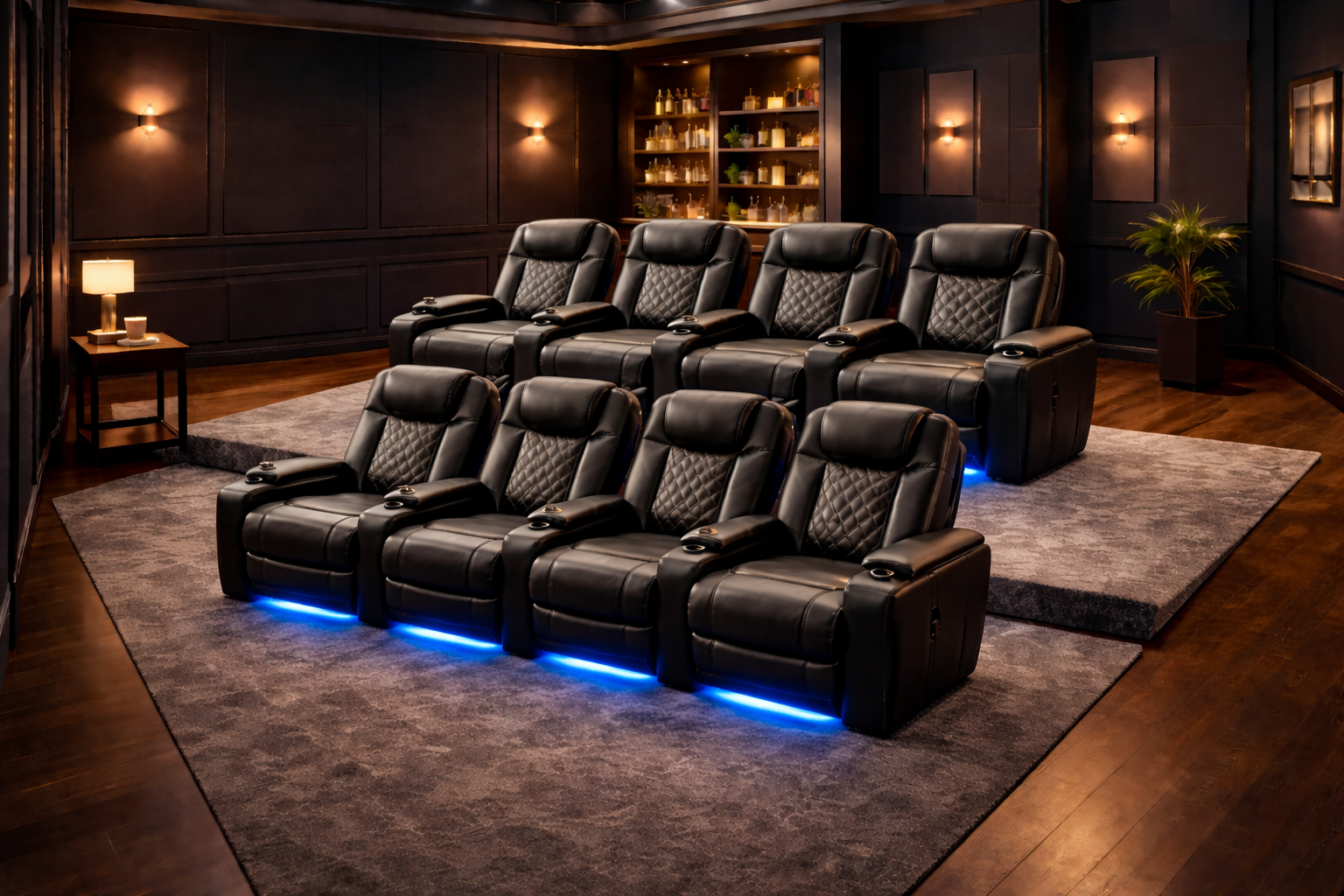
Affiliate disclosure: This post may contain affiliate links. As an Amazon Associate, I earn from qualifying purchases at no extra cost to you.
Choosing the right home theater seating layout can make a huge difference in how comfortable, functional, and cinematic your room feels. The best layout is not just about fitting as many seats as possible. It is about giving everyone a good view, enough walking space, comfortable seating, and a setup that works with your screen, speakers, and room size.
Whether you are planning a small media room, a family movie room, a basement theater, or a larger dedicated home cinema, the seating layout should support the way you actually use the space.
This guide will help you choose a home theater seating layout based on room size, screen distance, sightlines, comfort, walkways, and movie-night accessories.
If you are still planning the screen setup, read my guide on TV vs. Projector for a Home Theater.
Quick Guide to Home Theater Seating Layouts
Here is a simple way to choose a seating layout based on your room size and movie-night needs:
| Room Type | Best Seating Layout |
|---|---|
| Small room | One row of recliners, a loveseat, or a compact sectional |
| Medium room | One large sectional or two rows with careful spacing |
| Large theater room | Multiple rows with risers and clear walkways |
| Family media room | Sectional, sofa, bean bags, or mixed casual seating |
| Luxury theater | Recliners, side tables, tray tables, and mood lighting |
| Basement theater | Recliners or rows with a riser if ceiling height allows |
| Multipurpose room | Flexible seating, ottomans, poufs, or movable chairs |
Start by Measuring Your Room
Before choosing a seating layout, measure the room carefully. Room size affects how many seats you can fit, where the screen should go, how much walking space you need, and whether a second row or riser will work.
Measure the room’s width, length, ceiling height, door swings, windows, built-ins, and any areas where people need to walk. A seating layout that looks good online may not work if it blocks a doorway, crowds the screen, or leaves too little space to move around.
It can help to sketch the room on paper before buying seating. Mark the screen wall, doors, outlets, speakers, and the main walkway. This makes it easier to see whether a sofa, sectional, recliners, or multiple rows will fit comfortably.
Choose the Best Layout for Your Room Size
The best home theater seating layout depends heavily on the size of the room. A small room may feel better with a single comfortable row, while a large theater can often accommodate multiple rows, risers, and more traditional theater seating.
The goal is to create a layout that feels comfortable instead of crowded.
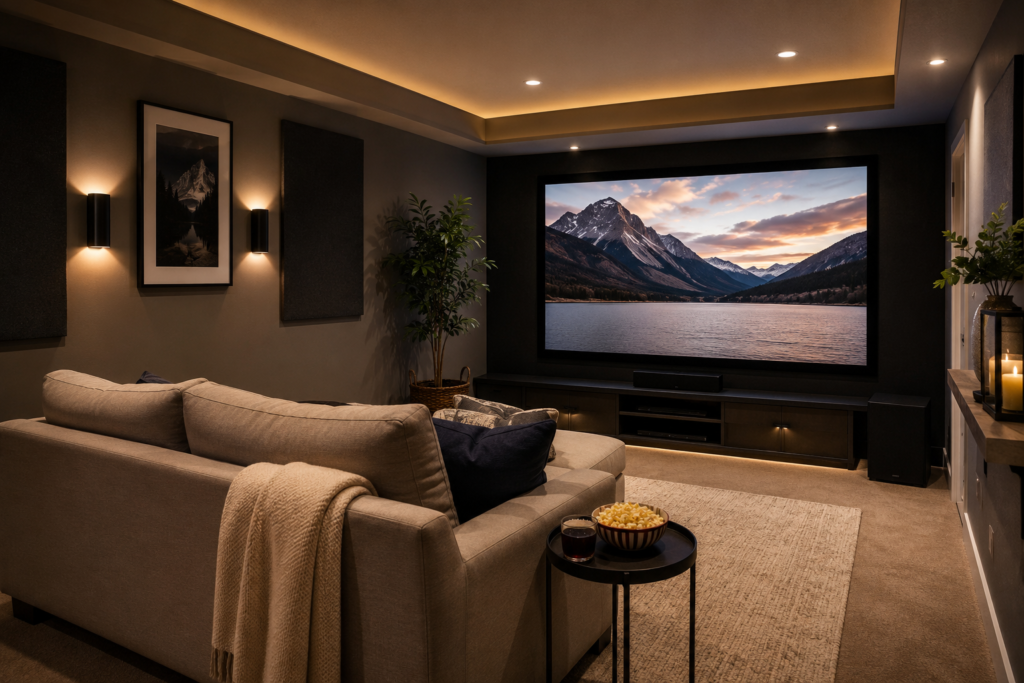
Small home theater seating layout
For a small home theater, keep the layout simple. One row of seating usually works best.
Good small-room seating ideas include:
- A compact sofa
- A loveseat
- Two recliners
- A small sectional
- Floor cushions or bean bags for kids
- A sofa with an ottoman
Avoid trying to squeeze in too many seats. A smaller room will feel more comfortable when there is enough space to walk, stretch out, and open doors or recliners easily.
Medium home theater seating layout
A medium-sized room gives you more flexibility. You may be able to use one large sectional, a row of recliners, or two rows if the room is long enough.
If you add a second row, make sure the back row still has a clear view of the screen. You may need a riser so the second row can see over the first row.
Medium rooms are often ideal for families because they can support a mix of seating, such as recliners in the back and a sectional or bean bags in front.
Large home theater seating layout
A large home theater can usually handle a more traditional theater-style layout. This might include multiple rows, risers, side aisles, and matching recliners.
Even in a large room, spacing still matters. Leave enough room behind and around seating so people can walk comfortably without squeezing past chairs.
A large theater can look impressive, but comfort should still come first. The best layout gives every seat a good view and enough room to enjoy the movie.
Think About Screen Distance and Viewing Angles
Screen distance is one of the most important parts of a seating layout. If the seats are too close, the screen may feel overwhelming. If they are too far away, the movie may not feel immersive.
A common starting point is to place seating about 1.5 to 2.5 times the screen size away from the screen. For example, if you have a 100-inch screen, many rooms feel comfortable with seating roughly 8 to 12 feet away.
You do not have to follow this perfectly, but it is a helpful starting point.
Try to keep the main seats centered with the screen. Side seats can work, but avoid extreme angles that require viewers to turn their heads for the whole movie.
For help deciding between screen types, read my guide on TV vs. Projector for a Home Theater.
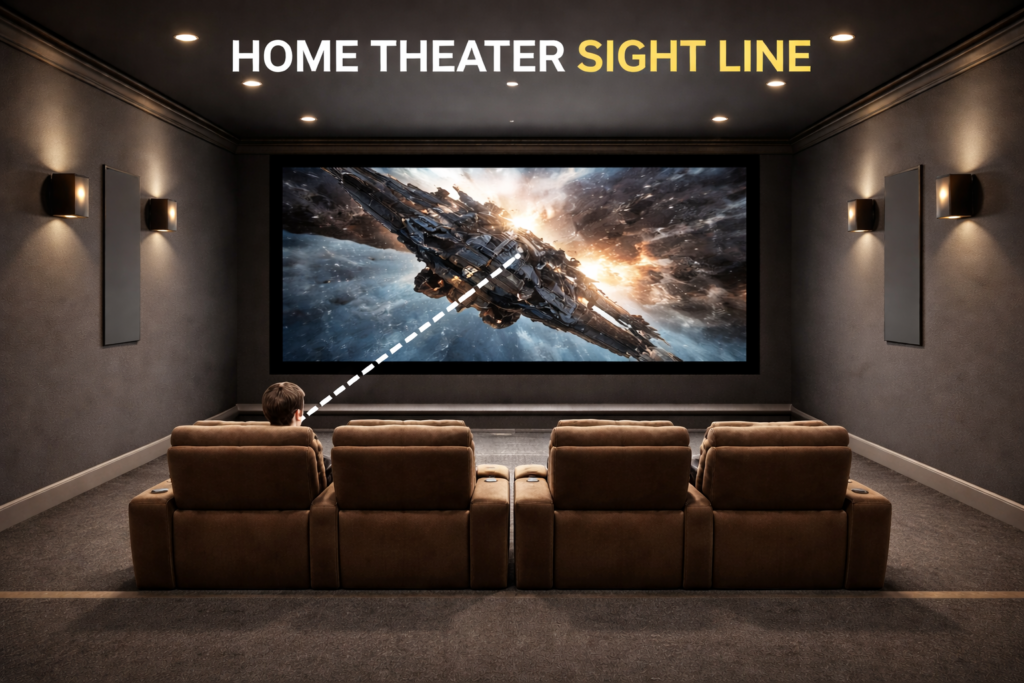
Plan for Clear Sightlines
Sightlines are one of the most important parts of a good home theater seating layout. Every seat should have a clear view of the screen without people needing to lean, stretch, or look around someone in front of them.
This becomes especially important if you have more than one row of seating. The back row should be high enough to see over the front row, which is why risers are often used in larger home theaters.
When planning sightlines, think about:
- The height of the screen
- The height of each seat
- Whether recliners block the row behind them
- The distance between rows
- The height of any riser
- Whether side seats have an angled view
- Whether furniture, speakers, or decor block the screen
A simple way to test sightlines is to sit in each planned seat location and check whether the screen feels comfortable to watch. If a seat feels awkward, too low, too far to the side, or blocked by another chair, adjust the layout before buying more furniture.
Good sightlines help every seat feel intentional, not like an afterthought.
Plan Clear Walkways Around Seating
A good seating layout should be easy to move through. People should be able to walk to their seats, reach snacks, leave the room, or use the restroom without stepping over others.
Try to leave walking space around the main seating area whenever possible. This is especially important if you use recliners, because they need extra room when fully extended.
Think about:
- Door swings
- Recliner clearance
- Side aisles
- Space between rows
- Access to snacks and drinks
- Access to light switches
- Walkways around coffee tables or ottomans
A layout that looks beautiful but feels difficult to move through will become frustrating over time.
For more ways to keep the room functional, read my guide on How to Organize a Home Theater.
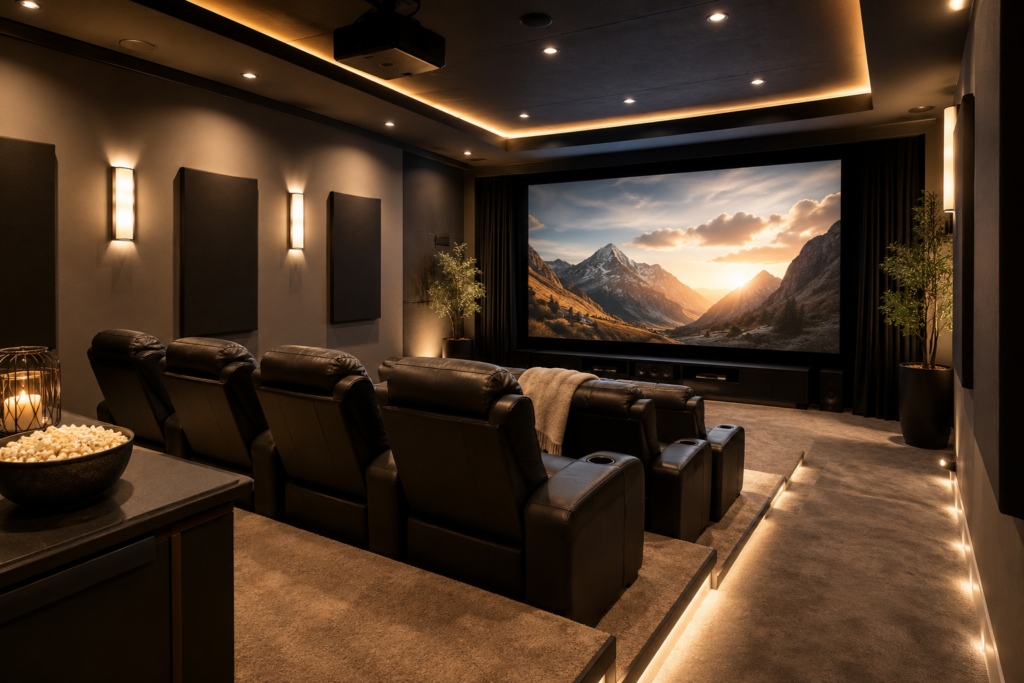
Use Risers for Multiple Rows
If your home theater has more than one row of seating, a riser can help the back row see over the front row.
Risers work best in larger rooms with enough ceiling height. Before adding one, make sure there is still enough headroom and that the back row will not feel too close to the ceiling.
A riser can make the room feel more like a real theater, but it needs to be planned carefully. The height, depth, and placement should work with your screen size, sightlines, and seating style.
Helpful Amazon picks for planning your seating layout
These items can help you measure the room, test furniture placement, and move seating around before committing to the final layout.
- SKIL 65ft Compact Laser Distance Measurer — best for measuring screen distance, room length, and walkway space
- Super Sliders XL Reusable Furniture Sliders — best for moving sofas, recliners, and media furniture while testing layouts
- PREXISO Laser Measure — best for measuring larger rooms, wall spacing, and seating distance

Choose Seating That Matches How You Use the Room
Your seating layout should match the way your family actually watches movies.
If you host guests often, you may want more individual seats, side tables, and cup holders. If your theater is mainly for family movie nights, a sectional or sofa may feel more relaxed. If kids use the room, bean bags, floor cushions, or ottomans can add flexible seating.
Popular home theater seating options include:
- Recliners
- Sectionals
- Sofas
- Loveseats
- Bean bags
- Floor cushions
- Ottomans
- Theater seats with cup holders
- Mixed seating for adults and kids
The most polished layout is not always the best one. The best layout is the one people actually enjoy using.
If recliners are the right fit for your room, my guide to the Best Home Theater Recliners for Every Budget compares single chairs, two-seat options, and complete theater rows.
Helpful Amazon picks for home theater seating
These seating picks cover different room types. A budget-friendly recliner works well for a classic theater setup; a leather recliner gives the room a more luxurious feel; a sectional is better for a relaxed family room; and a bean bag is helpful for kids, teens, or flexible seating.
- ANJ Power Recliner Chair with USB Ports and Cup Holders -best for a classic home theater recliner with cup holders and a tray
- Weilianda Top Grain Leather Zero Gravity Home Theater Recliner -best for a more luxurious leather home theater recliner with power reclining, cup holders, tray table, USB charging, and ambient lighting
- HONBAY Convertible Sectional Sofa -best for a small family media room or casual movie-night layout
- Big Joe Fuf 5ft Foam Bean Bag Chair -best for kids, teens, gaming rooms, and flexible seating
For more comfort upgrades, read my guide on Home Theater Seating Accessories You Didn’t Know You Needed.
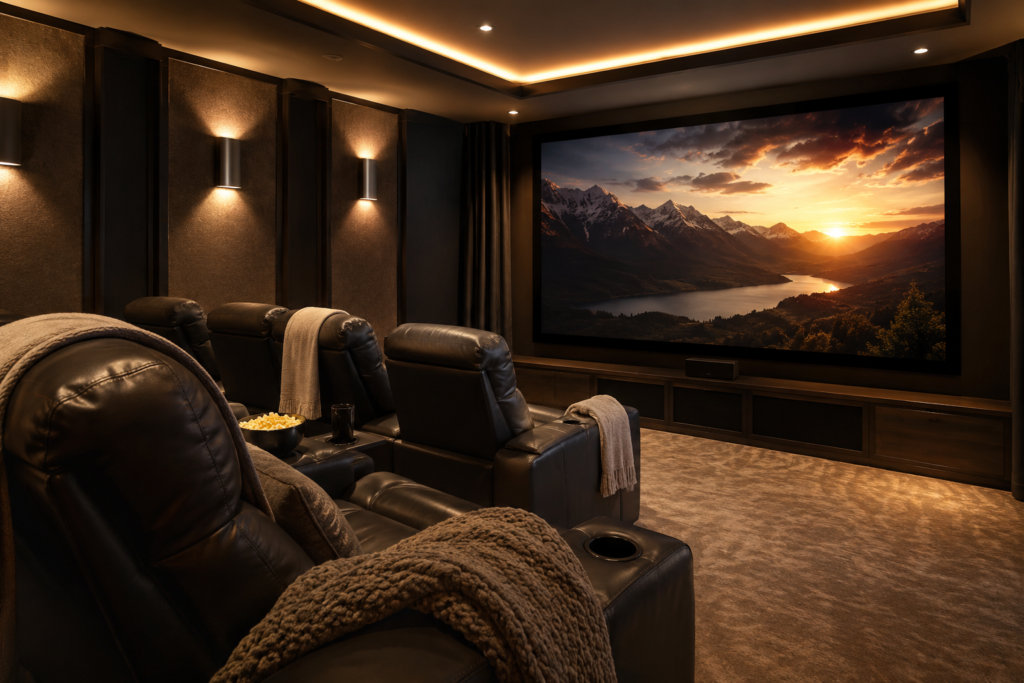
Add Comfort and Convenience Around the Seats
A seating layout is not only about the seats themselves. The accessories around the seats can make movie night much easier and more comfortable.
Think about where people will place drinks, popcorn, remotes, phones, blankets, and snacks. A beautiful layout can still feel inconvenient if there is nowhere to set anything down.
Helpful seating-area accessories include:
- Cup holder trays
- Armrest trays
- Side tables
- Snack trays
- Blanket baskets
- Remote organizers
- USB charging stations
- Small ottomans
- Floor pillows
Helpful Amazon picks for seating accessories
These accessories make the seating area easier to use, especially during long movies, sports nights, or family movie marathons.
- SINWANT Bamboo Couch Arm Tray — best for sofas and sectionals without built-in tables
- CouchConsole Original Tray — best for holding drinks, snacks, remotes, and phones during movie night
- KindGa Couch Cup Holder Tray — best for keeping drinks stable on a sofa or recliner arm
If you want to build a snack setup near the seating area, read my guide on DIY Snack Stations for Home Theaters.
For more finishing touches, read my guide on Home Theater Accessories and Decor.
Plan Seating Around Sound and Speaker Placement
Sound is another reason seating placement matters. The best seat is usually near the center of the room, facing the screen and speakers directly.
Try not to place the main seating flat against the back wall if you can avoid it. Seats pushed against the wall may make bass sound too strong or uneven.
If you use surround speakers, leave enough space for sound to move around the seating area. If you use a soundbar, keep the main seating centered with the screen so dialogue and effects feel connected to the picture.
Small changes in seating placement can make the room sound more balanced.
For more sound help, read my guide on Best Soundbars for Home Theaters and Media Rooms.
You may also like Acoustic Panels vs. Soundproofing for Home Theaters.
Avoid Common Home Theater Seating Layout Mistakes
A few common layout mistakes can make a home theater less comfortable, even if the furniture looks nice.
Try to avoid:
- Placing seats too close to the screen
- Crowding too many seats into a small room
- Blocking doors or walkways
- Forgetting recliner clearance
- Putting the main seats too far off-center
- Skipping a riser when adding a second row
- Placing seating directly against the back wall when avoidable
- Choosing furniture before measuring the room
- Forgetting side tables, trays, or cup holders
A simple layout with enough space usually feels better than a crowded layout with too many seats.
More Home Theater Seating Ideas
Keep improving your seating area with these helpful guides:
- Home Theater Seating Accessories You Didn’t Know You Needed — find trays, pillows, blankets, charging stations, and comfort upgrades for your seating area.
- Home Theater Accessories and Decor — discover accessories that make a media room feel more comfortable, organized, and complete.
- How to Organize a Home Theater — get practical ideas for cables, remotes, blankets, snacks, and storage.
- DIY Snack Stations for Home Theaters — create a snack area that works with your seating layout.
- TV vs. Projector for a Home Theater — compare screen options before finalizing your seating distance.
- Best Home Theater Recliners for Every Budget — compare practical single recliners, two-seat options, and premium theater rows to find seating that fits your room and budget.
Frequently Asked Questions
What is the best seating layout for a small home theater?
The best seating layout for a small home theater is usually a single row. A compact sofa, loveseat, small sectional, or two recliners can work well without making the room feel crowded.
How far should home theater seating be from the screen?
A common starting point is about 1.5 to 2.5 times the screen size. For example, a 100-inch screen is often comfortable from about 8 to 12 feet away, depending on the room and viewing preferences.
Do I need a riser for home theater seating?
You may need a riser if you have more than one row of seats. A riser helps the back row see over the front row, but it works best in rooms with enough depth and ceiling height.
Should home theater seats be against the back wall?
If possible, avoid placing the main seats directly against the back wall. Pulling seating forward can improve sound balance and make the room feel less cramped.
What is better for a home theater: recliners or a sectional?
Recliners are great for a classic theater feel, while sectionals are better for relaxed family movie nights. The best choice depends on your room size, comfort needs, and how many people use the space.
Final Thoughts
The perfect home theater seating layout is not the one with the most seats. It is the one that makes the room comfortable, easy to use, and enjoyable for the way your family actually watches movies.
Start by measuring the room, choosing the right screen distance, and leaving enough walking space. Then choose seating that fits your lifestyle, whether that means recliners, a sectional, bean bags, or a mix of different seating types.
A thoughtful layout can make every movie night feel more comfortable, organized, and cinematic.

Lisa is the creator of Home Cinema Living. Together with her husband, a longtime home theater professional, she has spent years designing and enjoying home theater spaces that bring family and friends together for memorable movie nights.